

Cart
0
Last Updated: October 25, 2026
Quick Summary
To socialize a puppy safely, start during the socialization window between three and sixteen weeks with one calm, controlled introduction per day, keeping each session under five minutes and pairing new experiences with treats and praise. Choose low-risk settings like your home and avoid dog parks and pet store aisles until your veterinarian confirms the vaccine series is complete.
- The socialization window runs roughly from three to sixteen weeks of age, so start the day your puppy comes home.
- Keep each socialization session short, under five minutes, and end before your puppy gets tired or scared.
- Carry your puppy in public and invite vaccinated friends over as low-risk exposures before full vaccines.
- Avoid dog parks, pet store aisles, and busy trails until your veterinarian confirms the vaccine series is complete.
- Introduce dogs one at a time on leash in a neutral space, and never force interaction if either dog looks tense.
Table of Contents
- Why Early Socialization Shapes the Dog You Live With
- The Puppy Socialization Window and When to Begin
- Your Puppy Socialization Before Vaccinations Risk Guide
- A Week-by-Week Puppy Socialization Timeline
- How to Introduce a Puppy to Other Dogs Safely
- Reading Fear and Stress Signals Before They Escalate
- Your Puppy Socialization Checklist for People, Places, and Sounds
- Stock Your Socialization Kit at Pawsibly Everything
- Frequently Asked Questions
Why Early Socialization Shapes the Dog You Live With
A puppy who meets 100 friendly people before turning four months old grows into a dog who handles the mail carrier, the vet, and the neighborhood kids without panic. That is the core promise of puppy socialization, and it is the single most important investment you will make in your new companion's behavior. At Pawsibly Everything, we talk with new pet parents every day who want to get this right from the start. The good news: safe socialization is a skill you can learn, and it does not require a crowded dog park or a perfect schedule. Below, we break down exactly how to socialize a puppy safely, step by step, with a plan you can start this week.
Early experiences wire a puppy's brain. Positive, calm exposure to new people, sounds, and surfaces builds confidence that lasts a lifetime. Forced or scary encounters do the opposite. So the goal is not "meet everything fast." The goal is many small, good experiences, repeated gently.
The Puppy Socialization Window and When to Begin
The socialization window is the period when a puppy's brain is most open to new experiences, roughly between three and sixteen weeks of age. Start the day your puppy comes home, even before the full vaccine series is complete.
This window will not wait. A puppy who misses it can still learn, but the work takes longer and needs more patience. Here is how to begin:
- Set up one calm, controlled introduction per day
- Keep each session short, under five minutes
- End on a good note, before your puppy gets tired or scared
- Pair every new thing with treats and praise
Many trainers describe this as "start slowly, at the puppy's pace." That phrase is the whole game. Rushing is the most common mistake we see, and it backfires every time.
Your Puppy Socialization Before Vaccinations Risk Guide
Puppy socialization before vaccinations carries real trade-offs, and most guides skip them. The answer is not to lock your puppy away until the shots are done. It is to choose low-risk settings, avoid high-traffic dog areas, and let your veterinarian weigh in on your local disease picture.
| Setting | Risk Level | Safe Before Full Vaccines? | Why |
|---|---|---|---|
| Your home with known, vaccinated adults | Low | Yes | Controlled environment, no unknown dogs |
| A friend's clean, private yard | Low | Yes | Limited exposure, known animal history |
| Carrying your puppy in public (parking lot, sidewalk) | Low | Yes | No ground contact, controlled distance |
| Puppy class with health checks and age-matched groups | Moderate | Often, with vet approval | Structured, supervised, but still group exposure |
| Pet store aisles, dog parks, busy trails | High | No | Unknown vaccination status, high dog traffic |
| Grooming salons or boarding facilities | High | No | Many unknown dogs, shared surfaces |
How to decide in practice:
- Ask your veterinarian about local risk. Disease rates vary by region and change seasonally. Your vet knows whether parvovirus or distemper is currently active in your area and can tell you which settings to avoid until the series is complete.
- Prioritize low-risk exposures first. Carry your puppy in public, invite vaccinated friends to your home, and use your own yard. These build experience without ground contact in unknown-dog areas.
- Use puppy class only with vet approval. Many reputable classes require proof of age-appropriate vaccines and health checks for all attendees. Ask the instructor what screening they use before enrolling.
- Avoid high-risk locations entirely until cleared. Pet store aisles, dog parks, and busy trails concentrate unknown dogs and shared ground. Wait until your veterinarian confirms the series is complete.
- Keep sessions short and calm. Even low-risk exposures should last under five minutes and end before your puppy shows stress.
A common pattern is that new owners either isolate the puppy completely or rush into high-traffic areas. The American Veterinary Medical Association guidance on puppy preventive care supports early, careful exposure over total isolation. When you do plan that first clinic trip, our guide on how to prepare a puppy for their first vet visit walks you through it calmly.
Watch Out
Do not take an unvaccinated puppy to dog parks, pet store aisles, or other high-traffic dog areas. Unknown dogs and shared surfaces raise disease risk, and no amount of caution during the visit fully offsets it.
A Week-by-Week Puppy Socialization Timeline
A puppy socialization timeline turns a vague goal into small, doable steps. Here is a simple plan you can adapt to your puppy's age and comfort level.
- Week 1: Settle in. Introduce family members, one calm room, and the crate.
- Week 2: Add gentle handling, collar and leash time, and household sounds.
- Week 3: Invite one vaccinated friend over. Practice calm greetings.
- Week 4: Short carries in public. Watch cars, strollers, and people from a distance.
- Week 5: Meet a calm, vaccinated adult dog in a neutral space.
- Week 6: Introduce new surfaces: grass, tile, carpet, a wobble board.
- Week 7: Start puppy class if your vet approves.
- Week 8+: Keep rotating new people, places, and sounds, always at your puppy's pace.
For controlled greetings, a Pet training dog leash keeps sessions calm and close. This structured approach is exactly how to socialize a puppy without overwhelming them.

How to Introduce a Puppy to Other Dogs Safely
The safest way to introduce a puppy to other dogs is a calm, neutral space, one dog at a time, both on leash, with plenty of distance at first.
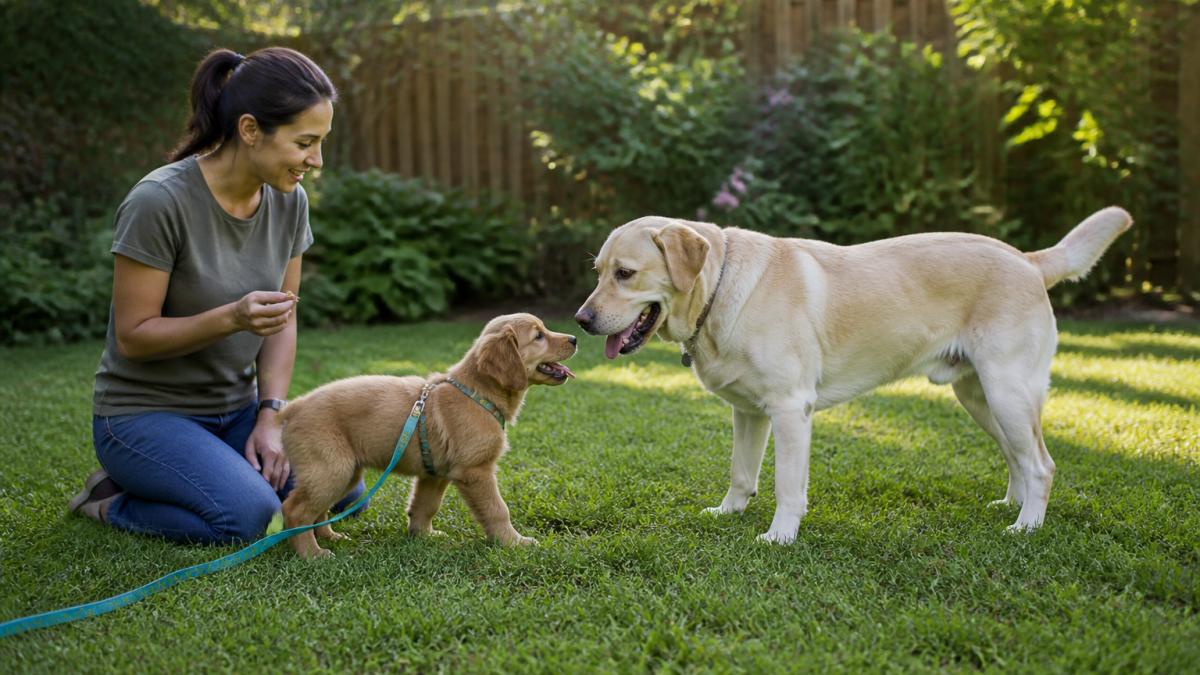
Follow these steps:
- Choose a vaccinated adult dog with a steady, friendly temperament
- Meet outdoors on neutral ground, never in either dog's home
- Keep leashes loose and let the dogs approach at their own pace
- Break off after a few minutes, then repeat another day
- Never force interaction if either dog looks tense
A common mistake is letting a puppy jump all over an older dog. For a deeper walkthrough of pet-to-pet meetings, see our 7 steps to introduce a puppy to other pets calmly.
New Product Pet Foreign Trade Dog Collar Outdoor Dog Walking Leash →
Reading Fear and Stress Signals Before They Escalate
Fear and stress signals are your early warning system, and catching them lets you step in before a puppy panics. For calming options during these moments, see our best stuffable toys for anxious dogs.
Body-language and stress-signal checklist:
- Yawning, lip licking, or excessive blinking out of context
- Tucked tail, flattened ears, or a lowered head
- Turning away, freezing, or trying to hide
- Sudden scratching or sniffing that seems out of place
- Whale eye, where the whites of the eyes show
- Tense body, stiff legs, or a closed mouth
- Pulling toward the exit or straining against the leash
- Refusing treats that were accepted moments earlier
Your response protocol:
- Increase distance. Move your puppy away from the trigger until the stress signals stop. Distance is the fastest way to lower arousal.
- Pause and observe. Give your puppy time to decompress. Do not lure them back toward the trigger while they are still showing signals.
- End the interaction if signals persist. If your puppy does not relax after a short break, end the session on a calm note and try again another day with less intensity.
- Pair at a distance next time. Use desensitization and counterconditioning: pair the scary thing with treats at a distance where your puppy can still eat, then gradually reduce distance over multiple sessions.
- Never push through fear. Forcing contact teaches your puppy that warnings do not work, which can lead to stronger reactions later.
When to seek professional help: If your puppy shows stress signals during everyday activities, reacts strongly to common sounds or people, or does not recover after distance and rest, consult a qualified behavior professional.
This is where desensitization and counterconditioning do their quiet work: pair the scary thing with treats, at a distance, until it feels safe.
Key Takeaway
Successful socialization means comfortable exposure, not greeting everyone. A puppy who can observe a new person or dog calmly from a distance is making progress. Watch for relaxed body language, soft eyes, and willingness to take treats as signs that the exposure is working.
Your Puppy Socialization Checklist for People, Places, and Sounds
A puppy socialization checklist keeps you organized and stops you from skipping the boring-but-important exposures. Use this one as a running log.
- People of different ages, heights, and voices
- People in hats, uniforms, and sunglasses
- Children, calmly and supervised
- Visitors at the door, with treats
- New places: parks, sidewalks, lobbies
- Sounds: vacuums, doorbells, thunder recordings
- Surfaces: grass, gravel, tile, hardwood
- Novel objects: umbrellas, boxes, wheelchairs
- Handling: paws, ears, mouth, collar
- Rest breaks after every new experience
For indoor setups, our guide on how to puppy proof an apartment safely helps you build a calm, safe space for these sessions. A puzzle feeder like our Dog Tumbler Puzzle Food Ball Toys offers a quiet confidence boost and a mental workout between outings.

Stock Your Socialization Kit at Pawsibly Everything
A good socialization kit makes calm, positive sessions easier to run. The American Kennel Club's guidance on puppy socialization echoes what we see in practice: short, positive, repeated experiences beat one big overwhelming day.
Build your kit around three things:
- A soft, comfortable leash for training walks
- Treats and praise for positive reinforcement
- A calm, comfy bed for rest between sessions
Our Multi-color cotton pet long leash is soft on a puppy's skin and gives you room to guide greetings. Pair it with treats and a quiet spot, and you have everything you need to start slowly.

Frequently Asked Questions
When should you start socializing a new puppy?
Start the day your puppy comes home, usually around 8 weeks old. The socialization window runs roughly from 3 to 16 weeks, and experiences during this stretch carry the most weight. Keep sessions short, five to ten minutes, and aim for one or two new positive experiences a day. A puppy that meets a calm adult, walks on a new surface, and hears a vacuum from a distance in the same week is building confidence without overload.
Can you socialize a puppy before they are fully vaccinated?
Yes, with care. Carry your puppy in your arms or use a stroller in low-traffic areas, invite healthy vaccinated adults to your home, and host calm visitors on your own floor. Avoid dog parks, pet store floors, and areas where unknown dogs congregate until your veterinarian clears your puppy. Ask your vet about your local parvo risk, since it varies by region, and follow their vaccination schedule before expanding where your puppy walks.
How do you introduce a puppy to other dogs safely?
Choose a calm, vaccinated adult dog with reliable manners. Meet on neutral ground, keep both dogs leashed, and let them approach at their own pace with plenty of slack. Watch for loose wiggly bodies and play bows as green lights, and stiff posture, tucked tails, or lip licking as reasons to add distance. End on a good note after a few minutes, and repeat short sessions before trying a longer playdate.
How can you tell if a puppy is scared or overwhelmed?
Watch the body, not the tail wag. Yawning, lip licking, whale eye (showing the whites), tucked tail, flattened ears, freezing, and sudden scratching are early stress signals. If you see them, increase distance, lower the intensity, and give your puppy a break. A puppy that shuts down or tries to bolt is past the learning point, so end the session and try a quieter version tomorrow.
Socializing a new puppy safely takes patience, a plan, and the right gear, but the payoff is a confident, well-adjusted dog for life. Pawsibly Everything makes it simpler with soft training leashes for controlled sessions, durable puzzle toys to ease stress, and cozy beds for calm rest breaks. Get started with Pawsibly Everything and give your puppy the calm, positive start they deserve.

