

Cart
0

Table of Contents
- Why Apartment Puppy Proofing Is Different
- Essential Supplies for New Puppies in Small Spaces
- Room-by-Room Puppy Proofing Checklist for Apartments
- Managing Puppy Anxiety in Small Spaces
- Apartment-Specific Challenges: Leases, Noise, and Vertical Space
- Common Puppy Proofing Mistakes to Avoid
- Frequently Asked Questions
Last Updated: September 17, 2026
Why Apartment Puppy Proofing Is Different
Learning how to puppy proof an apartment safely means removing or securing household hazards so a puppy can explore a small, shared living space without injury or damage. It differs from house proofing because you have less square footage, shared walls, and a landlord watching.
New pet parents often share how much trouble a nine-pound puppy finds in a 700-square-foot unit. A house has a yard, garage, and basement to absorb the chaos; an apartment has a hallway and a neighbor who works nights. That changes what you secure, where you store chemicals, and how you manage noise.
Below: a room-by-room approach, the supplies worth buying before your puppy comes home, and the apartment-specific problems most guides skip.
Key Takeaway
In an apartment, the two hazards that cause the most damage are also the two easiest to fix: exposed cords along baseboards and unanchored furniture. Handle both in your first hour home.
Essential Supplies for New Puppies in Small Spaces
Essential supplies for new puppies in a small apartment fall into two buckets: safety gear and comfort items. Buy safety gear first, comfort items reduce destructive chewing, but only once the hazards are gone.
Safety Gear You Should Not Skip
- Cord protectors and cable sleeves for every cord within 60 centimeters of the floor
- Furniture anchors for bookcases, TVs, and dressers
- Dog gates sized to your doorway widths, not standard hallway widths
- Cabinet locks for low cabinets holding cleaning supplies
- A covered trash can with a locking lid
- Outlet covers for unused wall sockets
A common mistake is buying gates before measuring. Apartment doorways and kitchen entries are often narrower than a standard gate, so measure every opening and write the numbers down.
Comfort Items That Reduce Destructive Behavior
Puppies chew when bored, anxious, or teething. A crate taps into natural denning behavior and gives you a safe place for deliveries or maintenance visits. Pair it with a washable bed and two or three durable chew toys, rotated every few days to stay interesting.
Pawsibly Everything carries ice velvet and plush beds built for all-season comfort, plus toys for high-energy chewers. If your puppy is already a power chewer, start with the toughest option rather than replacing a destroyed toy weekly.
Room-by-Room Puppy Proofing Checklist for Apartments
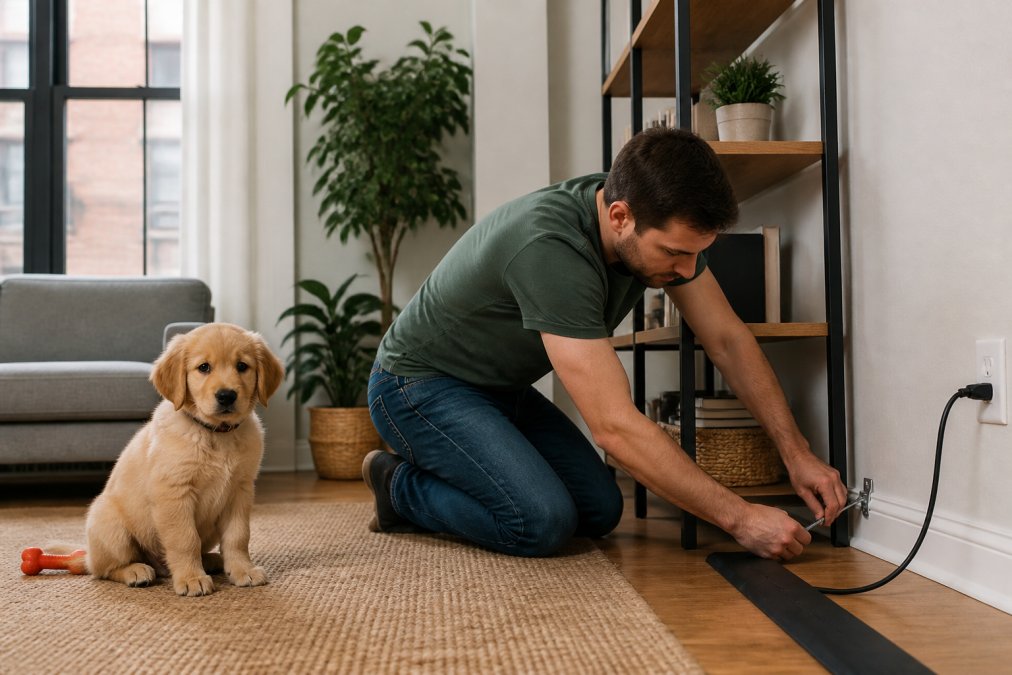
Knowing how to puppy proof an apartment safely works best at floor level. Get on your hands and knees and look from your puppy's height, roughly a soda can for a small breed. You will spot hazards you never noticed standing up: the gap under the couch, the cord behind the TV stand, the coin under the radiator. Do this before the puppy comes home, then monthly for six months as it grows and reaches new surfaces.
Living Room and Bedroom Hazards
Start with electrical cords. Re-route cables behind furniture or inside cord protectors, and unplug what you can. Chewing a live cord causes mouth burns and can be fatal, so do not postpone it. Watch the baseboard run behind the couch and the lamp cord beside the bed, the two spots puppies find first.
Then work through the smaller items:
- Blind cords and window treatment pulls, tie them up out of reach or use a cord cleat. A looped cord is a strangulation risk.
- Toxic houseplants, move them to a shelf the puppy cannot reach or rehome them entirely. Common apartment plants like pothos, philodendron, and lilies are dangerous if chewed.
- Small objects, coins, and hair ties, pick them up off the floor and out from under furniture. Hair ties and rubber bands are a common cause of intestinal blockage in puppies.
- Pet-safe deterrents, apply to furniture corners if your puppy targets them, and place a durable chew toy nearby to redirect the behavior.
- Cords from phone chargers and lamps, unplug them when not in use; a charging cable left on the floor is a favorite target.
Kitchen, Bathroom, and Balcony Safety
The kitchen holds the most ingestion risks. Cleaning supplies go in a latched cabinet, ideally above counter height. Trash cans need locking lids, a tipped bin means swallowed bones, packaging, and medication. Keep the dishwasher closed and latched; a puppy licking a detergent pod can become seriously ill.
| Room | Top Hazard | Fix | Priority |
|---|---|---|---|
| Living room | Electrical cords | Cord protectors, re-route cables | Immediate |
| Bedroom | Unanchored furniture | Furniture anchors | Immediate |
| Kitchen | Cleaning supplies | Cabinet locks, high storage | Day one |
| Bathroom | Medications | Closed cabinet, lid down | Day one |
| Balcony | Railing gaps | Gate or latched door | Day one |
Managing Puppy Anxiety in Small Spaces
Managing puppy anxiety in small spaces starts with routine. Apartment puppies hear hallway noise, elevator chimes, and neighbors through shared walls, and that constant stimulation wears them down. A predictable schedule of feeding, walks, crate time, and play does more than any single product.
Pro Tip
Play a recording of hallway and elevator sounds at low volume during your puppy's meal times. It pairs a mild stressor with something good and takes the edge off real-world noise over a few weeks.
Apartment-Specific Challenges: Leases, Noise, and Vertical Space
Most puppy proofing guides assume a yard, a garage, and no shared walls. In a rental, three constraints change the playbook: the lease you signed, the neighbors behind the drywall, and square footage measured in hundreds, not thousands, of feet. Handle these three and the rest gets easier.
Protect Your Security Deposit Before the Puppy Arrives
Read your rental agreement before bringing a puppy home, highlighter in hand. The clauses that matter: pet policy, pet deposit or rent, weight and breed restrictions, and renter's insurance requirements. Many leases require liability coverage naming a dog, and some buildings restrict pets by floor or wing. Get written approval, a verbal "sure, it's fine" will not help at move-out.
- Carpet and rugs, puppy pads, accidents, and chewing all leave marks. A waterproof, machine-washable rug or a washable pad under the crate limits the damage to one removable layer instead of the unit's flooring.
- Baseboards and door frames, the two most common chew targets in a rental. A pet-safe deterrent applied to corners and a few durable chew toys placed nearby redirect the behavior.
- Blinds and window coverings, cheap to replace individually, expensive when a landlord replaces the whole set. Tie cords up and keep the lower slats out of reach.
- Walls, a crate or gate pressed against drywall leaves scuffs and dents. Use felt pads on gate feet and keep the crate a few inches off the wall.
Watch Out
Most leases hold you financially responsible for chewed baseboards, carpet, and blinds, and those repairs come out of your deposit, or your wallet if the deposit does not cover them. Never leave a puppy loose in a rental unit while you are away.
Keep the Noise Down for Shared Walls
Barking is the fastest way to turn a friendly neighbor into a complaint. With shared walls, a puppy barking at every footstep, elevator chime, and door slam can generate complaints within days, and repeated complaints can put your lease at risk. The fix is not one product but routine, exercise, and environment combined.
Then reduce the triggers themselves:
- White noise or a fan near the crate masks hallway and elevator sounds.
- A radio or TV left on low during the day blurs sudden noises into background sound.
- Door and window weatherstripping cuts the sharp sounds that startle a puppy most.
- A thick rug or mat under the crate absorbs vibration and muffles scratching.
Use Vertical Space to Buy Back Floor
A small unit has wall space even without floor space, and vertical storage is the renter's advantage. A secured supply shelf, a wall-mounted leash hook, and a crate under a desk free up floor for your puppy. Keep anything chewable or swallowable above its reach, and re-check storage heights monthly for six months, a puppy grows and jumps higher every few weeks.
Pro Tip
Measure your doorways and kitchen entries before buying gates. Apartment openings are often narrower than standard hallway widths, and a gate that does not fit is a gate you will return.
Common Puppy Proofing Mistakes to Avoid
The biggest mistake is proofing once and calling it done. A puppy grows and reaches new surfaces every few weeks, so re-walk the apartment monthly for six months.
Frequently Asked Questions
What is the 3-3-3 rule for puppies?
The 3-3-3 rule describes a puppy's adjustment timeline after adoption. The first 3 days are for decompression, when your puppy may feel overwhelmed and shut down. The next 3 weeks involve settling in and learning your routine. After 3 months, your puppy starts feeling fully at home and shows their true personality. Knowing this helps you stay patient during early accidents and anxiety.
How do I protect electrical cords from a teething puppy?
Use cord protectors or flexible conduit tubing to wrap exposed cords, then tuck them behind furniture or along baseboards. Unplug and store any cords you do not need daily. For chargers, keep them in a drawer or use a cable management box. This removes the temptation entirely and eliminates shock and choking hazards.
How do I puppy proof an apartment balcony safely?
Never leave a puppy unsupervised on a balcony. Check that railings have no gaps wider than 4 inches, and add a mesh barrier if needed. Remove any climbable objects like planters or furniture near the railing. Keep the balcony door latched when you are not outside, and avoid using the balcony for potty training if your lease prohibits it.
Is it necessary to use baby gates in a small apartment?
Yes, baby gates are one of the most useful tools in a small apartment. They create a safe puppy zone, block off kitchens and bathrooms, and give you a way to contain your puppy while you cook or answer the door. Pressure-mounted gates work well for most doorways without damaging walls, which matters when you are renting.
Puppy proofing an apartment is a weekend of work followed by months of small adjustments, and the payoff is a puppy who can explore safely and a lease you can hand back intact. Pawsibly Everything stocks the supplies that make that easier, from all-season beds in ice velvet and plush fabrics to durable toys for heavy chewers and grooming essentials for everyday care. Add to Cart and get your apartment ready before your puppy walks through the door.

