

Cart
0

Table of Contents
- Why Stuffable Toys Matter for Anxious Dogs
- Quick Comparison of Top Stuffable Toys
- Safe Fillings for Stuffable Dog Toys
- How to Stuff a Dog Toy for Anxiety Relief
- How Long Should a Dog Play with a Puzzle Toy
-
Top Stuffable Toy Options for Anxious Dogs
- Dog Treat Dispenser Ball Toy: Dual-Purpose Enrichment
- Spiked Dog Chew Toy Stick: Anxiety Relief with Dental Benefits
- Automatic Dog and Cat Treat Dispenser: Independent Entertainment
- Interactive Dog Ball: Motion-Activated Mental Stimulation
- Dog Treat Dispenser Ball Launcher: Gravity-Powered Foraging
- Dog Tumbler Puzzle Food Ball Toys: Small-Dog Anxiety Solution
- Chew Toys For Dog Teeth Cleaning: Budget-Friendly Anxiety Relief
- Freezing Techniques for Extended Play Sessions
- Combining Stuffable Toys with Calming Strategies
- Frequently Asked Questions
Last Updated: September 30, 2026
Why Stuffable Toys Matter for Anxious Dogs
Anxiety in dogs manifests in destructive behavior, excessive barking, and compulsive chewing. The best stuffable toys for anxious dogs channel nervous energy into focused, rewarding activity that mimics natural foraging and calms their nervous system through mental enrichment.
When a dog works to extract treats from a puzzle toy, their brain releases endorphins, redirecting anxiety into problem-solving. Stuffable toys occupy your dog's mind during triggering events and build confidence through successful task completion.
An effective anxiety-relief toy requires effort but remains achievable, provides sensory feedback, and rewards persistence.
Quick Comparison of Top Stuffable Toys
| Toy Name | Price | Best For | Key Feature | Material |
|---|---|---|---|---|
| Dog Treat Dispenser Ball Toy | $21.89 | Anxiety + dental health | Dental spikes clean teeth while playing | Natural rubber |
| Spiked Dog Chew Toy Stick | $18.22 | Anxiety relief + fetch | Squeaker triggers prey drive | High-density rubber |
| Automatic Dog and Cat Treat Dispenser | $17.70 | Independent play | Self-rolling, adjustable reward speed | Food-grade plastic |
| Interactive Dog Ball | $14.89 | High-energy dogs | Motion-activated, rechargeable battery | Low-noise rubber |
| Dog Treat Dispenser Ball Launcher | $34.23 | Active play + slow feeding | Gravity-powered, no electronics | ABS plastic frame |
| Dog Tumbler Puzzle Food Ball Toys | $20.29 | Small dogs under 6kg | Soft rubber upper, observation hole | ABS resin + rubber |
| Chew Toys For Dog Teeth Cleaning | $6.51 | Budget-conscious owners | Hollow design for stuffing | TPR material |
Safe Fillings for Stuffable Dog Toys
The filling you choose determines engagement duration, extraction effort, and nutritional value.

Peanut butter is the gold standard, use unsalted, xylitol-free varieties exclusively, as xylitol is toxic to dogs. Mix with pumpkin puree for added nutrition and longer-lasting engagement.
Wet dog food works well for softer-mouthed dogs or those new to puzzle toys. Mix with bone broth to increase sensory appeal without adding empty calories.
Kibble requires minimal preparation and provides natural portion control. Mix with wet food to increase difficulty and engagement time while preventing overfeeding.
Frozen broth creates extended play sessions with a calming cold sensation. Pour low-sodium broth into the toy, freeze 4-6 hours, and offer during high-stress periods.
Avoid chocolate, grapes, raisins, onions, and anything containing artificial sweeteners. These are toxic to dogs and can cause serious health complications. Always verify ingredients before stuffing, what's safe for humans isn't automatically safe for pets.
How to Stuff a Dog Toy for Anxiety Relief
Stuffing technique matters, a poorly stuffed toy becomes either too easy or impossible, defeating the anxiety-relief purpose.
Select toys with accessible cavities or openings. Avoid toys with tiny holes that trap filling, your dog needs to actually access the reward.
Pack peanut butter firmly into cavities so your dog can't lick it clean in seconds. Aim for 10-15 minutes of engagement.
Layer your fillings for extended play. Start with kibble at the bottom, add a small amount of peanut butter, then top with more kibble. This creates multiple "discovery moments" as your dog works through the toy, sustaining engagement longer.
For frozen toys, fill cavities with wet filling and freeze. Remove 5-10 minutes before offering, completely frozen toys can be uncomfortable for sensitive gums.
Test difficulty: if you can easily remove filling with your finger, it's too easy; if you can't remove it at all, it's too hard.
Introduce stuffed toys gradually, starting with an unstuffed toy, then minimal filling. This prevents frustration and builds positive associations before anxiety-inducing situations.
Pro Tip
Stuff toys the night before high-stress events (thunderstorms, fireworks, vet visits). This gives your dog a familiar, rewarding activity to focus on when anxiety peaks.
How Long Should a Dog Play with a Puzzle Toy
Duration depends on your dog's age, anxiety level, and toy difficulty.
For anxious dogs, 15-30 minutes of focused puzzle play significantly reduces stress. Younger, high-energy dogs benefit from 20-30 minute sessions; senior dogs typically need 10-15 minutes.
Remove the toy once your dog loses interest or becomes frustrated. End on a positive note when they've successfully extracted rewards.
Dog Anxiety Vest - Calming Pressure →
Distribute puzzle play throughout the day: 15 minutes morning, 10 minutes midday, 15 minutes evening. This pattern helps separation anxiety by teaching your dog that engagement opportunities return regularly.
Rotate toys weekly to maintain interest and prevent habituation.
Monitor for obsessive behavior. If your dog shows anxiety when the toy isn't available, reduce access frequency and pair puzzle play with calming strategies like the Dog Anxiety Vest, Calming Pressure Wrap for Stress Relief.

Top Stuffable Toy Options for Anxious Dogs
Dog Treat Dispenser Ball Toy: Dual-Purpose Enrichment
The Dog Treat Dispenser Ball Toy ($21.89) combines anxiety relief with dental health. Built-in spikes clean teeth while your dog extracts treats, addressing both concerns simultaneously.
Natural rubber construction provides satisfying resistance. Side-slotted grooves hold kibble or peanut butter securely, requiring rolling, nudging, and chewing to release rewards.

The turquoise color is highly visible.
Best For
Dogs with mild to moderate anxiety who also benefit from dental stimulation, and owners seeking multi-functional toys that address multiple pet care needs.
Spiked Dog Chew Toy Stick: Anxiety Relief with Dental Benefits
The Spiked Dog Chew Toy Stick ($18.22) offers anxiety relief through prey-drive engagement. The internal squeaker triggers hunting instincts and creates interactive feedback that sustains engagement.
Automatic Dog and Cat Treat Dispenser: Independent Entertainment
The Automatic Dog and Cat Treat Dispenser ($17.70) keeps anxious dogs occupied while you're away. The self-rolling design provides movement and reward without your participation.
Pro Tip
Introduce the automatic dispenser during calm periods first. Let your dog discover it naturally before using it during actual separation events. This builds positive associations before high-stress situations arise.
Interactive Dog Ball: Motion-Activated Mental Stimulation
The Interactive Dog Ball ($14.89) delivers motion-activated play through unpredictable movement. Smart motors and sensors trigger rolling and bouncing, mimicking prey behavior.
Dog Treat Dispenser Ball Launcher: Gravity-Powered Foraging
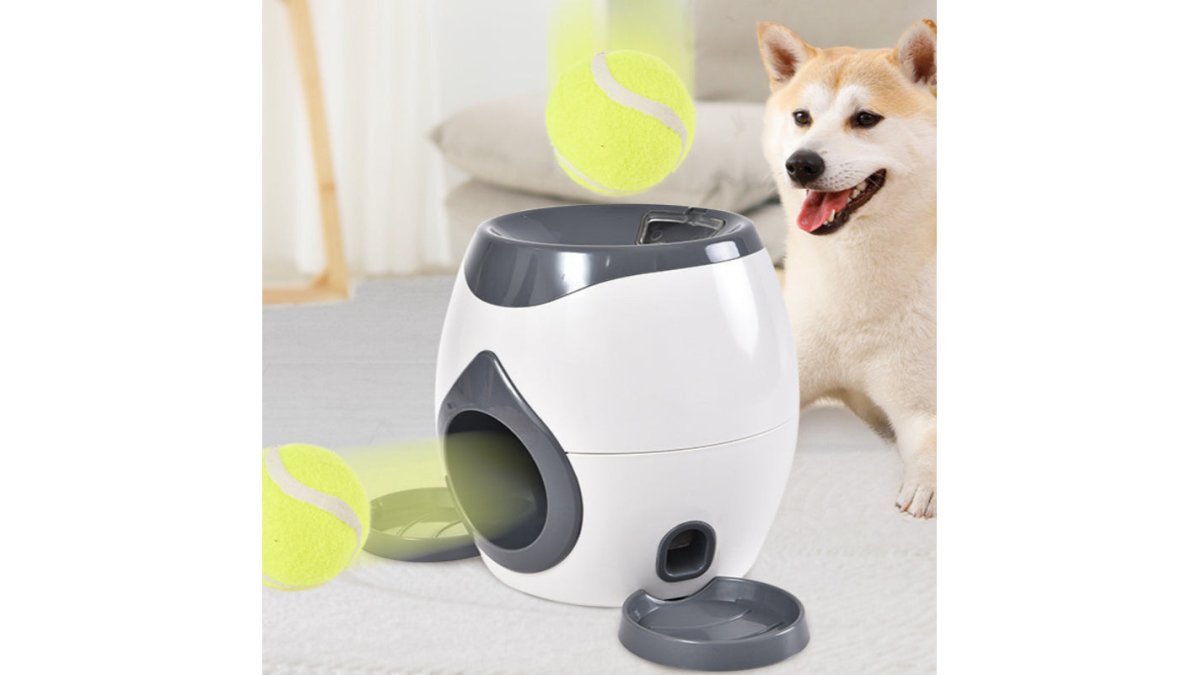
The Dog Treat Dispenser Ball Launcher ($34.23) is a gravity-driven system requiring no electronics. Your dog drops a tennis ball into the hopper, triggering automatic kibble dispensing and gentle rolling.
Best For
Active anxious dogs who need reliable, electronics-free enrichment and owners with homes where noise sensitivity matters. Best for dogs already comfortable with tennis balls and basic fetch concepts.
Dog Tumbler Puzzle Food Ball Toys: Small-Dog Anxiety Solution
The Dog Tumbler Puzzle Food Ball Toys ($20.29) are designed specifically for dogs under 6kg, addressing a gap for small anxious dogs.
Chew Toys For Dog Teeth Cleaning: Budget-Friendly Anxiety Relief
The Chew Toys For Dog Teeth Cleaning ($6.51) offer the most accessible entry point. TPR material provides safe chewing. The hexagonal shape offers multiple gripping surfaces.
Freezing Techniques for Extended Play Sessions
Freezing stuffed toys extends play duration and provides calming cold sensation similar to pressure therapy.
Watch Out
Never use toys with small holes for freezing. Frozen filling expands and can crack the toy. Stick to toys with large cavities or open designs like the Dog Treat Dispenser Ball Toy and Spiked Dog Chew Toy Stick.
Combining Stuffable Toys with Calming Strategies
Stuffable toys work most effectively as part of a comprehensive anxiety-management approach, not as standalone solutions.
Frequently Asked Questions
What are the best stuffable toys for dogs with anxiety?
The best stuffable toys for anxious dogs combine mental enrichment with tactile comfort. Look for toys made from durable rubber that can hold treats or pastes, like the Dog Treat Dispenser Ball Toy ($21.89) or Spiked Dog Chew Toy Stick ($18.22). These toys satisfy natural foraging instincts and redirect destructive chewing. For dogs who need independent play, the Automatic Dog and Cat Treat Dispenser ($17.70) provides self-directed entertainment that keeps them occupied for extended periods. Choose toys sized appropriately for your dog and always supervise initial use.
How do stuffable toys help with separation anxiety?
Stuffable toys reduce separation anxiety by providing cognitive stimulation and self-soothing opportunities. When your dog focuses on extracting treats or navigating puzzle features, their brain releases endorphins that naturally calm the nervous system. This mental engagement redirects anxious energy away from destructive behaviors like chewing furniture or excessive barking. Pairing stuffable toys with a consistent routine, such as offering one before you leave, helps your dog associate your departure with positive experiences, gradually building confidence and reducing panic responses over time.
What safe fillings work best for stuffable dog toys?
Safe fillings for stuffable dog toys include plain cooked chicken, pumpkin puree, plain yogurt, mashed banana, and peanut butter (xylitol-free). Dry kibble works for less demanding chewers. For frozen enrichment, mix wet fillings with low-sodium broth and freeze for extended play. Avoid chocolate, grapes, raisins, onions, and xylitol-containing products, which are toxic to dogs. Always start with small amounts of new fillings to monitor for digestive sensitivity. For puppies and senior dogs, softer fillings like yogurt or pumpkin are easier to extract and digest.
How long should a dog play with a puzzle toy each day?
Most dogs benefit from 15-30 minutes of puzzle toy play per session, once or twice daily, depending on age and energy level. High-energy or anxious dogs may need longer sessions to achieve adequate mental stimulation. Start with shorter periods and observe your dog's engagement, if they lose interest quickly, the toy may be too easy or they may need a break. Puppies and senior dogs should have shorter sessions with more frequent breaks. Monitor for signs of frustration, and rotate toys to maintain novelty. The goal is tired, content dogs with reduced destructive behavior.
How do I know if a stuffable toy is safe for my anxious dog?
Safe stuffable toys are made from non-toxic, durable materials like natural rubber or food-grade plastics. Check that toys have no small detachable parts, sharp edges, or toxic dyes. The toy should be appropriately sized, too small creates choking hazards, too large may frustrate your dog. Look for toys designed for your dog's age and chew strength. Supervise play initially to ensure your dog chews rather than swallows pieces. If your dog has a history of intestinal blockages or aggressive chewing, consult your veterinarian before introducing new toys. Quality brands test for safety and durability.

