

Cart
0
Last Updated: October 23, 2026
Quick Summary
Safe household items for teething puppies include frozen washcloths, chilled carrots and cucumber spears, frozen fruit, plain bagel halves, ice cubes, cardboard tubes, damp frozen dish towels, plain yogurt and pumpkin cubes, and rubber toys loaded with peanut butter. Every item is supervised only, so prepare it for size and temperature and inspect it for threads, chunks, and wear. If you cannot watch your puppy, put the item away and offer a properly sized chew toy instead.
- Teething puppies chew because their gums ache, and the behavior peaks between three and six months.
- Soak a washcloth, wring it damp, twist it into a rope, and freeze it flat for about two hours.
- Chill carrots and cucumber in the refrigerator rather than freezing them solid to protect baby teeth.
- Keep fruit to about a tablespoon per ten pounds of body weight per day.
- Call your veterinarian if your puppy stops eating, has bloody gums, or shows pain when you touch their mouth.
Table of Contents
- Why Teething Puppies Chew Everything (and How to Redirect It)
-
9 Safe Household Items for Teething Puppies
- 1. Frozen Washcloths
- 2. Chilled Carrots and Cucumber Spears
- 3. Frozen Strawberries, Banana Chunks, and Blueberries
- 4. Plain Bagel Halves and Food-Stuffed Toys
- 5. Ice Cubes and Frozen Bone Broth Pops
- 6. Cardboard Tubes and Paper Rolls
- 7. A Damp Rope or Dish Towel, Frozen
- 8. Plain Frozen Yogurt and Pumpkin Cubes
- 9. A Rubber Chew Toy Loaded With Peanut Butter
- Safe Toys for Puppies: Matching Toy Size to Chew Strength
- Homemade Puppy Teething Toys You Can Make in Ten Minutes
- Puppy Teething Pain Relief: What Actually Sothess Sore Gums
- What Toys Should Puppies Not Have? Items to Avoid and Toxicity Warnings
- When to Call a Veterinarian About Your Teething Puppy
- Frequently Asked Questions
Why Teething Puppies Chew Everything (and How to Redirect It)
Teething puppies chew everything because their gums ache, and chewing applies counter-pressure that eases the discomfort. The behavior peaks between three and six months, when baby teeth loosen and adult teeth push through.
Redirecting that urge is the whole game. Offer a safe, cold, or textured object before your puppy finds your furniture, and you teach a habit that lasts.
The Teething Timeline: What to Expect at Each Stage
Most puppies start teething around six to eight weeks, when the first baby teeth come in. Full adult teeth usually arrive by six to seven months. The worst chewing typically lands between four and six months, when mouth soreness is highest.
Here is the rough schedule we share with new owners:
| Age | What's Happening | What Helps |
|---|---|---|
| 6-8 weeks | First baby teeth emerge | Soft, small chew items |
| 12-16 weeks | Baby teeth loosen | Chilled washcloths, frozen carrots |
| 4-6 months | Adult teeth push through | Frozen toys, food puzzles |
| 6-7 months | Adult teeth settle | Durable rubber toys |
A common mistake is waiting for the chewing to stop on its own. It will not until the adult teeth are fully in, so plan for weeks of active management.
If your puppy is already destroying the house, our guide on why your puppy chews everything goes deeper into the fixes.
9 Safe Household Items for Teething Puppies
These nine items are safe household options for teething puppies when you follow the prep and supervision notes for each one. None replace a proper chew toy, but they add variety and relief on a budget. Each entry covers how to prepare the item, how much to offer, what can go wrong, and how closely to watch.
1. Frozen Washcloths
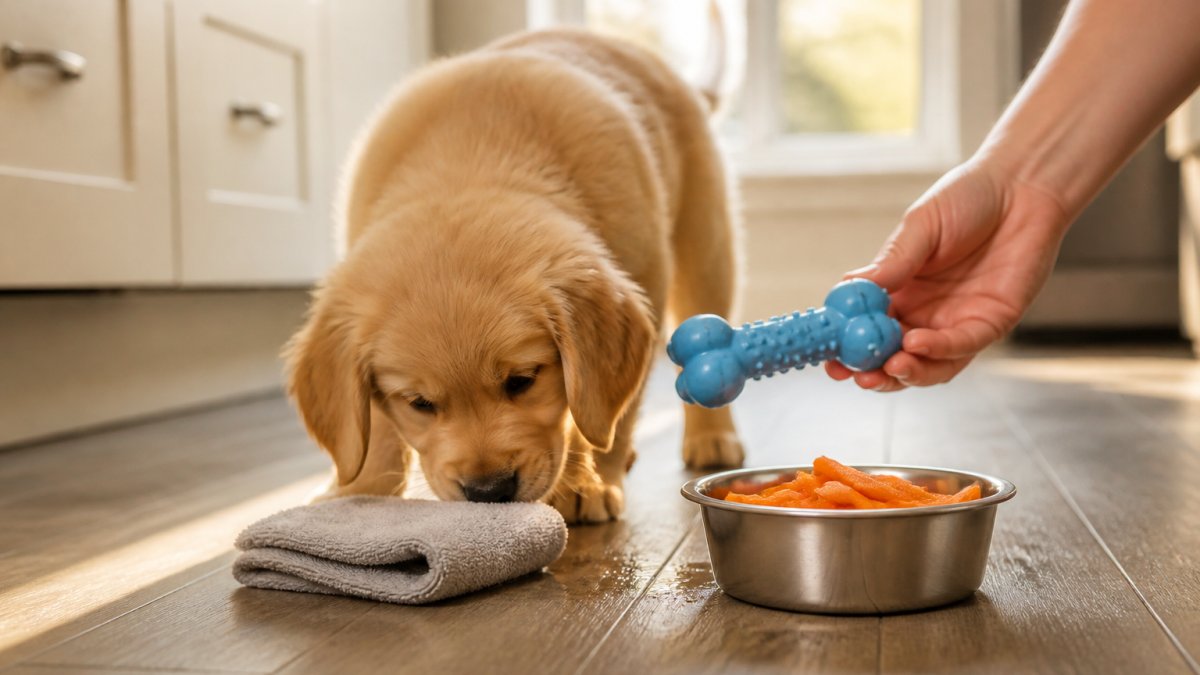
Soak a clean washcloth, wring it damp, twist it into a rope, and freeze it flat for about two hours. The cold numbs sore gums, and the texture satisfies the urge to gnaw. Let it thaw slightly before offering so it is cold, not rock-hard. Always supervise, and swap it out once it thaws or frays. Inspect for loose threads and holes before and after each use; a swallowed thread can cause a linear foreign body, a surgical problem.
2. Chilled Carrots and Cucumber Spears
Whole carrots and thick cucumber spears are firm enough to gnaw and cool enough to soothe. Chill them in the refrigerator rather than freezing solid; a fully frozen carrot is hard enough that some puppies chip a baby tooth on it. Cut cucumber into spears about the length of your puppy's muzzle, thick enough that they cannot swallow them whole, and peel them first.
3. Frozen Strawberries, Banana Chunks, and Blueberries
Frozen fruit works well as a small, cooling treat. Freeze strawberries whole, slice bananas into thick rounds, and scatter blueberries into a bowl. Keep portions to a few pieces at a time, since fruit is sugar-rich and should stay a snack. A good rule of thumb is no more than about a tablespoon of fruit per ten pounds of body weight per day, counted against your puppy's daily treat allowance.
4. Plain Bagel Halves and Food-Stuffed Toys
A plain, unseasoned bagel half gives a teething puppy a firm, edible surface. Choose a plain bagel with no seeds, salt, or toppings, and tear off a piece large enough that your puppy cannot swallow it whole. Bagels are dense and calorie-heavy, so this is occasional, not daily. For a longer-lasting option, stuff a rubber toy with kibble or a smear of soft food; Freeze a stuffed toy for extra cooling, but let it soften a few minutes first so the puppy does not bite down on a solid block.
5. Ice Cubes and Frozen Bone Broth Pops
Plain ice cubes are the simplest cooling option; freeze low-sodium bone broth in a tray for a tastier version. Serve on a towel or outside, and never leave a puppy alone with a bowl of ice. Small puppies can choke on a whole cube, so crush or partially melt cubes for toy breeds. Bone broth should be onion- and garlic-free, since both are toxic to dogs, and low in sodium; check the label.
6. Cardboard Tubes and Paper Rolls
Empty paper towel and toilet paper tubes are a free, satisfying chew. Remove any plastic or adhesive first, and take the tube away once it gets soggy. Cardboard is not toxic, but a puppy who eats a lot can end up with an upset stomach. Flatten the tube before offering it so your puppy cannot get a muzzle stuck inside, and never leave a puppy alone with one.
7. A Damp Rope or Dish Towel, Frozen
A clean cotton dish towel, dampened and frozen, gives a puppy a long, grippable chew. Tie it in a loose knot for extra texture, and check for loose threads and holes before and after each use. The knot should be loose enough that a puppy cannot tighten it around a tooth; if it pulls tight, untie it and start over.
8. Plain Frozen Yogurt and Pumpkin Cubes
Plain, unsweetened yogurt and plain canned pumpkin freeze into soft, soothing cubes. Make sure the yogurt has no xylitol and the pumpkin has no added spice or sugar; xylitol is toxic to dogs, so read every label. Use plain yogurt, not vanilla or fruit varieties, and canned pumpkin rather than pumpkin pie filling. Freeze in a silicone tray and pop out one cube at a time; a small puppy needs only a cube or two per day.
9. A Rubber Chew Toy Loaded With Peanut Butter
A rubber chew toy stuffed with peanut butter keeps a teething puppy busy and redirects the urge to gnaw. Make sure the peanut butter contains no xylitol. Our Chew Toys For Dog Teeth Cleaning holds a smear of peanut butter in its hollow center and doubles as a dental toy. Use a thin smear rather than a thick plug so the puppy does not gulp a large amount at once, and choose a toy sized so your puppy cannot swallow it.
Chew Toys For Dog Teeth Cleaning →

Watch Out
Xylitol is toxic to dogs and appears in some peanut butters, yogurts, and sugar-free treats. Check the ingredient list on every product before it goes near your puppy.
Key Takeaway
Every item on this list is a supervised item. The common thread is preparation (size, temperature, portion) and inspection (threads, chunks, wear). If you cannot watch your puppy, put the item away and offer a properly sized chew toy instead.
Safe Toys for Puppies: Matching Toy Size to Chew Strength
The safest toy is sized to your puppy's mouth and matched to how hard they chew. A toy that is too small becomes a choking hazard, and one that is too soft gets destroyed in minutes.
Use this rule of thumb: the toy should be large enough that your puppy cannot fit it fully in their mouth, and firm enough that it does not tear under a hard bite. For detailed guidance on choosing safe toy sizes, see our full article. Our guide to choosing durable puppy toys helps you pick options that last.
Pro Tip
Test a toy by pressing a fingernail into it. If your nail sinks in easily, it is too soft for a determined chewer and will not survive the week.
Homemade Puppy Teething Toys You Can Make in Ten Minutes
You can make several homemade puppy teething toys from kitchen items. The best ones are cold, textured, and easy to replace.
Try these three:
- The frozen washcloth rope: soak, twist, freeze. Ten minutes of prep, hours of relief.
- The stuffed ice pop: pack a rubber toy with wet kibble and freeze it solid.
- The carrot bundle: tie three thick carrot spears together with clean cotton string for a longer chew.
Rotate them so your puppy does not get bored, and inspect each one for wear before every use.
Puppy Teething Pain Relief: What Actually Sothess Sore Gums
Cold is the most reliable puppy teething pain relief. A chilled or frozen item numbs the gums, reduces swelling, and gives your puppy something to do besides chew the furniture.
Avoid human pain relievers entirely. Never give a puppy aspirin, ibuprofen, or acetaminophen, since these can be dangerous for dogs. If your puppy seems genuinely uncomfortable, ask your vet about safe options rather than guessing.
What Toys Should Puppies Not Have? Items to Avoid and Toxicity Warnings
Some toys and household items should never go to a teething puppy. Knowing this short list prevents most emergency visits, and the reason each item is dangerous helps you spot a look-alike hazard you have not read about.
Avoid these:
- Cooked bones, which splinter into sharp shards and can pierce the mouth, throat, or intestine. Raw bones are also risky for puppies because they can break teeth and carry bacteria; skip both.
- Sticks and rocks, which break teeth and cause choking. A puppy that habitually carries rocks can also wear down enamel.
- Vinyl and thin plastic toys, which tear into sharp pieces. If a toy dents with a fingernail, it is too soft for a chewer.
Watch Out
If you suspect your puppy ate a toxic food or a piece of a toy, call your veterinarian or a pet poison hotline right away. Do not wait for symptoms, and do not induce vomiting unless a veterinarian tells you to.
Key Takeaway
Supervision and toy inspection prevent injuries. When in doubt, choose a toy sized to your puppy's mouth, rated for their chew strength, and free of small parts.
When to Call a Veterinarian About Your Teething Puppy
Call your veterinarian if your puppy stops eating, has bloody gums, or shows pain when you touch their mouth. Also call if you suspect your puppy swallowed a toy piece, since vomiting, drooling, and refusal to eat can signal a blockage.
Normal teething causes drooling and mild gum soreness. It does not cause fever, vomiting, or lethargy. If biting and gum pain are your main concern, our guide on how to stop puppy biting and nipping walks you through it.
Frequently Asked Questions
What household items are safe for teething puppies to chew?
A damp washcloth twisted and frozen, chilled carrot and cucumber spears, frozen strawberry or banana pieces, plain bagel halves, ice cubes, and cardboard tubes all work for teething puppies. Each one is soft enough to give under pressure but firm enough to satisfy the urge to gnaw. Skip anything that splinters, shreds into long strands, or fits entirely in the mouth. Whatever you hand over, stay in the room and take it away once it gets small enough to swallow.
Can puppies chew frozen washcloths?
Yes, and it is one of the cheapest options available. Soak a clean washcloth in water, wring it out so it is damp rather than dripping, twist it into a rope shape, and freeze it flat for a few hours. The cold numbs sore gums while the fabric gives the puppy something to grip. Use it for ten to fifteen minutes at a time, supervise the whole session, and swap it out once the edges start fraying. Never leave a frozen cloth in the crate unattended.
Are ice cubes safe for teething puppies?
Ice cubes are safe for most puppies and give quick relief to hot, swollen gums. Small breeds and very young puppies do better with crushed ice or ice made in a silicone mold, since a whole cube can be a choking risk for a tiny mouth. Freeze plain water or low-sodium bone broth in small molds for a treat that lasts longer. Offer one at a time on a towel and watch that your puppy is crunching rather than trying to swallow it whole.
What toys should puppies not have?
Avoid anything hard enough to crack a tooth, including cooked bones, antlers, hooves, and nylon bones. Skip toys with squeakers or plastic eyes that can be pulled out, rope toys that unravel into long strands, and stuffed toys with loose stuffing. Never give a puppy a toy small enough to fit fully in its mouth, and keep socks, shoes, and electrical cords out of reach. Anything that shreds rather than flexes is a choking hazard waiting to happen.
When should I call a veterinarian about my puppy's teething?
Call your vet if you see bleeding that does not stop, a retained baby tooth still in place after the adult tooth comes through, swollen or foul-smelling gums, or a puppy that stops eating for more than a day. Get emergency care if your puppy swallows a piece of toy or household item, gags, drools heavily, or shows signs of stomach pain. Persistent diarrhea or vomiting after a new treat also warrants a call, since puppy stomachs react quickly to rich or unfamiliar food.
Teething is a short phase, but the habits you build now last. Give your puppy safe, cold, and appropriately sized chews, supervise every session, and replace worn items before they become a hazard. Pawsibly Everything stocks durable rubber chew toys, treat-dispenser balls, and dental toys made for puppies and power chewers alike, so you can redirect the chewing without guesswork. Get started with Pawsibly Everything and give your teething puppy relief that holds up.


