

Cart
0
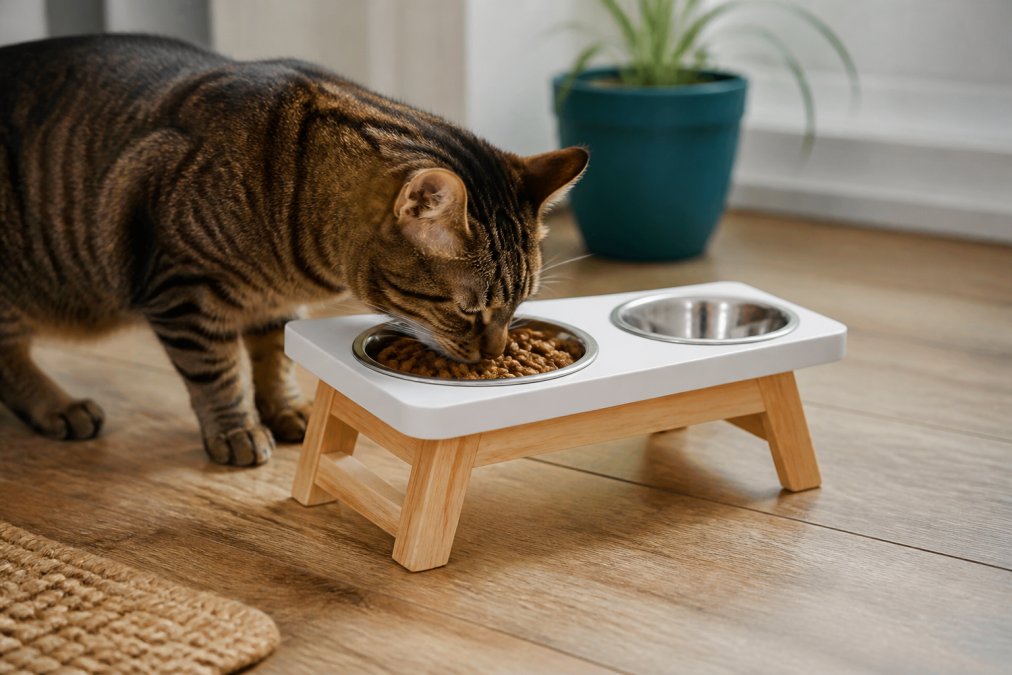
Table of Contents
- Why Ergonomic Pet Bowls for Cats Matter
- Understanding Whisker Fatigue in Cats
- Elevated Cat Bowl Benefits Explained
- How to Prevent Cat Vomiting After Eating
- Choosing the Right Bowl Material
- Selecting the Correct Height for Your Cat
- Tilted Bowl Designs vs. Flat Bowls
- DIY Ergonomic Modifications for Your Cat's Feeder
Last Updated: August 22, 2026
Why Ergonomic Pet Bowls for Cats Matter
Feeding your cat from a standard flat bowl on the floor forces their spine into an unnatural curve. Over months and years, this repetitive strain accumulates, affecting esophageal alignment, digestion efficiency, and joint stress, especially in senior cats. Elevated feeders correct this biomechanical problem. By choosing the right ergonomic pet bowls for cats, you're preventing a cascade of health problems.
Understanding Whisker Fatigue in Cats
Whisker fatigue is the overstimulation that occurs when a cat's sensitive facial whiskers constantly brush against bowl sides while eating or drinking. These whiskers are sophisticated sensory organs that detect minute environmental changes. Constant bowl contact causes genuine discomfort and stress.
The condition manifests in specific ways: cats eat slower and leave food uneaten, paw at their food before eating, or refuse certain bowls altogether. Chronic whisker fatigue can lead to behavioral changes and anxiety around mealtimes. Bowl width and diameter matter enormously, a narrow bowl forces whiskers into constant contact with the rim, while a wider, shallow dish allows eating without whisker contact. Elevated feeders compound this benefit by positioning the bowl at the correct height. When you eliminate whisker fatigue, cats eat faster, finish their meals, and approach food with less hesitation.
Elevated Cat Bowl Benefits Explained
Elevated feeders address multiple biomechanical problems simultaneously. The primary benefit is postural correction: when a bowl sits on the floor, your cat must crane their neck downward at an unnatural angle, compressing their cervical spine. An elevated bowl brings food closer to your cat's natural eating height, allowing their spine to remain neutral and their neck to stay in alignment.
Neck Strain and Feeding Posture
Chronic neck strain from floor-level feeding accumulates silently. Your cat doesn't vocalize discomfort but adapts by tightening muscles and hunching their posture. Some develop tension headaches or neck stiffness. An elevated feeder eliminates this strain immediately. When the bowl sits at approximately chest height (typically 4-6 inches off the ground for most cats), your cat's cervical spine stays neutral and their shoulders relax. Many pet parents report that their cats seem more relaxed and comfortable after switching, not just during meals but throughout the day.
Orthopedic Support for Senior Cats
Senior cats benefit most dramatically from elevated feeders. As cats age, their joints stiffen, muscles weaken, and tolerance for awkward postures decreases. A senior cat bending to a floor bowl experiences joint stress in their neck, shoulders, and front legs. For cats with arthritis, this daily strain becomes genuinely painful. Elevated bowls remove this pain point, allowing senior cats to eat in a more neutral position. Many show visible improvement in mobility and comfort within days of switching. They eat more consistently because eating no longer causes pain and seem more energetic because they're not compensating for feeding-related discomfort.
How to Prevent Cat Vomiting After Eating
Vomiting after meals is common but not normal. The most frequent cause is improper feeding posture combined with rapid eating. When a cat eats from a floor bowl, their esophagus isn't properly aligned, food moves down at an angle rather than straight down (peer-reviewed research). Combined with rapid eating speed, this misalignment causes food to back up into the esophagus, triggering regurgitation minutes after the meal.
An elevated, tilted bowl addresses this directly by positioning food to travel down the esophagus in a straight line, gravity-assisted. This alone eliminates vomiting in many cats. The secondary benefit is slowing eating speed. Bowl material also matters: ceramic and stainless steel maintain their shape and don't absorb odors that might encourage rapid, anxious eating. Plastic bowls can warp and absorb odors, leading to anxious eating patterns.
If your cat continues vomiting after switching to an elevated, tilted bowl, consult your veterinarian to rule out underlying digestive or metabolic issues. For many cats, correcting feeding posture solves the problem entirely.
Choosing the Right Bowl Material
Not all bowl materials are created equal. Three materials dominate the market: stainless steel, ceramic, and plastic.
Stainless Steel vs. Ceramic vs. Plastic
Stainless steel is the most durable option. It doesn't chip, crack, or absorb odors, is easy to clean, and lasts for years. Stainless steel bowls are heavier and less likely to slide around. The primary drawback is cost. Some cats also dislike the metallic taste or sound, though this is relatively rare.
Ceramic offers a middle ground. High-quality ceramic bowls are durable, non-porous, and dishwasher safe. The downside is that ceramic can chip or crack if dropped, and lower-quality ceramic may contain harmful glazes. If you choose ceramic, verify it's food-safe and lead-free.
Plastic is the most affordable but least ideal. Plastic bowls absorb odors and flavors, scratch easily (creating bacteria harbors), and can leach chemicals into food and water. Many plastic bowls also warp with time and heat. If you use plastic, choose BPA-free options and replace them frequently.
For elevated feeders, stainless steel is the clear winner if budget allows. The durability and hygiene benefits justify the cost.
Non-Toxic and BPA-Free Options
If you choose ceramic, ensure the glaze is food-safe and lead-free. Plastic bowls should always be explicitly labeled BPA-free. Avoid any bowl material treated with non-stick coatings like PTFE or Teflon, which can degrade over time and release harmful compounds.
Selecting the Correct Height for Your Cat
The right height depends on your cat's size, age, and posture. A general guideline is that the bowl should sit at approximately chest height when your cat stands naturally. For most adult cats, this means 4-6 inches off the ground (aafco.org). Senior cats or cats with mobility issues may benefit from slightly higher feeders (6-8 inches).
Measuring Your Cat and Adjustable Height Solutions
To measure correctly, have your cat stand naturally and measure from the floor to their chest. The bowl should sit at approximately this height. Observe your cat's posture after switching to an elevated feeder, if they're hunching, the bowl is too low; if stretching upward, it's too high.
Adjustable height feeders solve this problem elegantly. You can fine-tune height to match your cat's exact needs and adjust as your cat ages. Adjustable feeders are particularly valuable for households with multiple cats of different sizes. The best adjustable feeders allow smooth height changes without tools.
Breed-Specific Considerations
Breed size matters significantly. Maine Coons often benefit from feeders in the 6-8 inch range, while smaller breeds may prefer 3-4 inches. Breed-specific body structure also plays a role, breeds with longer legs benefit from higher feeders, while more compact breeds prefer lower heights. If you have a purebred cat, research the breed's typical proportions. The goal is neutral spine alignment.
Tilted Bowl Designs vs. Flat Bowls
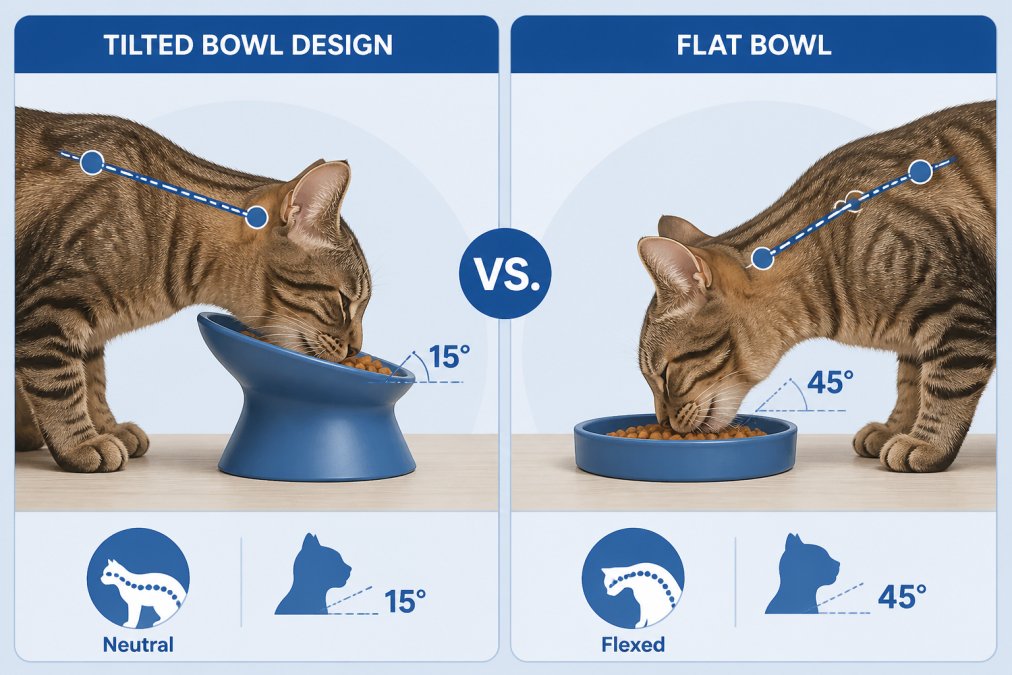
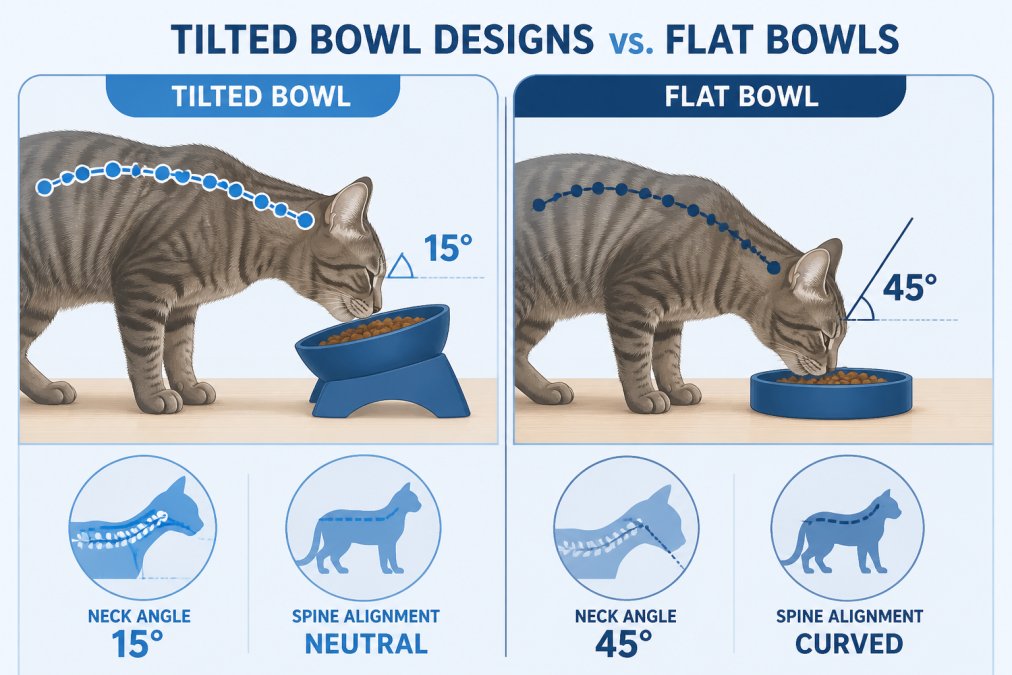
The angle of the bowl matters as much as the height. A tilted bowl (typically angled 15-30 degrees) provides multiple benefits that a flat bowl cannot match (peer-reviewed research). A tilted design naturally positions food toward the back of the bowl, making it easier for your cat to access without whiskers touching the rim. The angle also encourages proper esophageal alignment, reducing vomiting and regurgitation. Tilted bowls also slow eating speed slightly, which aids digestion and reduces bloating risk.
Flat bowls force your cat to position their head awkwardly to access food, creating whisker fatigue and poor esophageal alignment. For cats with any history of vomiting or digestive issues, a tilted bowl is non-negotiable. For healthy cats, a tilted design still provides measurable benefits in comfort and feeding efficiency.
DIY Ergonomic Modifications for Your Cat's Feeder
If you already have bowls you like but they're not elevated, you can create an ergonomic feeder with simple modifications. The simplest modification is using a platform or riser, a wooden box, sturdy step stool, or thick book can serve as a base. Adjust the height until your cat's posture looks neutral. Ensure whatever you use is stable and won't shift or tip when your cat eats.
For a tilted modification, place a thin wedge under one side of the bowl. A folded towel, thin cutting board angled slightly, or purpose-built tilting insert can create the angle you need. Start with a 15-degree angle and adjust based on your cat's response.
A more sophisticated DIY approach is building a simple wooden platform with a recessed area for the bowl, angled to create the tilt effect. This takes more effort but creates a permanent, attractive solution. The key is ensuring stability, a wobbly feeder defeats the purpose and creates anxiety. Whatever modification you make, test it thoroughly before making it permanent.
| Modification Type | Materials Needed | Difficulty | Stability | Cost |
|---|---|---|---|---|
| Platform riser | Sturdy box or step stool | Very easy | Good if heavy | Low |
| Tilted wedge | Folded towel or thin board | Easy | Fair | Very low |
| Custom wooden platform | Wood, screws, tools | Moderate | Excellent | Medium |
| Adjustable DIY feeder | Wood, hinges, fasteners | Moderate to high | Excellent | Medium |
Choosing the right ergonomic pet bowls for cats is one of the highest-impact decisions you can make for your cat's long-term health and comfort. The investment in a quality elevated, tilted feeder pays dividends in reduced vomiting, better digestion, improved posture, and a visibly more comfortable cat. Pawsibly Everything offers a carefully curated selection of ergonomic feeders designed with feline biomechanics in mind. Start with the right height for your cat's size, choose a durable material like stainless steel, and watch as your cat's eating behavior and overall well-being improve.
Frequently Asked Questions
Q: Do cats actually need elevated bowls?
A: Yes. Elevated bowls reduce neck strain and promote better esophageal alignment during feeding. Cats eating from floor-level bowls must bend their necks at awkward angles, which can lead to discomfort and digestive issues over time. Elevated feeders align your cat's spine more naturally.
Q: What is whisker fatigue in cats and how do elevated bowls help?
A: Whisker fatigue occurs when a cat's sensitive whiskers repeatedly brush against bowl sides during eating, causing irritation and stress. Whisker fatigue in cats can lead to reluctance to eat or behavioral changes. Wider, elevated bowls with sloped or tilted designs allow your cat to eat comfortably without whisker contact, reducing sensory overload and encouraging healthy feeding habits.
Q: How does bowl height affect cat digestion?
A: Bowl height directly impacts feeding posture and esophageal alignment. When cats eat from elevated bowls at the correct height, food travels down the esophagus more naturally, reducing the risk of regurgitation and vomiting. Proper alignment also promotes more efficient stomach function and nutrient absorption, making elevated feeders especially beneficial for senior cats and those prone to digestive upset.
Q: What materials are safest for ergonomic cat bowls?
A: Stainless steel and ceramic are the best choices for cat bowls. Both are non-toxic, durable, and easy to clean. Stainless steel resists bacteria growth and is dishwasher safe, while ceramic is chip-resistant and won't leach chemicals. Avoid plastic bowls, which can harbor bacteria in scratches and may contain BPA. Always choose BPA-free, food-grade materials to protect your cat's health.
This article was written using GrandRanker

