

Cart
0
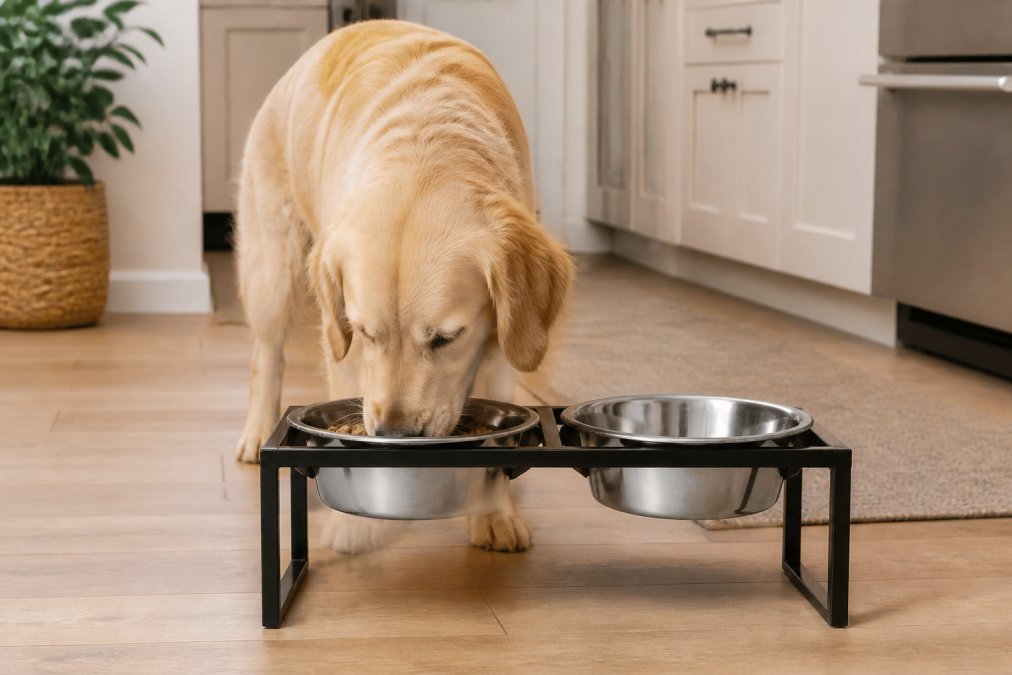
Table of Contents
- Why Elevated Dog Bowls Matter for Your Pet's Health
- Benefits of Elevated Dog Bowls: What Research Shows
- How to Measure Your Dog for an Elevated Feeder
- Raised Dog Bowl Height Chart: Finding the Right Fit
- Materials That Matter: Stainless Steel vs. Ceramic
- Top Elevated Dog Bowl Options at Pawsibly Everything
- Adjustable vs. Fixed Height: Which Works Best
- Conclusion
Last Updated: August 16, 2026
Why Elevated Dog Bowls Matter for Your Pet's Health
When dogs eat from floor-level bowls, they're forced into an unnatural neck position that strains their cervical spine and contributes to joint stress over time. Elevated dog bowls bring food and water to a height that aligns with your dog's natural shoulder position, addressing this fundamental biomechanical issue.
Dogs eating from raised bowls maintain better spinal alignment, reducing unnecessary strain on their neck and upper back. For large breed dogs especially, this matters because they're already predisposed to orthopedic issues like hip dysplasia and arthritis. Senior dogs with mobility challenges benefit enormously, they don't have to bend as far, which means less joint compression and easier transitions in and out of eating position.
Elevated feeders also slow down eating speed naturally. When dogs eat too quickly, they swallow air along with food, which can lead to gastric dilatation-volvulus (GDV), a serious and potentially life-threatening condition where the stomach twists. Raised bowls create a more controlled eating rhythm, giving your dog's digestive system time to process food properly.
At Pawsibly Everything, we offer solutions designed to transform the daily experience for both dogs and their owners. Dogs can experience less strain, and the entire feeding routine can become more dignified and comfortable.
Benefits of Elevated Dog Bowls: What Research Shows
Elevated dog bowls deliver measurable improvements across several dimensions of canine health and comfort. By positioning bowls at shoulder height, you eliminate the downward neck bend that floor-level feeding requires. This is particularly important for large breed dogs, whose greater body weight places more stress on joints during eating.
Digestion improves when dogs eat from elevated bowls. The raised position allows gravity to assist food movement through the esophagus into the stomach, reducing muscular effort required for swallowing. Dogs that previously gulped food frantically often naturally slow their eating pace when using a raised feeder, which directly supports better nutrient absorption and reduces bloating.
Senior dogs and dogs with arthritis experience noticeable relief. Elevated bowls eliminate the repetitive bending motion that aggravates joint pain. For aging dogs with compromised mobility, this can be the difference between eating comfortably and avoiding meals due to discomfort. The non-slip base of quality elevated feeders also prevents the bowl from sliding during eating, reducing muscle tension as your dog stabilizes their position.
Behavioral improvements often follow. Dogs that previously displayed anxiety around feeding, pacing, gulping, or refusing meals frequently become calmer when eating from an elevated feeder. The ergonomic position reduces stress signals in their body, and the slower eating pace allows their nervous system to register fullness cues more accurately.
Elevated feeders also contain spills within a defined footprint, preventing water from spreading across your kitchen floor and reducing cleanup burden.
How to Measure Your Dog for an Elevated Feeder
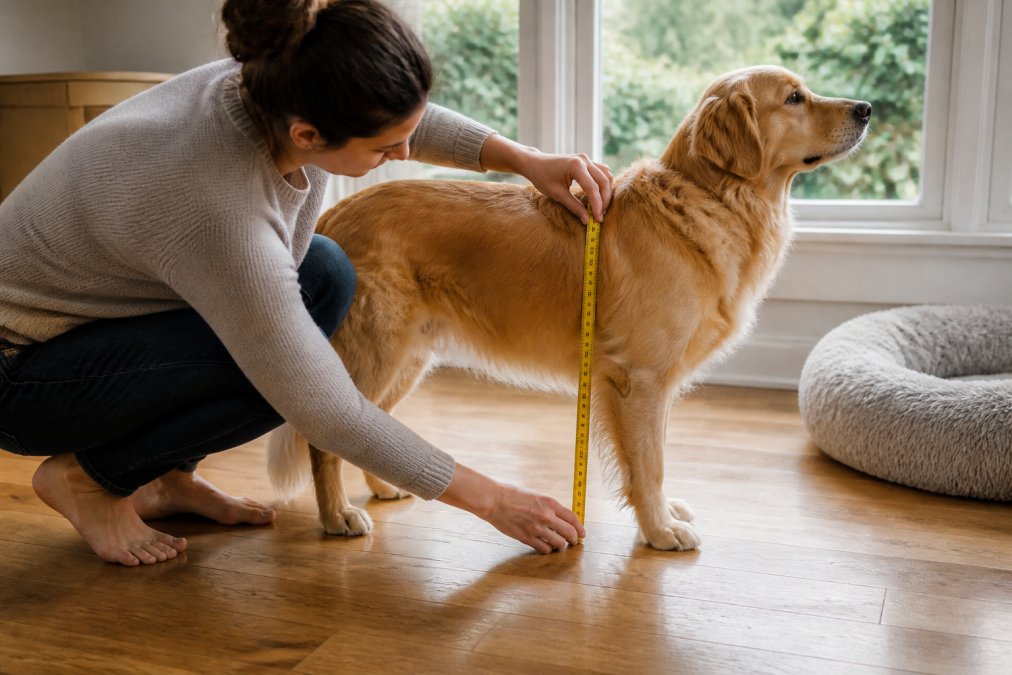
Stand your dog in their normal upright posture on a hard floor. Using a measuring tape, measure from the ground to the top of your dog's front shoulder blade. This measurement determines the ideal bowl height.
Position the bowl rim at approximately 6 to 8 inches below your dog's shoulder height. This creates the optimal eating angle where your dog's neck remains nearly neutral, not excessively bent downward and not stretched upward. A bowl that's too high forces your dog to reach up, straining the neck in the opposite direction.
Record this measurement and keep it handy when shopping for elevated feeders. Many quality feeders, including the adjustable options at Pawsibly Everything, offer multiple height settings to accommodate dogs of different sizes.
If you have a growing puppy, measure at different times since their optimal feeder height changes month to month. An adjustable elevated bowl grows with your dog, eliminating the need to repurchase equipment as they reach their adult size.
Raised Dog Bowl Height Chart: Finding the Right Fit
Small breeds (under 20 pounds, shoulder height under 12 inches) typically thrive with bowl heights between 2.5 and 4 inches. Medium breeds (20-50 pounds, shoulder height 12-18 inches) generally benefit from bowl heights between 4 and 8 inches, with 6 inches being the sweet spot for most. Large breeds (50-100 pounds, shoulder height 18-26 inches) need bowl heights between 7 and 12 inches. Giant breeds (over 100 pounds) often require heights of 10 to 14 inches or more.
The Dog Double Bowls from Pawsibly Everything address this variability with three adjustable heights: 2.5 inches, 7.8 inches, and 10.2 inches. This three-setting system covers small, medium, and large dogs without requiring multiple purchases.

Pro Tip
Don't rely solely on breed averages, individual dogs vary significantly within breed categories. Your actual measurement of your dog's shoulder height trumps breed guidelines every time.
Age-related adjustments matter too. Senior dogs sometimes benefit from slightly higher bowls than their younger counterparts, since arthritis and reduced flexibility make lower feeding positions more uncomfortable. Adjustable feeders let you adapt without replacement.
Materials That Matter: Stainless Steel vs. Ceramic
Stainless steel inserts represent the gold standard for elevated dog bowls. They're durable, non-porous, and resistant to bacterial growth, critical for food safety. Stainless steel won't retain odors or food particles, and it's dishwasher safe for thorough cleaning. The smooth surface is gentle on your dog's nose and mouth, and stainless steel doesn't chip or crack under normal use.
The Pet Lifting Feeding Bowl from Pawsibly Everything features stainless steel construction specifically because it combines durability with hygiene. Stainless steel bowls maintain their integrity through years of daily use.

Ceramic bowls offer aesthetic appeal but come with trade-offs. Ceramic can chip or crack if dropped, and its porous nature makes it harder to clean thoroughly. Plastic bowls are the most budget-friendly option but the least durable, plastic scratches easily, creating harbors for bacteria, and can leach chemicals over time.
The Pet Feeding Food With Stand from Pawsibly Everything uses food-grade material with a 15-degree tilt design that protects your dog's cervical spine while maintaining durability. The tilted bowl reduces the need for your dog to twist their neck side-to-side, adding another layer of ergonomic support.
Watch Out
Avoid ceramic bowls with decorative glazes or paints, especially from unknown manufacturers. Some glazes contain lead or cadmium, which can leach into food over time. If you choose ceramic, verify that it's food-grade and specifically tested for safety with pet use.
Non-slip base material matters as much as the bowl itself. A quality elevated feeder uses rubber or silicone feet that grip the floor and prevent sliding during eating.
Top Elevated Dog Bowl Options at Pawsibly Everything
The Dog Double Bowls stand out for their adjustability and comprehensive design. At $66.31, this option features three distinct height settings (2.5 inches, 7.8 inches, and 10.2 inches) that accommodate dogs from toy breeds through large breeds. The dual stainless steel bowls allow separate portions for food and water. The removable bowls are dishwasher safe, and the non-slip base keeps the feeder stable. This model is best for multi-dog households or owners who want flexibility as their dog ages.
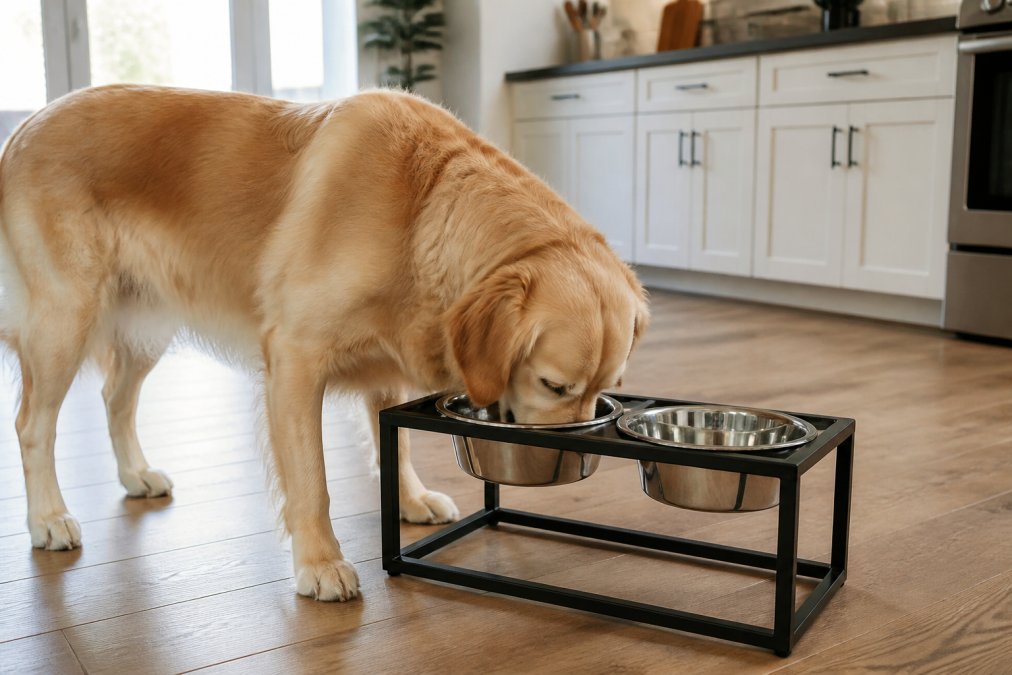
The Pet Feeding Food With Stand offers a different approach at $14.58. This option prioritizes the ergonomic tilt design, the front is lower than the back, creating a natural eating angle that protects the cervical spine. The food-grade material resists bacterial growth and won't develop black chin staining. The triangular support base provides exceptional stability, and the large capacity means fewer refills throughout the day. This model works well for owners who want simplicity and don't need adjustability.
The Pet Lifting Feeding Bowl at $46.06 combines neck protection with slow-feeding benefits. The stainless steel construction handles daily use without degradation, and the design specifically addresses the needs of medium to large dogs. The anti-tumble feature prevents accidental spills, and the lifting mechanism makes it easier for owners with mobility challenges to fill and clean the bowls. This option is ideal for senior dogs, dogs with joint issues, or power eaters.
| Option | Price | Best For | Key Feature |
|---|---|---|---|
| Dog Double Bowls | $66.31 | Multi-dog homes, growing puppies | Three adjustable heights, dual bowls |
| Pet Feeding Food With Stand | $14.58 | Budget-conscious owners | 15-degree tilt design, large capacity |
| Pet Lifting Feeding Bowl | $46.06 | Senior dogs, power eaters | Slow-feeder design, anti-tumble |
Adjustable vs. Fixed Height: Which Works Best
Adjustable elevated feeders offer flexibility that fixed-height options can't match. If you have a growing puppy, an adjustable feeder grows with your dog, eliminating the need to purchase new equipment. If you have multiple dogs of different sizes, a single adjustable feeder serves all of them by simply changing the height setting.
The trade-off with adjustable feeders is complexity. More moving parts mean more potential points of failure, though quality adjustable feeders minimize this risk through solid construction. Adjustable feeders also tend to cost more upfront.
Fixed-height feeders excel when you know exactly what height your dog needs and that height won't change. They're typically more stable because they lack adjustment mechanisms, and they're usually less expensive and easier to clean.
The Dog Double Bowls from Pawsibly Everything bridge this divide by offering three distinct height settings that cover the full range of dog sizes. This provides enough flexibility for most households without the complexity of continuously adjustable mechanisms.
Key Takeaway
Adjustable feeders provide insurance against future changes. The slightly higher cost is usually worth it if there's any chance your dog's needs will evolve through growth, aging, or health changes.
Conclusion
Elevated dog bowls address a fundamental biomechanical need that floor-level feeding simply can't meet. The orthopedic support, improved digestion, and reduced strain on joints make them a worthwhile investment for any dog owner, but especially for those with large breeds, senior dogs, or dogs with existing joint issues.
At Pawsibly Everything, we understand that pet parents want solutions that genuinely improve their dog's quality of life. Our elevated bowl options are designed with both your dog's health and your daily convenience in mind. Get started with Pawsibly Everything and give your dog the comfortable, strain-free feeding experience they deserve.
Frequently Asked Questions
Do vets recommend elevated dog bowls?
Veterinarians often recommend elevated dog bowls, particularly for large breeds and senior dogs. Elevated feeders reduce strain on the neck, shoulders, and front legs during eating. They can help improve digestion and reduce the risk of gastric dilatation-volvulus (bloat) in susceptible dogs. However, the best choice depends on your individual dog's age, size, and health status, so consult your vet about whether an elevated feeder suits your pet.
What height should an elevated dog bowl be?
The ideal height for an elevated dog bowl reaches your dog's chest or elbow when they stand in a natural position. As a general rule, measure from the floor to your dog's shoulder blade and subtract 4-6 inches. The Dog Double Bowls from Pawsibly Everything offers three adjustable heights (2.5 inches, 7.8 inches, and 10.2 inches) to accommodate dogs of different sizes, making it easy to find the perfect fit as your dog grows.
Are elevated dog bowls good for your dog?
Yes, elevated dog bowls offer multiple benefits. They promote better neck posture during feeding, reduce joint strain on the cervical spine and front limbs, and can aid digestion. They're especially beneficial for large breeds prone to bloat, senior dogs with arthritis, and dogs with mobility issues. Elevated feeders also prevent spills and keep the eating area cleaner. However, puppies and some small breeds may not need them initially.
How do I choose the right size elevated feeder for my dog?
Measure your dog's height at the shoulder while standing naturally, then subtract 4-6 inches to find the ideal bowl height. Consider your dog's breed size, age, and any health conditions like arthritis or joint issues. Look for feeders with non-slip bases and stable construction to prevent wobbling. Adjustable options like Pawsibly Everything's Dog Double Bowls ($66.31) work well if you have multiple dogs or expect your puppy to grow significantly.
[EXTERNAL_LINK: American Veterinary Medical Association guidelines on pet nutrition and feeding practices | avma.org]
[EXTERNAL_LINK: Orthopedic Foundation for Animals information on joint health in dogs | ofa.org]
[EXTERNAL_LINK: Pet Food Institute standards for safe pet feeding equipment | petfoodinstitute.org]
This article was written using GrandRanker

