

Cart
0

Table of Contents
- Why Senior Dogs Benefit From Elevated Feeders
- How to Determine the Right Height for Dog Bowls
- Elevated Dog Bowls for Arthritis and Joint Relief
- Preventing Bloat in Senior Dogs With Proper Feeding
- Top Elevated Feeders for Senior Dogs: Our Recommendations
- Key Features to Look for in an Elevated Feeder
- Quick Comparison Table
- Which Elevated Feeder Should You Choose?
Last Updated: August 10, 2026
Why Senior Dogs Benefit From Elevated Feeders
As dogs age, their joints stiffen and bending down to eat becomes uncomfortable. An elevated dog feeder raises the bowl to a natural height, allowing your senior companion to eat with a neutral neck and spine position rather than hunching forward.
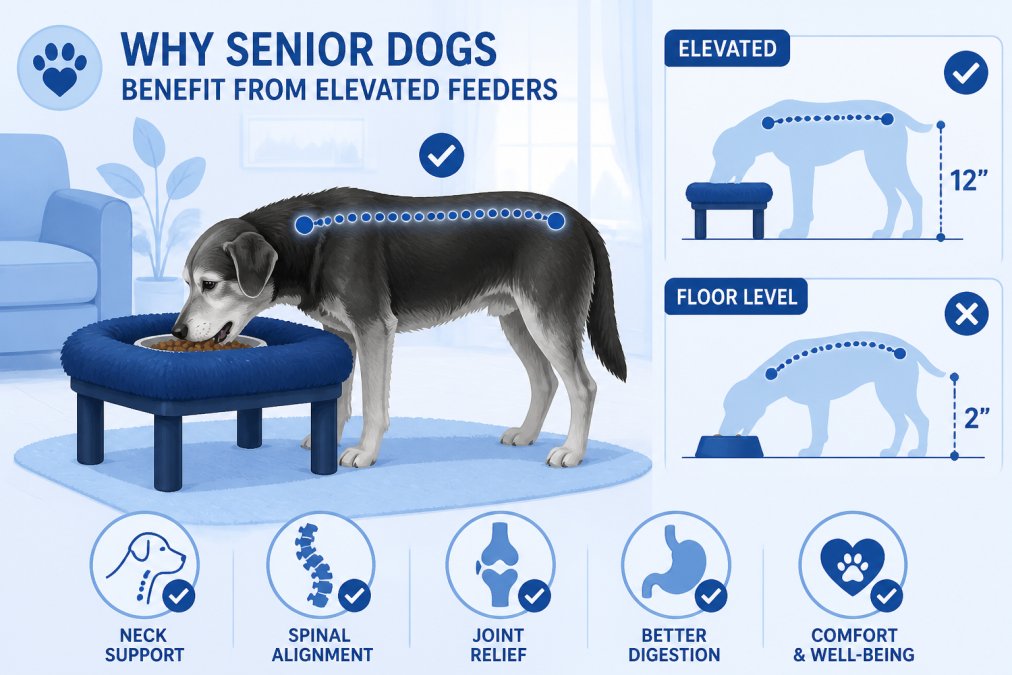
When dogs eat from floor-level bowls, they must crane their necks downward, compressing their esophagus and slowing swallowing. Elevated feeders allow food and water to travel more naturally down the throat, reducing strain on aging muscles and ligaments. This is particularly important for senior dogs with arthritis, hip dysplasia, or other joint conditions.
Elevated feeders also promote better digestion by improving posture and helping food move efficiently through the gastrointestinal tract. Many pet owners report that their senior dogs eat more slowly from elevated bowls, which aids nutrient absorption and reduces digestive upset. Beyond physical health, elevated feeders improve mealtime dignity for aging dogs, often translating to increased appetite and better overall nutrition.
How to Determine the Right Height for Dog Bowls
The ideal bowl height reaches approximately your dog's elbow level when standing naturally. Have your senior dog stand in a relaxed position on a hard floor and measure from the ground to their elbow joint. This measurement gives you the target height for the bowl's center, typically between 4 and 10 inches for most senior dogs, though larger breeds may need up to 12 inches.
If your dog has severe arthritis, raise the bowl slightly higher than elbow height to reduce bending. Conversely, if your dog gulps food quickly, a slightly lower height encourages slower eating and better chewing. Watch how your dog positions themselves when eating and adjust accordingly.
Pro Tip
Adjustable elevated feeders offer flexibility as your dog's mobility changes. [Pawsibly Everything's Dog Double Bowls](/products/dog-double-bowls-stainless-stand-adjustable-height-pets-feeding-dish-bowl-big-dog-elevated-food-water-feeders-for-dogs-pet-products) feature three height settings (2.5 inches, 7.8 inches, and 10.2 inches), allowing you to adapt to your senior dog's needs without replacing the entire feeder.
Your senior dog may need height adjustments as they age further. Periodic reassessment ensures your dog continues to benefit from optimal feeding posture throughout their senior years.
Elevated Dog Bowls for Arthritis and Joint Relief
Senior dogs with arthritis experience significant pain when bending down to eat. An elevated dog bowl reduces the range of motion required at the joints, allowing arthritic dogs to stand in a more neutral position. The joint relief benefits are most pronounced in dogs with hip dysplasia, elbow dysplasia, or degenerative joint disease.
Elevated feeders can also improve appetite in arthritic dogs. Many senior dogs with severe arthritis eat less because reaching their bowl causes pain. By removing this barrier, you often see improved food intake and better nutritional status.
For arthritic dogs, stainless steel bowls are preferable to ceramic or plastic because they're easier to clean and don't retain heat or cold that might aggravate inflamed joints. A non-slip base is essential to prevent the feeder from sliding during eating.
Preventing Bloat in Senior Dogs With Proper Feeding
Bloat, or gastric dilatation-volvulus (GDV), is a life-threatening emergency where the stomach fills with gas and twists on itself. Senior dogs face particular risk due to slower digestion and reduced stomach muscle tone. Elevated feeders contribute to bloat prevention by promoting slower, more deliberate eating.
When dogs eat too quickly from floor-level bowls, they swallow large amounts of air along with food, increasing gas buildup in the stomach. Elevated bowls naturally slow the eating process because gravity works against rapid food consumption.
The posture enabled by elevated feeders also matters for bloat prevention. When a dog's esophagus is aligned more vertically, food moves more efficiently into the stomach and is less likely to create pockets of trapped air. Veterinary consensus recommends feeding smaller, more frequent meals; using elevated feeders; avoiding vigorous exercise immediately after eating; and feeding a high-quality diet.
Certain breeds face higher bloat risk, including large and giant breeds like Great Danes, German Shepherds, and Boxers. If your senior dog is a high-risk breed, an elevated feeder becomes even more important as part of a comprehensive bloat-prevention strategy.
Top Elevated Feeders for Senior Dogs: Our Recommendations
Pawsibly Everything Dog Double Bowls
The Pawsibly Everything Dog Double Bowls stand out as the top choice for senior dogs because they offer adjustable height in a single, durable package. With three height settings (2.5 inches, 7.8 inches, and 10.2 inches), these bowls accommodate dogs of all sizes and adapt to your senior dog's changing mobility needs.
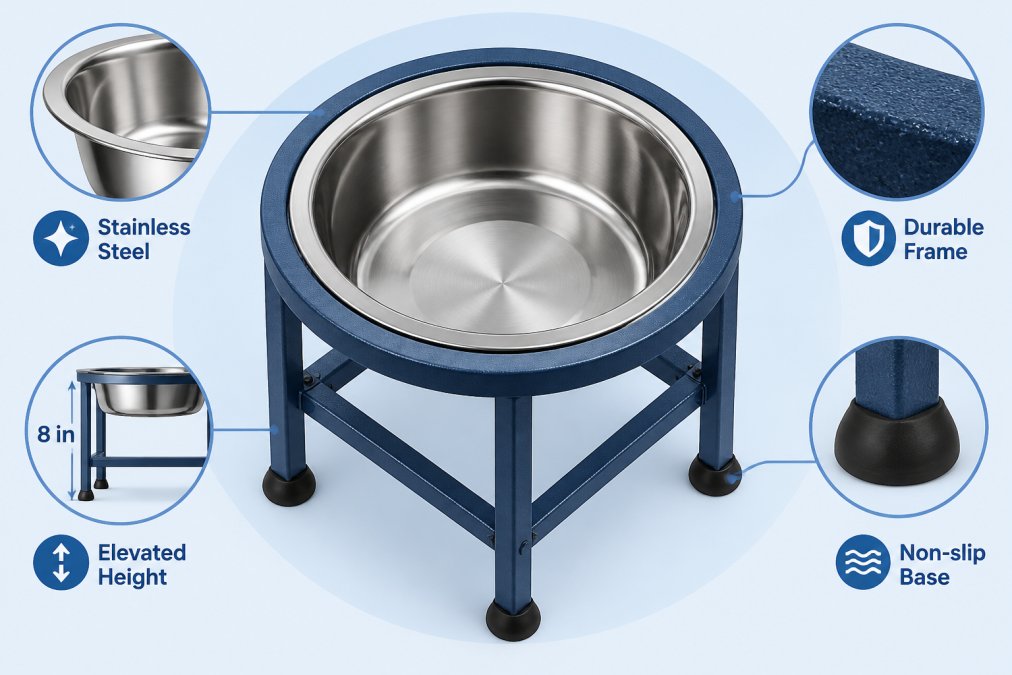
Built from premium stainless steel, these bowls resist corrosion and bacterial growth better than ceramic or plastic alternatives. At $66.31, they represent excellent value for a product that will serve your dog for years. The adjustable height feature means you can fine-tune comfort as arthritis or mobility issues worsen.
Best For
Senior dogs of all sizes, especially those with arthritis or progressive mobility decline. The adjustable height makes these ideal for multi-dog households where dogs are different sizes.
Pros: Three adjustable height options; stainless steel resists corrosion; sturdy construction prevents tipping; dual bowls for food and water
Cons: Assembly may be required; heavier than plastic alternatives
Pawsibly Everything Pet Lifting Feeding Bowl
The Pawsibly Everything Pet Lifting Feeding Bowl focuses specifically on neck protection, making it an excellent choice for senior dogs with cervical spine issues or swallowing difficulties. At $46.06, it's more affordable than the double bowls while delivering serious joint relief benefits. The anti-tumble design prevents the bowl from sliding, which is crucial for senior dogs with balance issues.
Pros: Specifically designed for neck protection; anti-tumble design prevents spills; affordable; simple setup
Cons: Fixed height may not suit all dog sizes equally; less versatile for multi-dog households
Pawsibly Everything Ceramic Double Bowl
The Pawsibly Everything Ceramic Double Bowl brings aesthetic appeal without sacrificing function. At $64.91, this option suits owners who want their senior dog's feeding station to complement their home decor. The ceramic bowls are gentler on sensitive gums and teeth compared to stainless steel, which matters for senior dogs with dental issues.
The wooden frame provides a stable, attractive base that prevents sliding across hard floors. The ceramic material resists heat transfer better than metal, keeping water cool and food at a stable temperature.
Watch Out
Ceramic bowls can chip or crack if dropped, and the wooden frame requires occasional cleaning to prevent water stains.
Pros: Beautiful wooden frame; ceramic bowls gentle on sensitive gums; excellent stability; double-bowl convenience
Cons: Ceramic is breakable; wooden frame needs regular maintenance; not adjustable
Pawsibly Everything Pet Creative Antislip Feeding Bowl
The Pawsibly Everything Pet Creative Antislip Feeding Bowl prioritizes stability and safety at $28.57. The antislip design is particularly valuable for senior dogs with mobility issues, as it prevents the bowl from sliding during meals. This feeder uses 100% porcelain ceramic and sturdy iron construction, combining durability with aesthetic appeal.
The iron stand provides excellent weight distribution and prevents tipping. For senior dogs with balance issues, the stability of this feeder can reduce anxiety around mealtime. The ceramic bowls are microwave-safe, allowing you to warm food for senior dogs with reduced appetite.
Pros: Exceptional stability; affordable price; ceramic bowls can be warmed; attractive design
Cons: Fixed height limits adaptability; ceramic requires careful handling; not ideal for very large dogs
Key Features to Look for in an Elevated Feeder
Adjustable Height
Adjustability is the single most valuable feature for senior dogs. As your dog ages, their mobility changes, and an adjustable feeder adapts without requiring replacement. Look for feeders with at least two height settings.
Material Quality
Stainless steel is superior to ceramic or plastic for daily-use elevated feeders. It resists corrosion, doesn't harbor bacteria as readily, and withstands years of use. Ceramic offers aesthetic appeal and gentleness on sensitive mouths but requires careful handling.
Non-Slip Base
A non-slip base prevents the feeder from sliding across hard floors during meals. This is essential for senior dogs with balance issues, as a sliding bowl forces them to use extra effort to stabilize themselves.
Tip-Resistant Design
A wide, stable base with a low center of gravity prevents tipping. Double-bowl designs are inherently more stable than single-bowl feeders.
Easy-to-Clean Components
Removable, dishwasher-safe bowls are far easier to sanitize than fixed bowls. Stainless steel and ceramic are both dishwasher-safe.
Appropriate Bowl Capacity
Senior dogs often eat smaller portions due to reduced appetite or dental issues. Appropriately sized bowls promote slower, more deliberate consumption.
Quick Comparison Table
| Feeder | Price | Height Adjustment | Material | Best For | Top Feature |
|---|---|---|---|---|---|
| Pawsibly Everything Dog Double Bowls | $66.31 | 3 heights (2.5"-10.2") | Stainless steel | All senior dogs, especially arthritic | Adjustable height for changing needs |
| Pawsibly Everything Pet Lifting Feeding Bowl | $46.06 | Fixed | Plastic/steel | Neck protection, balance issues | Anti-tumble design |
| Pawsibly Everything Ceramic Double Bowl | $64.91 | Fixed | Ceramic/wood | Design-conscious owners | Aesthetic appeal, gentle bowls |
| Pawsibly Everything Pet Creative Antislip Feeding Bowl | $28.57 | Fixed | Ceramic/iron | Budget-conscious, stability priority | Exceptional antislip base |
| Neater Feeder Deluxe | $39.99 | Fixed (extensions sold separately) | Plastic/stainless steel | Messy eaters, spill prevention | Splash guard design |
| OurPets Comfort Diner | $17.60-$50.99 | Fixed | Stainless steel | Large-breed seniors | Sturdy 4.0 lb stand |
| PetFusion Elevated Bowls | $21.99-$80.99 | Not adjustable | Acrylic/stainless steel | Multi-pet households | Modular magnetic design |
| Pawfect Pets Elevated Stand | $37.99-$49.99 | Adjustable | Bamboo/stainless steel | Eco-conscious owners | Water-resistant bamboo |
Which Elevated Feeder Should You Choose?
Your choice depends on your senior dog's specific needs, your home environment, and your budget. If your senior dog has progressive arthritis or mobility decline, prioritize adjustable height. The Pawsibly Everything Dog Double Bowls are worth the investment because they adapt as your dog ages.

If your dog struggles with balance or has cognitive decline, stability is paramount. The Pawsibly Everything Pet Creative Antislip Feeding Bowl's heavy iron construction and exceptional grip prevent sliding, giving your senior dog confidence during meals.
If aesthetics matter and your dog has a sensitive mouth, the Pawsibly Everything Ceramic Double Bowl combines beauty with function. For budget-conscious owners, the Pawsibly Everything Pet Lifting Feeding Bowl delivers solid neck protection and anti-tumble safety at an accessible price.

Consider whether you have multiple senior dogs of different sizes. Adjustable feeders like the Dog Double Bowls solve this problem elegantly, allowing each dog to eat at their optimal height.
Choosing an elevated feeder for your senior dog is one of the most impactful wellness decisions you can make. The right feeder reduces pain, improves digestion, and restores mealtime dignity during your dog's golden years. Pawsibly Everything's comprehensive selection of elevated feeders means you can find the perfect fit for your senior companion's unique needs. Whether you prioritize adjustability, stability, aesthetics, or budget, a quality elevated feeder from Pawsibly Everything ensures your aging dog eats comfortably and safely for years to come.
Frequently Asked Questions
Should senior dogs have elevated food bowls?
Yes, elevated feeders benefit senior dogs significantly. They reduce neck strain, promote better posture during eating, and ease pressure on arthritic joints. Dogs eating from raised bowls experience improved digestion and less stress on their spine. This is especially important for senior dogs with arthritis, hip dysplasia, or neck pain who struggle with bending down to floor-level bowls.
What height should an elevated dog feeder be?
The ideal height depends on your dog's size and breed. Generally, bowls should reach your dog's chest or shoulder when standing naturally. For most senior dogs, heights between 6 to 10 inches work well. Adjustable elevated feeders like the Pawsibly Everything Dog Double Bowls (available at 2.5, 7.8, and 10.2 inches) allow you to customize the height as your dog's needs change with age.
Can elevated dog bowls help prevent bloat in senior dogs?
Elevated feeders can reduce bloat risk by promoting slower, more controlled eating and better digestion. When dogs eat from raised bowls, they swallow less air and maintain better posture during meals, which supports gastrointestinal health. Combined with slow-feeding bowls, elevated feeders create an optimal feeding environment for senior dogs prone to gastric dilatation-volvulus (GDV).
Are elevated dog bowls safe for all senior dog breeds?
Elevated feeders are safe and beneficial for most senior dogs, but deep-chested breeds like Great Danes and German Shepherds may have specific considerations. Always choose a sturdy, tip-resistant design with a non-slip base. Ensure the height is appropriate for your dog's size. If your senior dog has specific health conditions, consult your veterinarian to confirm the feeder height and design suit their needs.
This article was written using GrandRanker

