

Cart
0
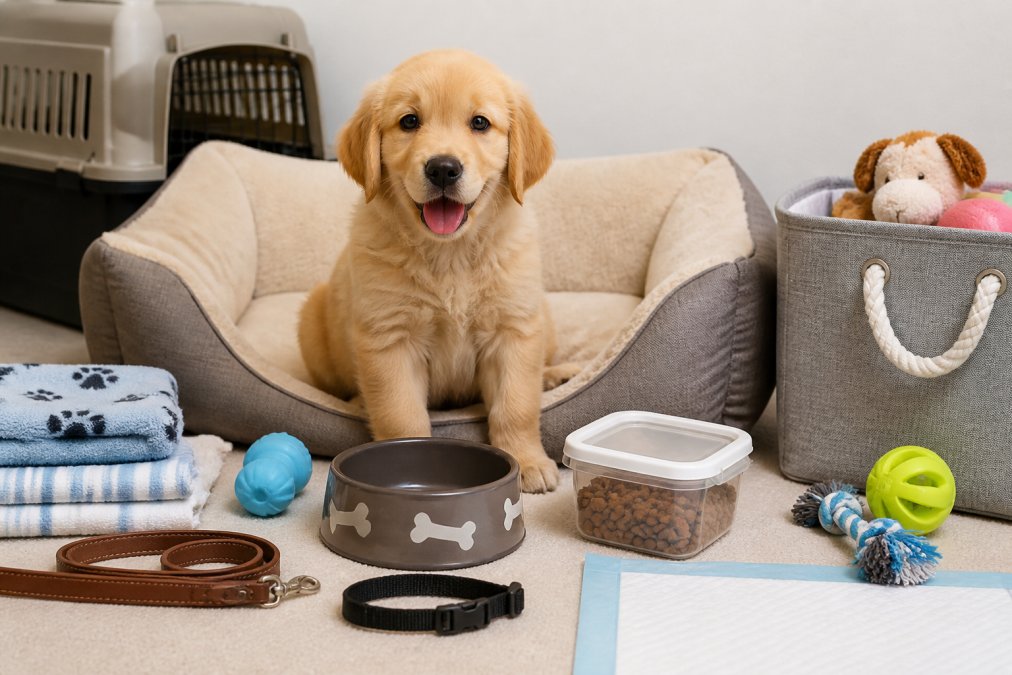
Table of Contents
- The Essential Supplies for New Puppies: What to Buy First
- Feeding and Nutrition Essentials for Your New Puppy
- Best Puppy Crate Training Tips and the Gear You Need
- Potty Training Supplies, Leash Basics, and Safety Gear
- Chew Toys, Enrichment, and Bedding for a Happy Puppy
- Grooming, Hygiene, and Flea and Tick Prevention Kits
- Your Puppy Proofing Checklist Before the First Day Home
- Puppy Vaccination Schedule and Ongoing Veterinary Care
Last Updated: August 3, 2026
The Essential Supplies for New Puppies: What to Buy First
Getting essential supplies before your puppy comes home ensures a smooth first week. Most new pet parents either overbuy or scramble at midnight. This guide walks you through exactly what to buy and how to match purchases to your puppy's size, breed, and budget.
A critical mistake: treating every puppy the same. A Chihuahua and a Great Dane need different crates, collars, and food bowls. Breed-specific choices matter more than most guides acknowledge.
Budget-Friendly vs. Premium: How to Tier Your Purchases
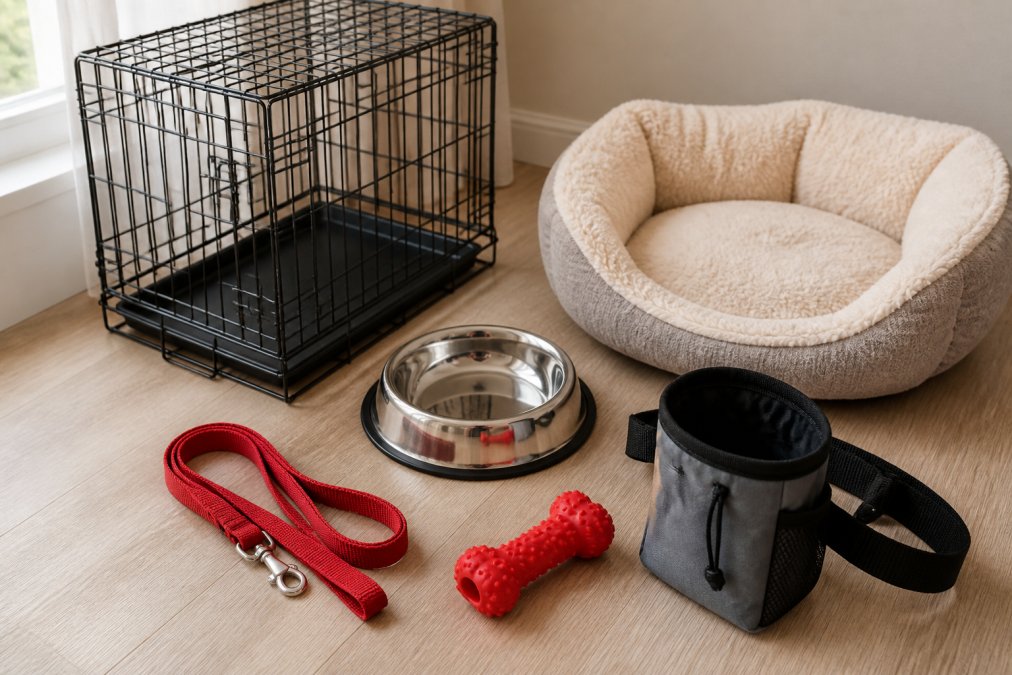
Not everything needs to be premium on day one. Think in three tiers:
| Supply Category | Budget-Friendly First Choice | Premium Upgrade When Ready | Why It Matters |
|---|---|---|---|
| Crate | Wire crate with divider panel | Furniture-style wooden crate | Divider panel grows with the puppy |
| Food bowls | Stainless steel basic bowl | Slow feeder or elevated set | Prevents bloat in large breeds |
| Bedding | Washable fleece mat | Ice velvet plush orthopedic bed | Durability and joint support |
| Collar and leash | Nylon adjustable set | Padded leather or biothane | Comfort during extended walks |
| Chew toys | Basic rubber Kong-style toy | Durable composite toys | Withstands power chewing |
| Grooming | Slicker brush and nail clippers | Full grooming kit | Breed-specific coat needs |
Tier-one items are essential before arrival. Tier-two upgrades make sense once you understand your dog's chewing habits and sleep preferences. Spending premium prices on a bed a teething puppy will destroy is a common mistake.
Breed-Specific Variations Worth Knowing Before You Shop
Breed size and coat type should drive at least half of your supply decisions:
- Small breeds (under 25 lbs): Narrow collars (5/8" width), smaller crate sizes, and lighter leashes. Tiny breeds are prone to tracheal collapse, so a harness is often better than a collar for leash walking.
- Large and giant breeds: Elevated food bowls reduce neck strain and may reduce bloat risk. Plan for a crate that accommodates adult size.
- Double-coated breeds (Huskies, Golden Retrievers, Labs): Invest in an undercoat rake from day one. A standard slicker brush alone won't manage shedding.
- Short-faced breeds (French Bulldogs, Pugs): Avoid deep bowls that force the face downward. Wide, shallow bowls are far more comfortable.
Buy for the adult dog your puppy will become, not the size it is right now.
Feeding and Nutrition Essentials for Your New Puppy
Puppy nutrition is not an area to cut corners. The right feeding setup prevents digestive issues, supports healthy development, and builds lifelong habits. Start with age-appropriate puppy formula kibble recommended by your veterinarian, paired with the right bowl setup from the beginning.
The two most important variables are portion control and eating speed. Many puppies eat too fast, causing vomiting and, in large breeds, increasing bloat risk. According to the American Kennel Club's puppy feeding guidance, puppies generally need three to four meals per day until around six months of age, after which twice-daily feeding is typical.
Slow Feeders, Elevated Bowls, and Eco-Friendly Options
A slow feeder bowl is one of the highest-impact, lowest-cost upgrades you can make. The raised ridges inside force the puppy to work around obstacles, slowing consumption and reducing gulping.
Elevated bowls serve a different purpose: they're most beneficial for large and giant breeds where repeated downward neck extension during meals can contribute to joint strain. For small breeds, elevated feeders offer minimal benefit.
Eco-conscious pet parents have more options. Bowls made from bamboo composite, recycled stainless steel, and BPA-free materials are widely available. Avoid ceramic bowls with decorative glazes that may contain lead, and plastic bowls, which harbor bacteria in micro-scratches.
Training treats should be small (pea-sized), high-value, and soft for young puppies.
Best Puppy Crate Training Tips and the Gear You Need
Crate training is often misunderstood as punishment. It isn't. A properly introduced crate becomes the puppy's den, a place it actively seeks out for rest and security. The gear supports the training, but the training approach determines whether it works.
Start with short, positive sessions. Place high-value treats inside the crate, let the puppy explore freely, and never force entry. Build duration gradually over days. Separation anxiety develops most often when puppies are crated for too long too soon, before they've built a positive association.
Choosing the Right Crate Size for Your Breed
Crate size is the most common mistake. The crate should be large enough for the puppy to stand, turn around, and lie down comfortably. Nothing more. A crate that's too large allows the puppy to use one end as a bathroom, undermining potty training.
The practical solution for growing puppies is a wire crate with a divider panel. You purchase the adult size, block off most of the space with the divider, and expand it as the puppy grows. This approach is cost-effective and functionally superior to buying multiple crates.
A playpen or exercise pen is a useful companion to the crate, giving the puppy a safe, confined space to move around during the day without full run of the house.
Pro Tip
Place a worn t-shirt or small piece of your clothing inside the crate during the first week. The familiar scent significantly reduces nighttime whining and helps puppies with separation anxiety settle faster.
Potty Training Supplies, Leash Basics, and Safety Gear
Potty training success depends on consistency and the right supplies in the right places. The essential kit includes potty training pads for indoor use, an enzyme cleaner for accidents, and waste bags for outdoor trips.
Enzyme cleaner is non-negotiable. Standard household cleaners mask odors to human noses but leave enough scent markers for dogs to re-use the same spot. Enzyme-based formulas break down organic compounds completely, removing the scent signal that draws puppies back to previous accident sites.
Baby gates are an underrated potty training tool. Containing the puppy to a single room dramatically reduces unsupervised accidents and shortens the training timeline.
Harness, ID Tag, Microchip, and Car Restraint Essentials
For most puppies, a back-clip harness is the safest starting point. It eliminates pressure on the trachea, gives you control without discomfort, and works well for positive reinforcement-based leash training.
An ID tag should be on the collar before the puppy leaves the house for the first time. Include your phone number and, optionally, a note that the dog is microchipped. Microchipping is a permanent form of identification that dramatically increases the odds of reuniting with a lost dog. According to the American Veterinary Medical Association's resources on microchipping, microchipped dogs are returned to their owners at significantly higher rates than non-microchipped dogs.
Car restraint is essential. An unrestrained dog in a moving vehicle is a safety hazard. A crash-tested travel crate or vehicle-specific harness restraint are the two most reliable options.
Watch Out
Never use a retractable leash during initial leash training. Retractable leashes teach puppies that pulling creates more freedom, which is the exact opposite of the behavior you want to build. Stick with a standard 4-6 foot leash until leash manners are established.
Chew Toys, Enrichment, and Bedding for a Happy Puppy
Teething puppies chew. This is a developmental stage, not a behavior problem. Providing appropriate durable toys and using a chew deterrent spray on furniture is far more effective than correction alone.
The best chew toys for puppies are non-toxic, sized appropriately for the puppy's mouth, and durable enough to withstand sustained chewing without breaking into swallowable pieces. Rubber toys with hollow centers that can be stuffed with treats or puppy-safe food provide both physical satisfaction and mental enrichment.
Enrichment is different from play. Puzzle toys, sniff mats, and food-dispensing toys engage the puppy's brain and burn mental energy. A puppy that gets adequate mental stimulation is less likely to develop destructive behaviors born from boredom.
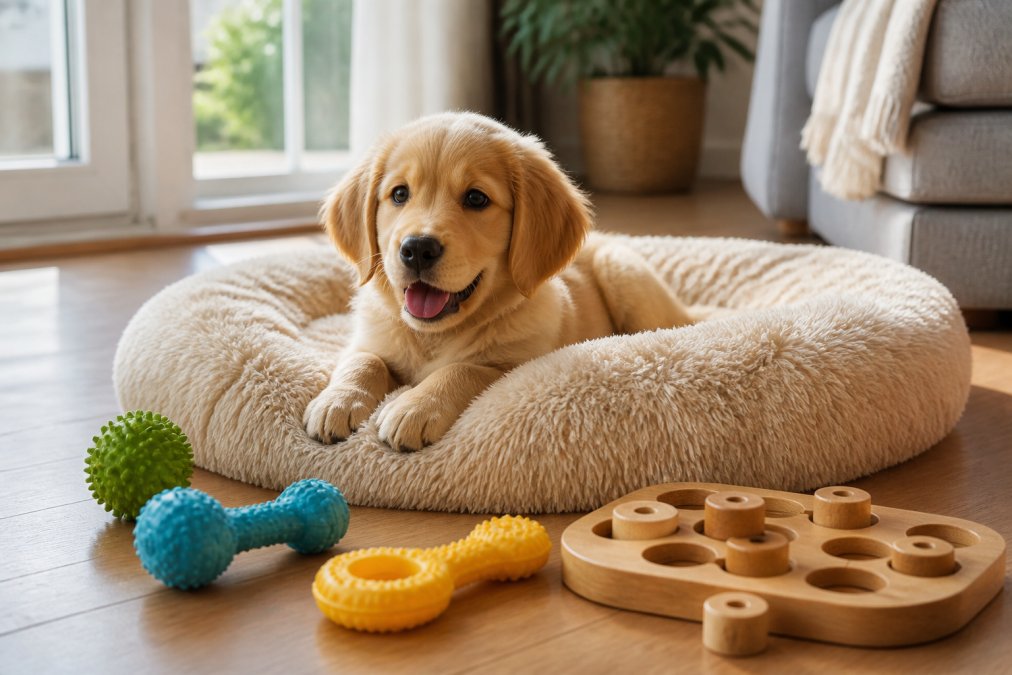
For bedding, the priority in the first few months is washability, not luxury. Puppies have accidents. A bed that can't go in the washing machine will smell within a week. Once the puppy is reliably house-trained, upgrading to a premium plush bed with orthopedic support becomes worthwhile, particularly for breeds prone to joint issues. Pawsibly Everything's beds, crafted from ice velvet and plush fabrics, are designed for this transition: from basic washable mat to a genuinely comfortable, durable sleeping solution.
Grooming, Hygiene, and Flea and Tick Prevention Kits
Starting grooming early is one of the best investments you can make in a puppy's long-term behavior. A dog that's been gently handled around the ears, paws, and mouth since puppyhood is far easier to groom and examine as an adult.
The core grooming kit for a new puppy includes a grooming brush appropriate for the coat type (slicker brush for most breeds, undercoat rake for double coats), nail clippers or a rotary grinder, ear cleaning solution and cotton balls, puppy-safe shampoo, and a soft toothbrush and puppy dental care paste (never human toothpaste, which contains xylitol).
Dental care is consistently overlooked in early puppy care guides. Periodontal disease is one of the most common health issues in adult dogs, and habits built in puppyhood directly affect adult dental health.
Flea and tick prevention should be discussed with your veterinarian at the first visit. The right product depends on your geographic region, the puppy's age and weight, and whether the dog will spend time in wooded or grassy areas.
Key Takeaway
Begin nail trims and ear checks in the first week, even if no actual trimming is needed. The goal is desensitization. A puppy that learns these experiences are routine becomes an adult dog that tolerates veterinary exams and grooming appointments without stress.
Your Puppy Proofing Checklist Before the First Day Home
Puppy-proofing is not optional. It is the difference between a safe first week and an emergency vet visit. The good news: it doesn't require expensive modifications, just a systematic walk-through of your home from a puppy's perspective.
Room-by-room puppy-proofing checklist:
- Secure electrical cords with cord covers or route them behind furniture
- Move toxic houseplants out of reach (refer to the ASPCA's toxic plant database for a full list)
- Install baby gates at stairways and room entrances
- Store cleaning products, medications, and chemicals in locked or high cabinets
- Remove small objects from the floor that could be swallowed (coins, rubber bands, hair ties)
- Secure trash cans with locking lids
- Check for gaps behind appliances where a small puppy could become trapped
- Move shoes, bags, and clothing out of reach
- Identify and block access to any spaces the puppy could get stuck in
According to the ASPCA's animal poison control resources, household toxins including certain foods, plants, and cleaning products are among the most common reasons pet owners call poison control. Complete puppy-proofing before the dog arrives, rather than reactively after an incident.
Socialization also begins in the first week. Controlled, positive exposure to different sounds, surfaces, people, and environments during the puppy's critical development window (roughly 3-14 weeks) shapes behavior for life.
Puppy Vaccination Schedule and Ongoing Veterinary Care
A puppy vaccination schedule is one of the first conversations to have with your veterinarian, ideally before or within the first few days of bringing the puppy home. Core vaccines protect against diseases including distemper, parvovirus, adenovirus, and rabies. The typical schedule involves a series of vaccinations beginning at 6-8 weeks and continuing through 16 weeks, with boosters following in subsequent years.
Veterinary care goes beyond vaccinations. The first visit should include a full physical examination, a fecal test for intestinal parasites, a discussion of flea and tick prevention appropriate for your region, and a conversation about spay or neuter timing based on breed and size.
The ongoing veterinary care calendar for the first year typically includes initial exam within the first week, vaccination series at 8, 12, and 16 weeks, heartworm prevention discussion and prescription, spay or neuter consultation, and first annual wellness exam at 12 months.
Puppy development is rapid. Tracking changes and maintaining the vaccination schedule is the foundation of long-term health. Many veterinary practices offer puppy wellness packages that bundle the first year of visits at a set cost, representing meaningful savings compared to individual appointment pricing.
The supplies you buy matter. The veterinary relationship you build matters more. No amount of premium gear replaces consistent professional care during the first year of a puppy's life.
Getting the first few months right sets the trajectory for years of healthy, happy companionship. Pawsibly Everything takes a curated approach: a selection of premium toys, plush and ice velvet beds, grooming essentials, and comfort items designed for the real needs of real dogs and their owners. Explore the full collection and Add to Cart to give your new puppy the start it deserves.
Frequently Asked Questions
What are the absolute must-haves for a new puppy?
The non-negotiables for essential puppy supplies are a properly sized crate, food and water bowls, age-appropriate puppy food, a collar with an ID tag, a 4-to-6-foot leash, potty training pads, an enzyme cleaner, waste bags, at least two durable chew toys, and a comfortable bed. These cover safety, nutrition, and basic training from day one. Everything else, including grooming tools and enrichment toys, can be added within the first week.
What should I buy before bringing my puppy home?
Purchase your core puppy supplies at least two to three days before pickup. That means a crate with a divider panel, food and water bowls, puppy-formula food recommended by your breeder or shelter, potty training pads, an enzyme cleaner, a collar, an ID tag, a leash, and one or two non-toxic chew toys. Having bedding and a playpen set up before arrival helps your puppy settle faster and reduces separation anxiety on that first night.
What supplies do I need for puppy crate training?
Effective crate training calls for a crate sized to your puppy's adult dimensions with a divider to limit the space while they grow, a washable crate mat or pad, a few training treats for positive reinforcement, and a non-toxic chew toy to keep them occupied. A crate cover can help anxious puppies feel more secure. Avoid placing water bowls inside overnight, as this encourages accidents. Consistency with the schedule matters as much as the gear itself.
How do I prepare my house for a new puppy?
A solid puppy proofing checklist covers five areas: secure loose electrical cords, move toxic plants and household chemicals out of reach, install baby gates to block stairs and off-limit rooms, latch low cabinets, and remove small objects that could be swallowed. Set up the crate, playpen, and feeding station before your puppy arrives. Designate a specific potty spot outside and place training pads near the door for the first few weeks of indoor backup.
What is the most important thing to buy for a new puppy?
If forced to pick one item from the full list of essential puppy supplies, most veterinary behaviorists point to the crate. It protects your puppy when unsupervised, supports potty training through natural denning instinct, and gives them a safe space that reduces separation anxiety. A correctly sized crate with a soft mat is the single item that affects the most outcomes: house training speed, nighttime settling, and long-term behavior.
When should my puppy start their vaccination schedule?
The standard puppy vaccination schedule in the United States begins at 6 to 8 weeks of age with a distemper-parvovirus combination vaccine. Boosters follow every 3 to 4 weeks until the puppy is 16 weeks old. Rabies vaccination is typically given at 12 to 16 weeks, as required by most state laws. Your veterinarian will also recommend flea and tick prevention at the first visit. Keep all records in one place, as proof of vaccination is required for boarding, grooming, and dog parks.
Are eco-friendly puppy supplies worth buying?
Sustainable puppy supplies have improved significantly. Non-toxic, natural-rubber chew toys, organic cotton bedding, and biodegradable waste bags are widely available and hold up well for average chewers. For power chewers, durability should take priority over material sourcing since a destroyed toy creates more waste than a long-lasting synthetic one. Look for products that are certified non-toxic regardless of material, and check that dyes and finishes are safe for a puppy that will mouth everything.
This article was written using GrandRanker

