

Cart
0

Table of Contents
- How to Choose the Best Puppy Food for Sensitive Stomachs
- Signs Your Puppy Has a Sensitive Stomach (and When to Call the Vet)
- What Causes Digestive Upset in Puppies
- Puppy Food Ingredients for Sensitive Stomach: What to Look For
- Best Puppy Food for Diarrhea: What Actually Helps
- How to Transition Puppy Food Without Upsetting Their Stomach
- Puppy Food for Sensitive Stomach and Skin: When Both Need Help
- Conclusion
- Frequently Asked Questions
Last Updated: October 6, 2026
How to Choose the Best Puppy Food for Sensitive Stomachs
Finding the best puppy food for sensitive stomachs starts with reading the label, not the marketing on the front of the bag. Puppies have different nutritional needs than adult dogs, so a food that works for a grown dog may not support healthy growth.
Puppy food is a complete and balanced diet formulated to meet the higher calorie, protein, and mineral needs of a growing dog. The Association of American Feed Control Officials (AAFCO) sets the nutritional standards that reputable manufacturers follow, and the AAFCO pet food labeling guidelines explain what those statements on the bag actually mean.
Here is what matters most when you are choosing:
- Look for an AAFCO statement confirming the food is complete and balanced for growth or all life stages
- Check the first three ingredients for a named protein source, not a vague "meat meal"
- Match protein to your puppy's tolerance, since some puppies do better on lamb or novel proteins than chicken
- Avoid artificial colors, flavors, and preservatives when possible
- Introduce one new food at a time so you can identify what causes problems
A common mistake is switching foods every time a puppy has one loose stool. Digestive upset in puppies is common and often resolves on its own within a day or two.
Pro Tip
Buy the smallest bag of any new food first. If your puppy tolerates it after a full transition, then commit to a larger size. This saves money and prevents you from being stuck with a 30-pound bag your puppy refuses to eat.
Signs Your Puppy Has a Sensitive Stomach (and When to Call the Vet)
Signs of a sensitive stomach in puppies include frequent diarrhea, vomiting, excessive gas, bloating, and intermittent appetite loss.
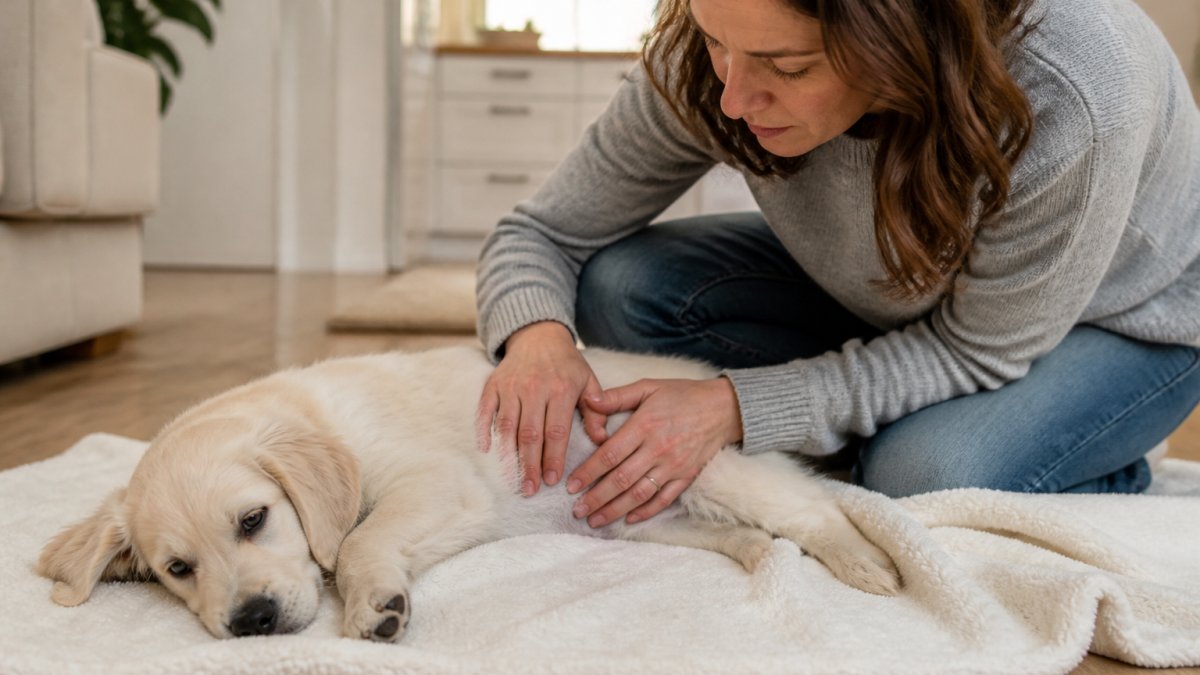
Watch for patterns rather than one-off incidents. A single loose stool after a treat is not a crisis. Recurring digestive issues over several days, or symptoms paired with lethargy and weight loss, need veterinary attention.
Call your veterinarian right away if you see:
- Blood in the stool or vomit
- Repeated vomiting that prevents your puppy from keeping water down
- Signs of dehydration, such as tacky gums or skin that does not spring back when gently pinched
- A swollen or painful abdomen
- Lethargy combined with digestive symptoms
Puppies dehydrate faster than adult dogs, so symptoms that seem mild can become serious quickly. When in doubt, call your vet. No article can replace an exam.
What Causes Digestive Upset in Puppies
Digestive upset in puppies usually traces back to one of a handful of causes: a sudden food change, eating something inappropriate, food sensitivity, parasites, or stress.
Food sensitivity and food allergy are not the same thing, though people use the terms interchangeably. According to veterinary guidance on adverse food reactions, adverse food reactions in dogs most often involve a protein source.
Other common triggers include:
- Overfeeding, which overwhelms a puppy's digestive system
- Too many treats or table scraps
- Intestinal parasites, common in puppies and easily missed
- Stress from a new home, travel, or changes in routine
If symptoms persist despite a consistent diet, your vet may recommend a limited-ingredient diet or a hydrolyzed protein trial to isolate the trigger.
Puppy Food Ingredients for Sensitive Stomach: What to Look For
The best ingredients for a sensitive stomach are easy-to-digest proteins, gentle carbohydrate sources, and added fiber and probiotics. You do not need an exotic formula. You need a simple one.
Protein sources that tend to be easier to digest:
- Lamb, which is often used in limited-ingredient formulas
- Salmon and other fish
- Turkey, for puppies who do not tolerate chicken
- Novel proteins like venison or duck, useful when a puppy has eaten chicken or beef for a while
Carbohydrates and fiber:
- White rice and sweet potato are gentle on the stomach and support stool quality
- Soluble fiber, found in ingredients like pumpkin and oats, helps regulate digestion
- Prebiotics and probiotics support the gut microbiome and healthy bowel movements
Ingredients to avoid or limit:
- Artificial colors, flavors, and preservatives
- High-fat formulas, which can trigger digestive upset
- Foods with long, complicated ingredient lists when your puppy is already struggling
According to FDA guidance on pet food ingredients, manufacturers must list ingredients in descending order by weight, which makes the ingredient panel a useful tool for comparison.
Watch Out
Do not assume "grain-free" means easier to digest. Some grain-free foods swap in ingredients that are harder on sensitive stomachs, and the FDA has investigated links between certain grain-free diets and heart issues in dogs. Talk to your vet before making that switch.
Best Puppy Food for Diarrhea: What Actually Helps
The best puppy food for diarrhea is a bland, easily digestible diet paired with a gradual return to normal food.
| Approach | Best For | Duration | Watch For |
|---|---|---|---|
| Bland diet (cooked protein + white rice) | Mild, short-term diarrhea | 1-2 days | Not a complete diet long-term |
| Limited-ingredient puppy food | Suspected food sensitivity | Ongoing | Slow transition needed |
| Hydrolyzed protein diet | Suspected food allergy | 8-12 weeks trial | Requires vet supervision |
| High-fiber puppy formula | Soft stool, poor stool quality | Ongoing | Introduce gradually |
| Probiotic supplement | Gut microbiome support | Ongoing | Choose puppy-safe products |
A bland diet is not nutritionally complete, so it should only bridge the gap until your puppy is back on a proper puppy food. If diarrhea lasts more than a day or two, or comes with vomiting or lethargy, call your vet.
How Much to Feed During a Bland Diet
Portion size matters as much as food choice. A common starting point is about 1 to 2 tablespoons of the bland mixture per 5 pounds of body weight, split into three or four small meals per day. For example, a 10-pound puppy might get roughly 2 to 4 tablespoons total per day, divided across meals. Adjust based on your veterinarian's guidance and your puppy's response. Overfeeding, even bland food, can prolong diarrhea.
Monitoring and a Simple Log
Keep a short daily log so you and your vet can spot patterns instead of guessing. Track:
- Meals: time, type, and amount fed
- Stool: time, consistency (use a simple 1-5 scale from firm to watery), color, and any blood or mucus
- Symptoms: vomiting, gas, bloating, appetite, energy level
- Weight: weigh your puppy every few days on the same scale
Bring this log to your vet visit. It turns a vague story into usable data and can shorten the time to a diagnosis.
Cost and Availability by Food Type
Costs vary by brand, bag size, and where you shop, but the general pattern is consistent:
- Everyday puppy food: lowest cost per day, widely available in stores and online
- Limited-ingredient puppy food: moderate cost per day, usually available at pet specialty retailers and online
- Veterinary gastrointestinal or hydrolyzed diets: highest cost per day, often sold through veterinary clinics or with a prescription
When you return to regular food, do it gradually. Rushing the transition is one of the most common reasons diarrhea comes back.
Watch Out
Do not use adult or therapeutic formulas for a growing puppy unless your veterinarian specifically directs it. Some are not formulated to meet puppy growth requirements, and prolonged use can shortchange development.
How to Transition Puppy Food Without Upsetting Their Stomach
Transition puppy food over seven to ten days by mixing increasing amounts of the new food into the old. This gradual transition gives your puppy's digestive system time to adjust.
A simple transition schedule:
- Days 1-2: 75% old food, 25% new food
- Days 3-4: 50% old food, 50% new food
- Days 5-6: 25% old food, 75% new food
- Days 7-10: 100% new food
If your puppy shows signs of digestive upset at any stage, slow down and hold at the current ratio for a few extra days. Some puppies need two weeks or more.
How to Calculate Portions During the Switch
Use the feeding chart on the new food's label as your target, then split that daily amount according to the schedule above. For example, if the label calls for 1 cup per day for your puppy's weight, Day 1 would be 3/4 cup old food plus 1/4 cup new food, divided across your normal number of meals. Keep total daily volume roughly the same as before the switch so you are changing composition, not quantity.
Track the Transition With a Simple Log
A short daily log makes it obvious whether the switch is working. Record:
- Date and day of transition (for example, Day 3 of 10)
- Ratio fed (old-to-new)
- Amount fed and number of meals
- Stool consistency on a 1-5 scale, plus color and any blood or mucus
- Symptoms such as gas, vomiting, itching, or appetite changes
- Weight every few days on the same scale
If stool stays soft for more than two or three days at the same ratio, hold there longer or check with your vet before pushing forward.
Cost and Availability Considerations
Transitioning slowly means you may need both the old and new food on hand for one to two weeks. Plan for that overlap:
- Everyday puppy food: lowest cost per day and easy to find, so buying a small bag to test is low-risk
- Limited-ingredient puppy food: moderate cost per day, often at pet specialty stores and online; small bags may be harder to find
- Veterinary gastrointestinal or hydrolyzed diets: highest cost per day, typically sold through clinics or by prescription, so confirm availability before you start
Buying the smallest bag first keeps the test affordable and avoids being stuck with a large bag your puppy cannot tolerate.
Key Takeaway
The single biggest mistake during a food transition is moving too fast. A slow, patient transition prevents most cases of transition-related diarrhea.
Keep your feeding schedule consistent during the switch. Sudden changes in timing, portion size, or treat routine add stress that muddies the picture.
Puppy Food for Sensitive Stomach and Skin: When Both Need Help
When a puppy has both digestive upset and itchy skin, a food allergy becomes more likely.
For these cases, your veterinarian may recommend an elimination diet.
This process takes patience. An elimination trial typically runs eight to twelve weeks, and any slip, like a single treat from the wrong bag, resets the clock.
Look for formulas with omega fatty acids, which support skin and coat health alongside digestion.
Conclusion
Choosing the right puppy food for a sensitive stomach takes patience, careful label reading, and a willingness to slow down. Start with an AAFCO-complete puppy formula, transition gradually, and track symptoms so you and your vet can spot patterns.
At Pawsibly Everything, we stock premium feeding and care essentials designed to make pet care simpler.
Add to Cart and give your puppy the comfortable, well-cared-for start they deserve.
Frequently Asked Questions
What is the best food for a puppy with a sensitive stomach?
Look for a puppy food that meets AAFCO nutrient profiles for growth, uses a single novel protein like lamb or salmon, and includes easily digestible carbohydrates such as white rice or sweet potato. Limited-ingredient formulas with prebiotics and probiotics support gut health. Always check the ingredient list for artificial preservatives or fillers. Your veterinarian can help match a formula to your puppy's specific digestive tolerance and life-stage nutrition needs.
How do I switch my puppy to a new food without upsetting their stomach?
Make a gradual transition over 7 to 10 days. Start with 25% new food mixed with 75% old food for three days. Move to a 50/50 mix for three more days, then 75% new and 25% old. Finally, switch fully to the new food. If diarrhea, vomiting, or gas appears at any stage, slow down and stay at the previous ratio longer. This method gives the gut microbiome time to adjust and protects stool quality.
Should I choose grain-free food for a puppy with a sensitive stomach?
Not automatically. True grain allergies are rare in puppies. Most digestive upset comes from protein sources, sudden food changes, or overfeeding. Grains like white rice and oats are often gentle and provide soluble fiber for healthy bowel movements. If you suspect a grain sensitivity, work with your vet on an elimination diet before switching to grain-free. The FDA has investigated certain grain-free diets and heart health concerns in dogs, so discuss this with your veterinarian first.
When should I take a puppy with an upset stomach to the vet?
Call your vet if diarrhea lasts more than 24 hours, if you see blood or black tarry stool, or if your puppy vomits repeatedly. Puppies dehydrate fast. Other warning signs include lethargy, refusing food for more than one meal, bloating with a hard belly, or any sign of pain. Young puppies have limited reserves, so do not wait to see if it resolves on its own. Early veterinary guidance prevents small gastrointestinal issues from becoming serious.

