

Cart
0

Table of Contents
- Why Do Dogs Destroy Toys
- Distinguishing Normal Destruction From Compulsive Behavior
- Best Toys for Dogs That Destroy Everything
- Dog Toy Safety and Ingestion Risks
- How to Teach a Dog to Play Gently With Toys
- Managing Toy Destruction When Your Dog Is Alone
- Exercise, Enrichment, and Mental Stimulation
- When Redirection and Exercise Don't Work
- Frequently Asked Questions
Last Updated: October 4, 2026
Why Do Dogs Destroy Toys
Dogs destroy toys due to natural instincts, emotional needs, or boredom. Understanding why your dog tears apart toys is the first step toward solving the problem, and learning how to stop dog from destroying toys is fixable once you know what's driving the behavior.
Natural Chewing and Prey Drive
Chewing is hardwired into dogs. Puppies chew to explore and ease teething pain; adult dogs chew to satisfy instinctive urges rooted in their wolf ancestry. When a dog sees a squeaky toy, that high-pitched sound triggers prey drive, the dog's brain says "This is alive. Destroy it." This is normal dog behavior, not a flaw. Soft toys are designed to be destroyed: they're small, squeaky, and give way easily under teeth. The key is redirecting that drive toward durable toys rather than fighting it.
Anxiety and Boredom
Many dogs tear apart toys when stressed, anxious, or bored. A dog left alone for hours will destroy toys as a coping mechanism. Boredom is equally destructive, dogs need mental and physical stimulation or they'll shred whatever's available. The difference matters: a bored dog needs more activity; an anxious dog needs gradual desensitization to alone time plus calming outlets.
Distinguishing Normal Destruction From Compulsive Behavior
Most toy destruction is normal, but sometimes it signals a deeper problem requiring a different approach.
Normal toy destruction happens during play; the dog chews and shakes the toy, then stops when redirected. The dog seems happy and relaxed. Anxiety-driven destruction happens suddenly and intensely when you leave, with frantic behavior and repeated destruction even after replacement. Compulsive destruction is repetitive and obsessive, continuing even when you're present and trying to interrupt.
Anxiety or compulsive behavior requires training and professional help. For playful destruction, supervise play, redirect to durable toys, and reward calm behavior.
Best Toys for Dogs That Destroy Everything
Soft plush toys are designed to be destroyed and are the worst choice for power chewers.
Durable Toy Materials and Construction
Rubber and TPR materials flex under pressure instead of tearing and withstand aggressive chewing without damaging teeth. Look for double-stitched seams or reinforced construction, single-stitched toys fall apart in minutes. Grooved or textured surfaces add interest and help clean teeth.
Avoid these materials:
- Thin plastic (breaks into sharp pieces)
- Loosely woven fabric (shreds instantly)
- Glued-on parts (choking hazard when they come loose)
- Toys with small decorative elements (eyes, noses, bells)
The American Veterinary Medical Association recommends choosing toys that are larger than your dog's mouth to prevent swallowing, and checking toys regularly for damage or loose pieces.
Matching Toys to Chewing Style and Size
Not all durable toys work for all dogs. A toy that's perfect for a 15-pound dog might be too small for a 60-pound dog. A toy that satisfies a moderate chewer might bore a power chewer.
For small dogs (under 15 lbs): Choose toys larger than your dog's head to prevent choking. For medium dogs (15-30 lbs): Medium-sized durable toys with hollow centers for treats add mental stimulation. For large dogs (over 30 lbs): Bigger toys with heavy-duty construction are essential, look for toys labeled for power chewers.
The Dog Bite Resistant Rubber Grinding Toys come in sizes S, M, and L to match your dog's size and power. The Chew Toys For Dog Teeth Cleaning are made from TPR material that withstands aggressive chewing while protecting teeth and gums.

Dog Toy Safety and Ingestion Risks
Toy destruction becomes dangerous when pieces are swallowed, causing blockages, choking, or internal injuries.
Watch for vomiting, loss of appetite, lethargy, straining to defecate, abdominal pain, or constipation lasting more than a few days. If your dog swallows toy pieces, call your veterinarian immediately, blockages can be life-threatening.
Remove toys that are falling apart, don't leave toys with loose parts unsupervised, and supervise play sessions with new toys.
The Pet Poison Helpline tracks toy-related injuries and recommends inspecting toys weekly for damage, removing any toy that shows signs of wear, and choosing toys appropriate for your dog's size and chewing strength.
How to Teach a Dog to Play Gently With Toys
Learning how to stop dog from destroying toys takes consistency but prevents constant toy replacement and frustration.
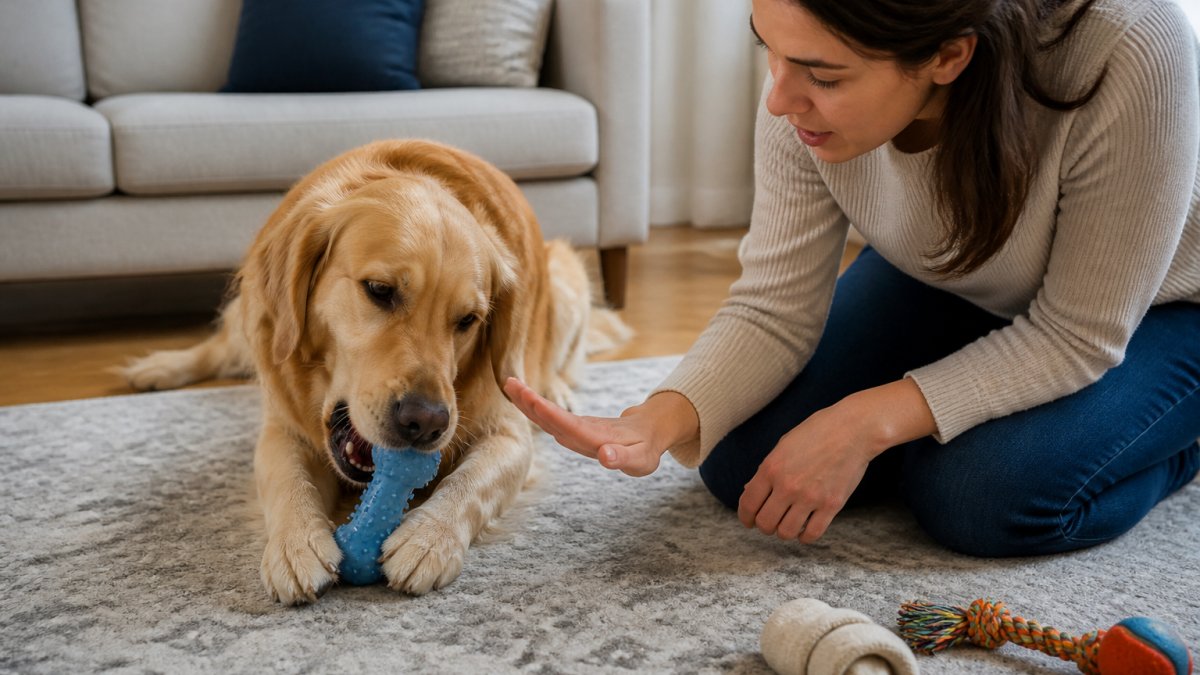
Step 1: Supervise and Interrupt Destructive Chewing
Supervision is non-negotiable. Watch for destructive behavior (aggressive shaking, tearing, ripping seams) and interrupt calmly with a neutral word like "easy." Don't yell, a gentle redirect is more effective than scolding. Interrupt early, before the toy is destroyed, so your dog learns that aggressive chewing stops playtime.
Step 2: Redirect to Appropriate Chew Toys
When you interrupt destructive chewing, you need an alternative ready. This is where appropriate chew toys become essential.
The redirect process:
- Interrupt the destructive behavior
- Immediately offer a durable chew toy (like the Spiked Dog Chew Toy Stick or Dog Treat Dispenser Ball Toy)
- Praise and reward when your dog accepts the redirect
- Let your dog chew the appropriate toy for a few minutes
- End on a positive note before the dog gets bored
This teaches your dog: "Aggressive chewing on that toy stops playtime. Calm chewing on this toy is rewarded."

Redirection works because you're not taking away all fun, you're redirecting it toward something better. Your dog learns that appropriate chewing gets more attention and rewards.
Step 3: Reward Gentle Play and Remove Toys Strategically
Reward the behavior you want to see. When your dog plays gently with a toy, holding it, carrying it, chewing calmly, praise enthusiastically and offer treats.
Strategic toy removal:
- Don't leave toys out all day
- Rotate toys every few days to maintain interest
- Remove toys after supervised play sessions
- Keep toys in a closed container, not scattered around
- Offer toys only during supervised playtime
This approach does two things. First, it prevents unsupervised destruction. Second, it makes toys more valuable. A toy that appears once a day is more exciting than one that's always available.
Dog Bite Resistant Rubber Grinding Toys →
Many dogs destroy toys out of boredom because they have constant access. Limiting access reduces the problem naturally.
Managing Toy Destruction When Your Dog Is Alone
Some dogs destroy toys only when left alone. This is almost always anxiety-driven, not playful destruction.
If your dog destroys toys only when alone:
- Start with very short absences (2-5 minutes)
- Leave a durable chew toy or treat-dispensing toy
- Don't make departures emotional or dramatic
- Return before your dog gets anxious
- Gradually extend alone time as your dog stays calm
The goal is building confidence that you always return. Your dog learns that alone time isn't scary and that toys are safe to chew calmly.
For anxious dogs:
- Crate training can help (make the crate a safe space, not a punishment)
- Leave calming music or white noise playing
- Use puzzle toys that require focus and slow down destructive impulses
- Consider a second pet for companionship (if appropriate)
The Dog Treat Dispenser Ball Toy works well for solo play because it requires active engagement. Your dog has to work to get treats out, which redirects anxiety into problem-solving.
Exercise, Enrichment, and Mental Stimulation
A tired dog is a well-behaved dog. This isn't a cliché, it's biology. Dogs with insufficient exercise and mental stimulation are more likely to develop destructive behaviors.
Exercise requirements vary by breed and age:
- Puppies: Multiple short play sessions (10-15 minutes each)
- Adult dogs: 30-60 minutes of physical activity daily
- Senior dogs: Shorter walks, more frequent breaks
- High-energy breeds: 60-90 minutes or more daily
Physical exercise alone isn't enough. Mental stimulation matters equally. A dog that's physically tired but mentally bored will still destroy toys.
Mental enrichment activities:
- Puzzle toys that require problem-solving
- Treat-dispensing toys that slow eating and engage the brain
- Training sessions (even 5-10 minutes)
- Nose work games (hiding treats around the house)
- Interactive play with toys you control (fetch, tug, chase)
The Chew Toys For Dog Teeth Cleaning and Dog Treat Dispenser Ball Toy provide both physical and mental engagement. Your dog chews (physical), works to extract treats (mental), and satisfies natural instincts (emotional).

A well-exercised, mentally stimulated dog is less likely to destroy toys out of boredom or anxiety.
When Redirection and Exercise Don't Work
Sometimes standard solutions don't fix the problem. If your dog continues destroying toys despite supervision, redirection, exercise, and appropriate toy selection, something deeper is happening.
Consider these possibilities:
Medical issues: Pain or dental problems can drive compulsive chewing. A dog with a sore tooth or stomach discomfort might chew obsessively.
Severe anxiety: Some dogs have genuine anxiety disorders that require professional help. These dogs can't be fixed with toys and exercise alone.
Obsessive-compulsive behaviors: Rarely, dogs develop compulsive chewing that's not about play or anxiety. This requires professional intervention from a veterinary behaviorist.
Insufficient training foundation: If your dog has never learned to respond to redirects or commands, toy destruction is part of a bigger training gap.
If standard approaches aren't working after 2-3 weeks of consistent effort, consult a professional dog trainer or veterinary behaviorist.
| Strategy | Best For | Expected Timeline |
|---|---|---|
| Supervision + Redirection | Playful destruction, normal chewing | 1-2 weeks |
| Durable toys + toy rotation | Boredom-driven destruction | 2-3 weeks |
| Exercise + enrichment | Energy-related destruction | 1-2 weeks |
| Anxiety training | Alone-time destruction | 4-8 weeks |
| Professional help | Severe anxiety or compulsive behavior | Varies |
Pro Tip
The most common mistake is leaving inappropriate toys available unsupervised. Soft plush toys are destroyed within minutes by power chewers. Remove them entirely if your dog destroys toys, they're not worth the frustration or the risk of ingestion.
Watch Out
Swallowed toy pieces can cause intestinal blockages, which are life-threatening. If your dog shows signs of vomiting, loss of appetite, or abdominal pain after destroying a toy, call your veterinarian immediately. Don't assume it will pass on its own.
The solution to toy destruction isn't complicated, but it does require consistency. Supervise play, redirect to durable toys, provide adequate exercise and enrichment, and remove inappropriate toys.
At Pawsibly Everything, we understand that toy destruction is frustrating.
Start with the Dog Bite Resistant Rubber Grinding Toys or Chew Toys For Dog Teeth Cleaning.
Your dog doesn't need to destroy toys.
Frequently Asked Questions
What does it mean when a dog destroys their toys?
Toy destruction usually reflects natural chewing instincts, prey drive, boredom, or excess energy. Puppies destroy toys while teething. Adult dogs may destroy toys to satisfy chewing needs or when anxious. However, obsessive destruction, tearing toys apart the moment they arrive or only when left alone, can signal separation anxiety or compulsive behavior. Watch for patterns: Does your dog destroy toys during play or only when unsupervised? Does he swallow pieces? These details help you determine whether the behavior is normal play or a concern requiring training intervention.
How do I choose a toy for a dog that destroys everything?
Select toys based on your dog's size, age, and chewing intensity. For strong chewers, choose double-stitched, high-density rubber toys like the Dog Bite Resistant Rubber Grinding Toys ($33.94), available in sizes S, M, and L to match your dog's weight. Avoid plush or squeaky toys if your dog swallows pieces. Rotate toys to maintain novelty and prevent boredom-driven destruction. Puzzle toys and treat-dispensing options like the Dog Treat Dispenser Ball Toy ($21.89) provide mental stimulation while channeling destructive energy into problem-solving.
Should I take a toy away when my dog starts destroying it?
Yes, remove the toy immediately when your dog begins aggressive chewing or tearing. Leaving it available teaches him that destruction is acceptable. Instead, interrupt the behavior, redirect to a more appropriate chew toy, and praise gentle interaction. This trains your dog to associate toy play with supervision and appropriate handling. Rotate toys so your dog doesn't grow bored with the same options. Store toys out of reach when you cannot supervise, and only offer toys during playtime or training sessions until your dog demonstrates reliable gentle play.
What should I do if my dog swallows toy pieces?
Contact your veterinarian immediately if you suspect your dog has swallowed toy material. Small pieces may pass naturally, but larger fragments, stuffing, or rubber can cause intestinal blockage, which is a medical emergency. Do not wait to see if symptoms develop. Your vet may recommend monitoring, imaging, or surgery depending on the toy material and size. Prevent this by choosing toys made from durable, non-toxic rubber and supervising all play. Inspect toys regularly for tears or loose parts, and discard damaged toys to eliminate ingestion risks.

