

Cart
0
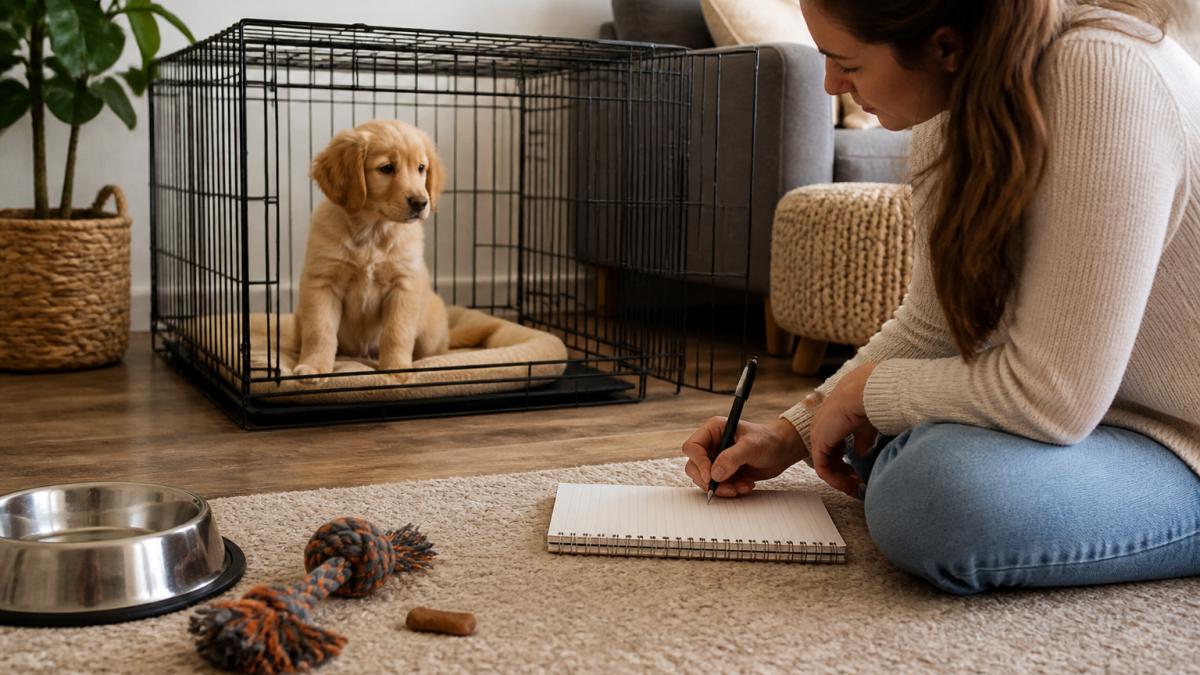
Table of Contents
- Puppy Crate Training Schedule for Beginners: A Step-by-Step Start
- What You'll Need Before You Start
-
Puppy Crate Training Schedule by Age: 8 to 16 Weeks
- The Core Daily Loop
- Sample Day: 8-10 Weeks (7:00 a.m. Wake-Up)
- Sample Day: 11-13 Weeks (6:30 a.m. Wake-Up)
- Sample Day: 14-16 Weeks (6:00 a.m. Wake-Up)
- How to Shift the Schedule to Your Wake-Up Time
- 8 to 10 Weeks: The First Week Home
- 11 to 13 Weeks: Building Duration
- 14 to 16 Weeks: Extending Alone Time
- How Long Can a Puppy Hold Its Bladder? Potty Break Timing
- How to Stop Puppy Crying in Crate at Night
- Common Mistakes to Avoid in the First Two Weeks
- Adapting the Schedule to Work, School, and Family Routines
- Readiness Signs: How to Know Your Puppy Is Progressing
- Frequently Asked Questions
Last Updated: October 6, 2026
Puppy Crate Training Schedule for Beginners: A Step-by-Step Start
A puppy crate training schedule for beginners works best when it mirrors a puppy's natural rhythm: eat, potty, play, sleep, repeat.
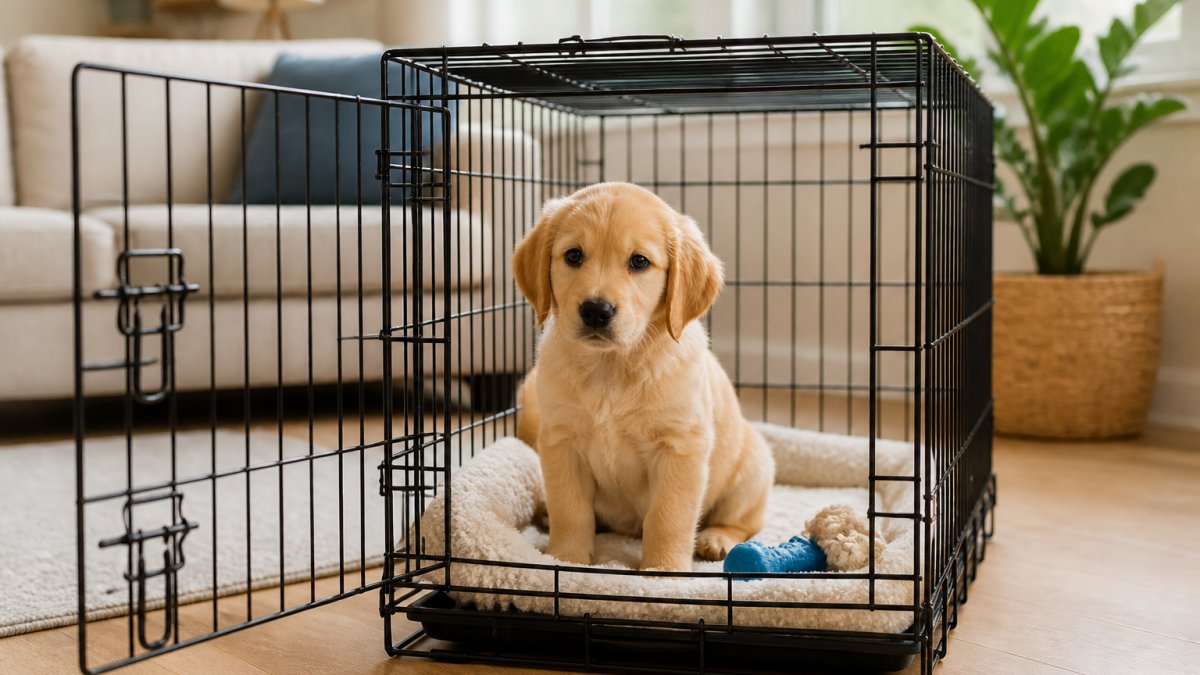
Crate training teaches a puppy to accept the crate as a safe, familiar space rather than a cage.
Most guides promise a fixed timeline. In practice, progress depends on your puppy's age, breed, and temperament, not a calendar.
Below, we'll show you how to build a daily routine that works for your household, what to do when your puppy cries, and how to tell real progress from a bad week.
Key Takeaway
The goal of week one is not a quiet crate. It's a puppy that walks in willingly. Speed comes later.
What You'll Need Before You Start
Set up before your puppy comes home. The right crate size and location do more for success than any training trick.
- A crate just big enough to stand, turn, and lie down
- A washable bed or soft blanket
- Safe chew toys for solo time
Crate size matters more than most people expect. If the crate is too big, a puppy can potty in one corner and sleep in another. A divider panel lets you shrink the space as your puppy grows.
For bedding, look for something soft and machine washable.
Watch Out
Never use the crate as punishment. One "time out" in the crate can undo a week of positive work.
Puppy Crate Training Schedule by Age: 8 to 16 Weeks
Age sets the pace: younger puppies need shorter crate sessions and more potty breaks, older puppies can handle longer stretches. But a table of maximums isn't a schedule, it's a ceiling. Beginners need a repeatable daily loop they can shift to fit their own wake-up time.
Start with these limits, then build the day around them:
| Age | Max Crate Time (awake) | Potty Breaks | Overnight Stretches |
|---|---|---|---|
| 8-10 weeks | 30-45 min | Every 60-90 min | 2-3 hours |
| 11-13 weeks | 45-60 min | Every 2 hours | 3-4 hours |
| 14-16 weeks | 60-90 min | Every 2-3 hours | 4-5 hours |
The Core Daily Loop
Every puppy day runs on the same five-beat cycle: wake → potty → eat/play → potty → crate nap. The crate is where the cycle resets, not where the puppy spends the whole day. A puppy that just woke up and pottied can settle; one that just ate or played needs to go out again first.
That rule prevents most first-week accidents: potty comes before crate, every single time.
Sample Day: 8-10 Weeks (7:00 a.m. Wake-Up)
- 7:00 a.m., Wake, straight outside to the potty spot. Praise and treat immediately after.
- 7:15 a.m., Breakfast, fed inside the crate with the door open.
- 7:30 a.m., Potty break, then 10-15 minutes of gentle play or exploration.
An 8-10 week old puppy sleeps 18-20 hours a day, so most crate sessions are naps, not alone time. That's normal and it's the point.
Sample Day: 11-13 Weeks (6:30 a.m. Wake-Up)
- 6:30 a.m., Wake, potty, breakfast in the crate.
- 7:00 a.m., Potty, then 20-30 minutes of play or a short walk.
- 7:45 a.m., Potty, crate nap (60-90 minutes).
Sample Day: 14-16 Weeks (6:00 a.m. Wake-Up)
- 6:00 a.m., Wake, potty, breakfast in the crate.
- 6:45 a.m., Potty, then 30-45 minutes of play or a walk.
- 7:45 a.m., Potty, crate nap (90 minutes to 2 hours).
How to Shift the Schedule to Your Wake-Up Time
The sample days are anchors, not rules. To move them, keep the intervals and change the clock:
- Pick your real wake-up time and make that the first potty of the day.
- Count forward using the age-based intervals in the table.
- Keep the last potty of the night within 30 minutes of bedtime.
- Protect the overnight stretch, don't let a late nap push bedtime past 9:00 p.m. for young puppies.
If you wake at 5:00 a.m., everything shifts an hour earlier; at 8:00 a.m., later, but the 8-10 week old still can't go more than 60-90 minutes between potty breaks while awake, no matter what the clock says.
8 to 10 Weeks: The First Week Home
Keep sessions short: ten minutes in the crate with the door open beats an hour with the door shut.
- Feed meals inside the crate
- Toss treats in for voluntary exploration
- Leave the door open during early introductions
11 to 13 Weeks: Building Duration
Start closing the crate door for short periods. Stay in the room at first, then step out for a minute or two.
- Close the door during meals
- Add a chew toy for settling
- Extend door-closed time by a few minutes each day
14 to 16 Weeks: Extending Alone Time
This is where alone time grows. Build up gradually, and don't rush a setback.
- Leave for 15 minutes, then 30
- Use the crate for naps and rest
- Keep departures calm and quiet
Key Takeaway
The schedule is a loop, not a countdown. If your puppy wakes early from a nap, the next move is always the same: potty first, then decide what comes next.
How Long Can a Puppy Hold Its Bladder? Potty Break Timing
A common rule of thumb is one hour of bladder control per month of age, plus one.
Overnight differs from daytime: most puppies need one or two nighttime potty breaks until around 12 to 16 weeks.
Watch for signals:
- Circling or sniffing the floor
- Whining right after waking
- Sudden restlessness in the crate
Take your puppy out on a leash to the same spot every time. Praise and treat right after they go. This builds a clear bathroom break routine fast.
How to Stop Puppy Crying in Crate at Night
Crying is normal in the first few nights, not a sign you're failing or a reason to give up on the crate. But "normal" doesn't mean "ignore it." The skill beginners need is triage: figure out why the puppy is crying, then respond to that reason instead of the noise.
Step 1: Rule Out a Real Need
Before anything else, run through the physical checklist, a crying puppy may simply need something.
- Potty? When did they last go out? If it's been longer than the age-based interval, assume this is a potty cry.
- Hungry or thirsty? Did they eat dinner and have water within the last couple of hours?
- Uncomfortable? A too-large crate, a wet bed, or a collar caught on the crate bars can all cause distress.
If any of these is the cause, fix it quietly and put the puppy back. No play, no chatter, no lights.
Step 2: Read the Cry
Once real needs are ruled out, the sound itself tells you a lot. Most practitioners find three categories:
| Cry Type | What It Sounds Like | What It Usually Means |
|---|---|---|
| Protest | Sharp, rhythmic, starts within minutes of crating, fades in 10-20 minutes | Puppy is annoyed, not scared. Wait it out. |
| Potty | Whining that escalates, often paired with pacing or circling | Take them out now, quietly. |
| Distress | High-pitched, continuous, panting, drooling, clawing at the door | Genuine panic. Stop and reassess. |
Protest crying is the most common and least urgent. Distress crying is the one beginners most often misread as "just whining", and it needs a different response.
Step 3: Respond by Category
For protest: Wait 10-20 minutes before you go in. Opening the door the moment noise starts teaches the puppy that crying opens the crate. If crying stops and restarts, reset the clock.
For potty: Go out immediately, on a leash, to the same spot. Keep it dark and boring. Praise and treat after they go, then straight back to the crate. No detours.
What Works
- Put the crate in your bedroom for the first week
- Cover part of the crate with a light blanket
- Offer a comfort item with your scent
What Backfires
- Letting your puppy out every time they whine, this rewards the noise
- Talking or playing during night breaks
- Moving the crate around the house
When to Call Your Veterinarian
Reach out if any of these are true:
- Crying continues past two weeks with no improvement
- The puppy shows panic signs, drooling, panting, frantic clawing, attempts to escape
- The puppy injures themselves trying to get out
Some puppies need extra support, and that's normal. A veterinarian can rule out pain or a medical cause, and a certified trainer or veterinary behaviorist can build a gradual plan if the crate itself is the trigger.
Watch Out
Never leave a puppy in a crate with a collar, tags, or a loose harness. They can catch on the bars and become a strangulation hazard, and that risk goes up when a puppy is already stressed.
Common Mistakes to Avoid in the First Two Weeks
Most first-week problems trace back to pacing. Too much, too soon, and the crate stops feeling safe.
- Leaving the door closed too long on day one
- Skipping the door-open phase entirely
- Using the crate only when you leave the house
Pro Tip
Feed every meal in the crate for the first two weeks. It's the fastest way to build a positive association without extra training sessions.
Adapting the Schedule to Work, School, and Family Routines
Real life doesn't pause for crate training. Build the schedule around your actual day, not an ideal one.
| Situation | Adjustment |
|---|---|
| Full workday away | Dog walker or mid-day potty break |
| School pickup | Crate time before and after |
| Kids at home | Quiet crate zone away from play |
| Shift work | Split crate time into shorter blocks |
A few ground rules help:
- Keep wake-up and bedtime consistent
- Split long absences with a helper
- Place the crate in a family area, not a back room
Readiness Signs: How to Know Your Puppy Is Progressing
Progress looks quieter than people expect. You won't get a perfect week; you'll get small wins.
Signs you're on track:
- Walks into the crate without a treat
- Settles within five minutes
- Sleeps through a longer overnight stretch
Keep a simple log for two weeks: crate time, potty breaks, and crying.
If progress stalls for more than a week, or your puppy shows real panic, ask your veterinarian or a certified trainer for help.
For everything else, from comfortable bedding to durable chew toys, Pawsibly Everything has the supplies to make the routine easier.
Frequently Asked Questions
How long should I let my puppy cry in the crate on the first night?
On the first night, expect some whining as your puppy adjusts to being alone. Wait five to ten minutes before responding. If crying continues, take the puppy outside for a quiet potty break with minimal interaction, then return them to the crate. Avoid letting the puppy out to play or cuddle during these breaks, since that teaches crying equals freedom. Most puppies settle within three to five nights if the crate is placed near your bed and paired with a consistent bedtime routine.
What is the 10-10-10 rule for puppies?
The 10-10-10 rule is a general adjustment guideline for a puppy's first three days, three weeks, and three months at home. The first 10 days focus on decompression, rest, and gentle routine building. The next 10 weeks involve introducing training, crate time, and social experiences. The final 10 months cover solidifying habits and obedience. For crate training specifically, the first 10 days should stay low-pressure: short sessions, plenty of treats, and no long stretches alone.
How many hours can an 8-week-old puppy stay alone in a crate?
An 8-week-old puppy can typically hold its bladder for about two hours, sometimes less overnight. That means crate sessions during the day should not exceed two hours, and overnight you may need one or two potty breaks. The general rule is one hour of bladder control per month of age, plus one. So a two-month-old puppy handles roughly three hours at most, but only during active daytime hours with recent potty breaks.
What are the signs my puppy is ready for more crate time?
Signs include entering the crate voluntarily, settling within a few minutes of the door closing, sleeping through scheduled nap sessions without whining, and staying dry through the night. If your puppy wakes calm instead of frantic, that is a strong signal. Increase crate duration by 15 to 30 minutes at a time, and only after several consecutive successful sessions. Rushing the progression often causes setbacks that take longer to undo than the original pace would have taken.
Crate training asks a lot of patience in the first two weeks, and the payoff is a puppy that settles calmly at home. If you're building your setup, Pawsibly Everything offers plush, machine-washable beds, durable toys for solo crate time, and grooming essentials for everyday care. Get started with Pawsibly Everything and give your puppy a space that feels safe from day one.

