

Cart
0
Last Updated: October 26, 2026
Quick Summary
Therapeutic pet bedding is a sleep surface engineered to reduce pressure on joints, regulate temperature, and support the body's natural resting posture. Choose it by species first, then by the condition the bed is meant to support, and use it alongside veterinary guidance.
- Therapeutic bedding is supportive care, not treatment, so pair it with veterinary guidance.
- Senior or arthritic dogs need high-density orthopedic foam with a low front edge.
- Avoid tall bolsters that force climbing and egg-crate foam that flattens.
- The Pet Calming Donut Bed comes in four sizes for pets from within 2.5 kg to within 22.5 kg.
- Paper or aspen bedding for small animals needs a full change at least weekly.
Table of Contents
- What Makes Pet Bedding Therapeutic
- How to Choose Therapeutic Pet Bedding by Species and Sleep Style
- Orthopedic Dog Beds for Joint Support and Senior Dogs
- Therapeutic Cat Beds for Burrowing, Nesting, and Anxiety
- Cooling Pet Beds for Heat-Sensitive Pets
- Washable Pet Bedding and Care Routines That Protect Sensitive Pets
- Durability, Materials, and What to Ignore When Shopping
- Find the Right Therapeutic Bed at Pawsibly Everything
- Frequently Asked Questions
What Makes Pet Bedding Therapeutic
Therapeutic pet bedding is a sleep surface engineered to reduce pressure on joints, regulate temperature, and support the body's natural resting posture.
Support, Pressure Relief, and Sleep Surface
Breathability matters too: a surface that traps heat and moisture keeps a pet shifting all night and worsens skin irritation in pets with limited mobility. Look for covers that breathe and fill that rebounds.
How to Choose Therapeutic Pet Bedding by Species and Sleep Style
Most guides sort beds by size and sleep style and stop there, which does not tell you which surface actually helps a pet with a diagnosis. Choose by species first, then by the condition the bed is meant to support. Therapeutic bedding is supportive care, not treatment, so use these recommendations alongside veterinary guidance.
Start with species, then condition
| Species | Primary therapeutic need | Surface to prioritize | What to avoid |
|---|---|---|---|
| Dog, senior or arthritic | Pressure relief at hips and elbows, easy entry | High-density orthopedic foam, low front edge, removable washable cover | Tall bolsters that force climbing; egg-crate foam that flattens |
| Dog, large or giant breed | Weight distribution, durability | Thick foam base sized nose-to-tail, reinforced seams, heavy woven fabric | Beds sized by breed name rather than measured dimensions |
| Dog, post-surgical or on restricted activity | Clean, low-entry, non-slip resting area | Flat orthopedic bed with waterproof liner and snug washable cover | Deep nests that are hard to enter; loose fills that shift |
| Cat, arthritic or senior | Warmth, low entry, pressure relief | Flat or low-profile orthopedic bed with a breathable cover | High-walled beds a stiff cat must climb into |
| Cat, anxious or nesting | Security, head and neck support | Donut or bolster bed with walls close around the body | Oversized open mats with no perimeter |
| Small animal (rabbit, guinea pig, ferret) | Absorbency, dust control, safe footing | Paper or aspen bedding with a fleece liner; solid-surface resting pad | Cedar or pine shavings with strong aromatic oils; loose bedding a pet can ingest |
| Bird | Perch comfort, foot pressure relief | Flat platform perch or rope-wrapped perch sized to foot span | Smooth dowels of uniform diameter |
Match the bed to the diagnosis, not just the age
The same "orthopedic" label covers very different needs. Use the condition to set your priorities:
Sizing and fit checklist
For a deeper walkthrough on matching bedding to size, health needs, and sleeping style, our guide to choosing pet bedding covers materials and maintenance in detail.
Orthopedic Dog Beds for Joint Support and Senior Dogs
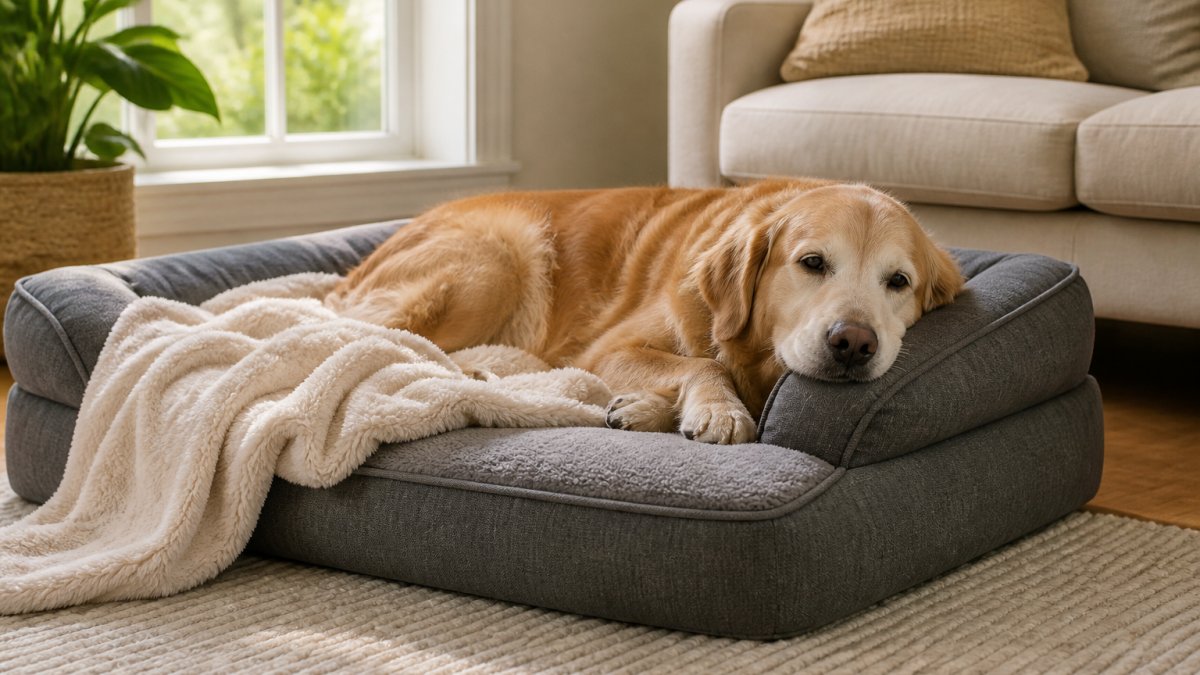
If you are comparing specific models, our roundup of the best orthopedic beds for senior dogs breaks down foam type, size, and health need. For the full selection process, read how to choose orthopedic dog beds.
Therapeutic Cat Beds for Burrowing, Nesting, and Anxiety
The Pet Calming Donut Bed from our collection is available in four sizes, with recommended weights listed from within 2.5 kg to within 22.5 kg.
Cooling Pet Beds for Heat-Sensitive Pets
The Waterproof Cooling Oval Bed in our collection is described as having water-resistant fabric, high resilience, a cooling sensation, and breathability. For a focused comparison of options, see our best cooling memory foam beds for dogs.

Washable Pet Bedding and Care Routines That Protect Sensitive Pets
For small animals, the schedule is tighter. Paper or aspen bedding needs a full change at least weekly, with spot cleaning of soiled areas daily, because ammonia from urine builds quickly in enclosed habitats. A fleece liner over the bedding makes daily cleanup faster and keeps dust down.
Durability, Materials, and What to Ignore When Shopping
Durability is not a fabric adjective; it is a set of measurable choices. The three that matter most are fabric weight, seam construction, and whether the cover is replaceable. Heavy, tightly woven fabric resists clawing and chewing better than thin synthetics, reinforced seams survive pre-settling digging, and a replaceable cover extends the life of the foam, the expensive part.
Objective selection criteria
Use these measures instead of marketing language:
- Dimensions, not breed names. A "large" bed from one maker is not the same as another's. Compare the listed length, width, and bolster height against your pet's measurements.
Materials worth prioritizing
-
Plush fabric.
-
Breathable fill and covers so heat and moisture do not build up against the skin.
What to ignore
Marketing language about "premium" or "luxury" without a stated foam thickness or density, beds sized by breed name rather than measurements, and covers that cannot be removed. These are the claims that most often fail in practice.
Care routines and replacement signals
For small animals, the schedule is tighter. Paper or aspen bedding needs a full change at least weekly, with spot cleaning of soiled areas daily, because ammonia from urine builds quickly in enclosed habitats. A fleece liner over the bedding makes daily cleanup faster and keeps dust down.
When to ask a veterinarian
Bedding is supportive care, not treatment. Ask your veterinarian about the right surface and positioning schedule if your pet has pressure sores, cannot reposition itself, is recovering from surgery, or is receiving cancer treatment. Bedding helps most when matched to the pet's mobility and cleaning needs rather than to a product category.
Find the Right Therapeutic Bed at Pawsibly Everything
At Pawsibly Everything, we offer pet supplies for dogs, cats, birds, fish, and small pets, including beds. Our selection includes plush fabrics and a Waterproof Cooling Oval Bed.
Get started with Pawsibly Everything.
Frequently Asked Questions
What makes a pet bed therapeutic?
A therapeutic bed is built around support and relief rather than looks. That usually means orthopedic foam or memory foam that spreads weight and reduces pressure on joints, a bolstered edge for head and neck support, and a breathable cover that keeps the sleep surface dry. For senior pets, pets recovering from surgery, or pets with arthritis, the foam density matters more than the fabric. A soft plush cover adds comfort, but the layer underneath is what actually supports joints and pressure points.
Are orthopedic dog beds worth it for a dog with joint pain?
For a dog with arthritis, hip dysplasia, or stiffness after rest, an orthopedic dog bed is usually worth the cost. The thicker, denser foam keeps hips and elbows from pressing into a hard floor, which helps dogs settle and get up more easily. Look for a bed with a removable, washable cover and a low front edge so a stiff dog can step in without climbing. If your dog is a chewer, check the cover seams and fabric weight before buying.
Which pet bed materials are easiest to clean?
Washable pet bedding with a removable cover and a water-resistant inner liner is the easiest to keep clean. A two-cover rotation helps: one cover goes in the wash while the other stays on the bed, so your pet never loses its sleeping spot. For small animals, paper bedding and fleece liners change out quickly and control odor better than loose shavings alone. Avoid beds where the cover cannot be removed, since foam cores should not go through a washing machine.
What bedding helps keep pets cool while they sleep?
Cooling pet beds use breathable fabric and, in some designs, a cooling gel or water-resistant layer that pulls heat away from the body. These suit double-coated dogs, pets in warm rooms, and animals that sprawl out instead of curling up. A cooling bed works best paired with a raised or oval shape that lets air move underneath. If your pet is a burrower, offer a cooling mat on top of a plush bed so it can choose.
How do I choose the right bed size for my pet?
Check the size and recommended-weight information on the listing. The Pet Calming Donut Bed lists four sizes with recommended weights from within 2.5 kg to within 22.5 kg.
When should I replace my pet's bed?
Replace a bed when the foam has flattened and no longer springs back, when the cover has tears at the seams, or when washing no longer removes odor. Most orthopedic foam beds last one to three years with regular cleaning, depending on the pet's size and chewing habits. A senior pet with changing mobility needs may also need a different shape, such as a lower entry or a firmer foam, even if the old bed is still intact.

