

Cart
0
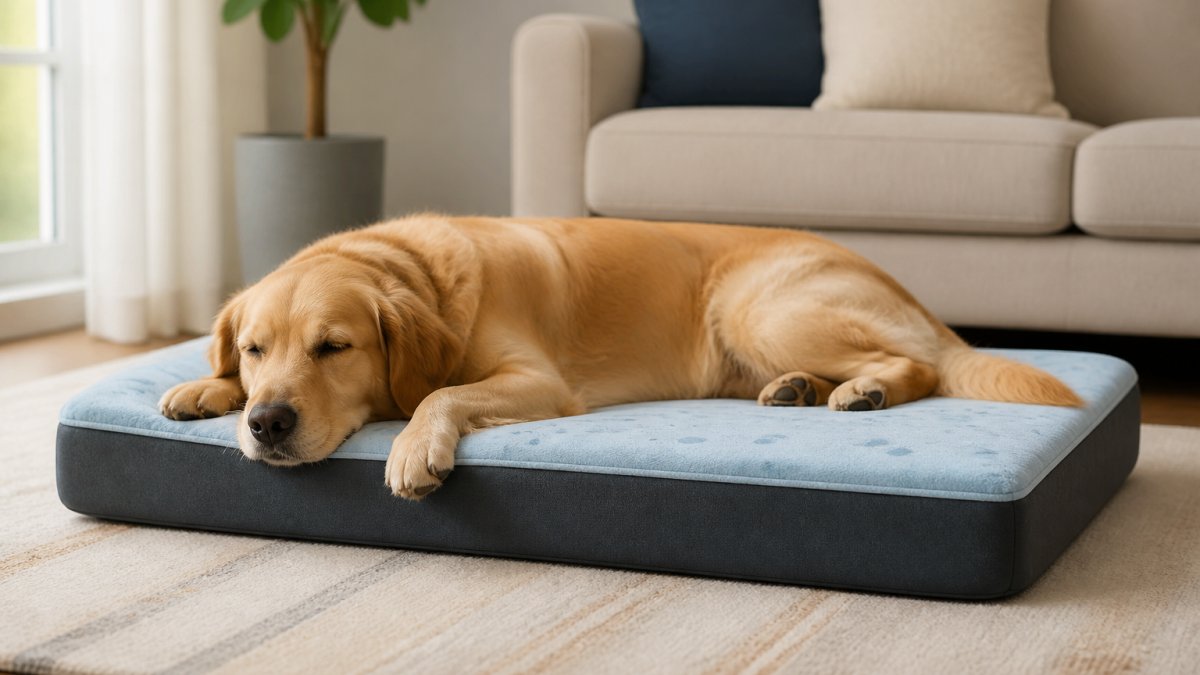
Table of Contents
- What Makes a Cooling Memory Foam Bed Actually Work for Dogs
- Are Memory Foam Beds Good for Dogs? The Honest Answer
- How a Cooling Gel Dog Bed Dissipates Heat
- Memory Foam Dog Bed for Large Dogs: Sizing and Support
- Waterproof Cooling Dog Bed Options for Accidents and Easy Cleaning
- Cooling Beds for Different Climates, Coat Types, and Senior Dogs
- Common Mistakes When Buying a Cooling Memory Foam Dog Bed
- Conclusion
- Frequently Asked Questions
Last Updated: October 12, 2026
What Makes a Cooling Memory Foam Bed Actually Work for Dogs
A cooling memory foam bed works when the foam cushions joints without trapping body heat, and the cover moves moisture and air away from your dog's skin. Most beds sold as "cooling" only do one of those jobs.
A thick slab of dense foam insulates, so a bed marketed as cooling memory foam beds for dogs has to solve a problem the foam itself creates.
Below, we break down foam density, gel layers, sizing by body length, and the mistakes that leave dogs sleeping hot anyway. The AVMA's pet care resources are a useful starting point for understanding how dogs regulate body temperature, since they cool mainly through their paws and by panting rather than sweating.
Are Memory Foam Beds Good for Dogs? The Honest Answer
Yes, for most dogs, memory foam is good, but the real benefit is pressure relief, not softness.
Memory foam is a viscoelastic polyurethane that softens in response to body heat and weight, then slowly returns to shape.
Where it falls short: traditional memory foam sleeps warm. If your dog seeks out tile floors in summer, you need foam plus heat dissipation, which is why gel-infused foam and breathable fabric matter.
Key Takeaway
Memory foam's job is orthopedic support. Cooling is a separate feature you have to verify. A bed that claims both should explain how the heat actually leaves the foam.
How a Cooling Gel Dog Bed Dissipates Heat
A cooling gel dog bed pulls heat away through the gel layer, which absorbs and spreads thermal energy faster than plain foam. The gel does not refrigerate anything; it equalizes temperature across the surface so no single spot gets hot.
Four mechanisms do the real work, and the best beds stack two or three of them:
- Gel infusion: Gel beads or a continuous gel layer conduct heat away from the contact point, spreading it laterally so it does not pool under the hips and shoulders.
- Open-cell foam structure: More open foam lets air move through the mattress, and rebounds faster than closed-cell foam so airflow channels don't collapse under weight.
- Phase-change materials (PCMs): Microencapsulated PCMs absorb heat as they change from solid to liquid at skin temperature, then release it as the bed cools. PCMs buy time rather than continuous cooling.
Heat retention is the enemy: a gel layer buried under a waterproof liner that doesn't breathe will still trap warmth against your dog. Construction quality matters more than the word "gel" on the label.
Gel-Infused Memory Foam vs. Plain Memory Foam
Gel infusion changes how foam behaves under load, not just how it feels. Plain viscoelastic memory foam softens with body heat and holds it, which is why it sleeps warm. Gel beads or a gel layer interrupt that buildup and usually add firmness and faster recovery.
A few practical differences to weigh:
- Heat transfer: Gel-infused foam moves heat away from the contact point faster than plain foam, but needs airflow or a breathable cover to shed that heat.
- Firmness: Gel infusion typically firms the foam slightly. Dogs who sink too far into soft foam often do better on a gel-infused medium-firm core.
- Density: Gel does not replace density. A 3-pound-per-cubic-foot gel-infused foam still compresses under a large dog faster than a 4- or 5-pound foam. Ask for foam density, not just gel content.
Graphite, Charcoal, and Other Cooling Additives
Some memory foam beds use graphite or charcoal infusions, marketed for heat dissipation and odor control. Graphite conducts heat and can spread it across the foam; charcoal absorbs odors and moisture. Neither replaces airflow, if the cover isn't breathable, an infused foam core still traps heat.
What Actually Moves Heat Out of the Bed
Cooling only works when heat has somewhere to go:
- Heat leaves your dog and enters the foam or gel layer.
- The foam spreads that heat across a wider surface area.
- Air moving through open cells and a breathable cover carries the heat away.
- A waterproof liner, if present, must sit below the breathable layer, not above it.
Break any link and the bed runs warm, which is why two beds with identical gel content can perform very differently.
Pro Tip
Press your palm flat on the bed for 30 seconds, then lift it. If the spot feels noticeably warm right after, the bed is holding heat rather than moving it. Test this in the store, or check the return window before buying online. A bed that feels cool to the touch before you lie on it may just have a cool-to-the-touch cover fabric, not a cooling core.
Key Takeaway
Gel infusion, open-cell foam, PCMs, and breathable covers each solve part of the heat problem. A bed worth buying explains which ones it uses and how air actually exits the mattress.
Memory Foam Dog Bed for Large Dogs: Sizing and Support
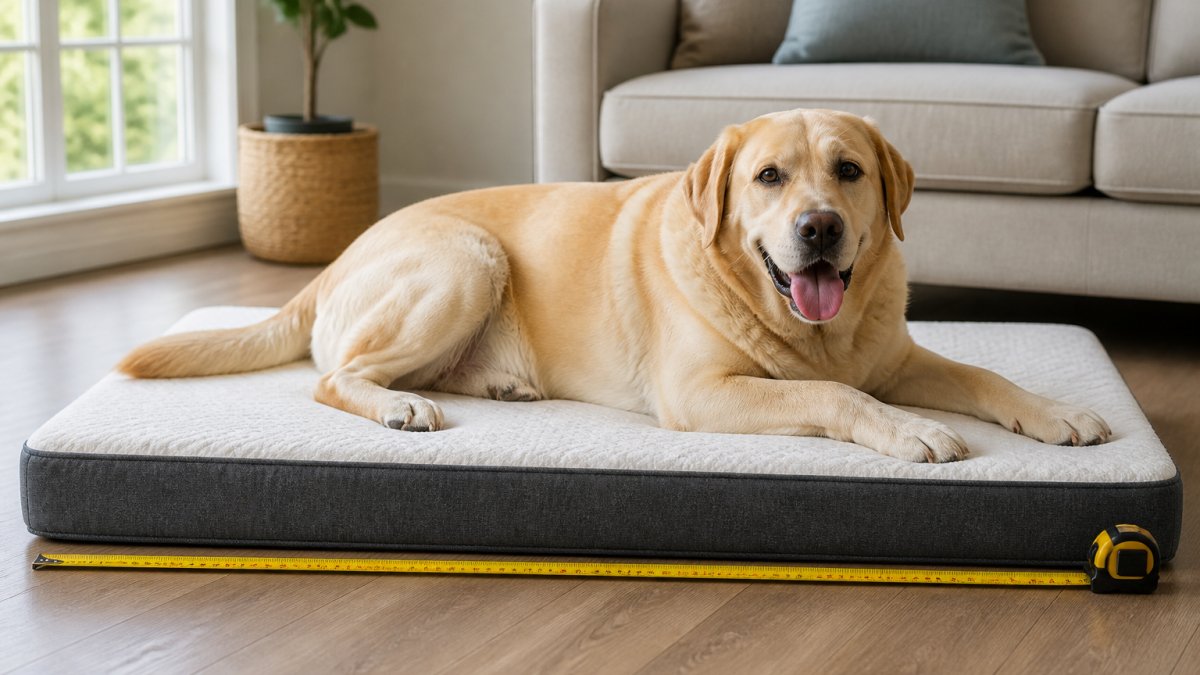
A memory foam dog bed for large dogs needs to match your dog's full body length when stretched out, not their curled-up sleeping size. Undersized beds push weight onto the floor and defeat the orthopedic support you paid for.
Measuring Your Dog by Weight, Body Length, and Sleeping Position
Measure from the tip of the nose to the base of the tail while your dog lies flat, then add a few inches of margin. Check the bed's weight capacity, and match the style to how they sleep:
| Sleeping Position | Best Bed Style | Why It Fits |
|---|---|---|
| Curled in a ball | Bolster bed | Raised edges give a sense of security |
| Stretched flat | Mattress-style bed | Full-length support, no walls in the way |
| Head propped up | Sofa-style bed | Bolster back plus open front |
| Sprawled on side | Oversized mat | Maximum flat surface area |
Sizing by Weight and Body Length
Use your dog's weight and nose-to-tail length together. A tall, lean dog and a short, stocky dog of the same weight need different bed footprints.
| Dog Weight | Typical Body Length (nose to tail base) | Minimum Bed Surface |
|---|---|---|
| Under 25 lb | Up to 20 in | 24 x 18 in |
| 25-50 lb | 20-30 in | 30 x 20 in |
| 50-75 lb | 30-38 in | 36 x 27 in |
| 75-100 lb | 38-44 in | 44 x 32 in |
| Over 100 lb | 44 in and up | 50 x 36 in or larger |
These are minimums for a curled or compact sleeper. Add 4-6 inches in each direction for dogs who stretch out, and consider an oversized mat for side-sleepers.
Foam Density and Thickness for Large Dogs
For dogs over roughly 50 pounds, foam density matters more than thickness. Low-density foam compresses under weight and stops supporting within weeks. Denser foam holds its shape longer.
- Density: Look for 3 lb per cubic foot or higher for large dogs. Foam under 2.5 lb compresses quickly under a 70-pound dog.
- Thickness: 3-4 inches of dense foam supports most large dogs. Thickness without density is just a thicker pancake.
- Firmness: Medium-firm is the sweet spot. Very soft foam lets heavy dogs bottom out; very firm foam can create pressure points on bony hips.
Matching the Bed to Your Dog's Body
A few patterns worth knowing:
- Deep-chested breeds (Great Danes, Boxers) need a longer bed than their weight suggests, because their length runs nose to tail.
- Short-legged, heavy breeds (Bulldogs, Basset Hounds) need a lower profile so they can step on without a ramp.
- Senior large dogs often need a bolster to lean against when getting up, plus dense foam for arthritic joints.
Best For
Large dogs over 50 lb: a 4-inch, 3 lb+ density memory foam core with a gel-infused top layer and a breathable, removable cover. Size up at least one step from your dog's curled-up measurement.
Watch Out
A bed labeled "large" is not a standard size. Always compare the listed surface dimensions to your dog's nose-to-tail length plus margin, not to the breed name on the label.
Waterproof Cooling Dog Bed Options for Accidents and Easy Cleaning
A waterproof cooling dog bed solves the two problems that shorten a bed's life: accidents and odor. Puppies, senior dogs, and dogs recovering from surgery all need a water-resistant barrier between them and the foam.

- Removable cover: Non-negotiable. Foam cores cannot go in a washing machine.
- Machine-washable cover: Saves you hand-washing a large, heavy cover every week.
- Water-resistant cover plus inner liner: The liner is the real protection; the cover is the first line.
Our own Waterproof Cooling Oval Bed is built around this idea, with water-resistant fabric, a breathable surface, and a cooling sensation in the material. At $14.18, it's a practical starting point for a puppy or a smaller dog who needs easy cleanup.
Watch Out
Never machine-wash a memory foam core, even on a gentle cycle. Water breaks down the foam's cell structure, and it will never fully dry inside. That trapped moisture turns into mildew, which is worse than the accident you were cleaning up.
Cooling Beds for Different Climates, Coat Types, and Senior Dogs
Cooling needs change with where you live and what your dog wears year-round. A thick-coated breed in a humid climate needs more airflow than a short-coated dog in a dry one.
- Hot, humid climates: Prioritize breathable fabric and elevated design so air moves under the bed.
- Dry heat: Gel-infused foam and moisture-wicking covers do more work here.
- Double and thick coats: Airflow matters most; heat dissipation is harder through dense fur.
For dogs with joint issues, an orthopedic bed with firm, dense foam and a washable cover does more than a thin cooling mat. Cooling mats are a supplement, not a replacement for joint support.
Common Mistakes When Buying a Cooling Memory Foam Dog Bed
The biggest mistake is trusting the label instead of the construction. "Cooling" is not a regulated term, so any bed can use it.
Here's what we see most often:
- Buying by thickness, not density. A four-inch low-density bed flattens faster than a three-inch dense one.
- Ignoring the cover material. A non-breathable waterproof shell traps heat and cancels out the gel layer.
- Sizing down. A bed that's too small puts your dog's joints on the floor.
- Skipping the wash plan. If the cover isn't removable and machine-washable, the bed becomes a hygiene problem within months.
- Expecting a cooling bed to replace vet care. If your dog pants heavily indoors or avoids lying down, that's a conversation for your veterinarian, not a shopping decision.
Best For
Dogs who run hot but still need joint support: dense memory foam with a gel layer and a breathable, removable cover. Dogs who just need a cool spot to sprawl: a lighter cooling mat or an elevated cot.
Conclusion
Choosing well comes down to matching foam density, cover breathability, and size to your specific dog, not to a marketing claim. Get those three right and the bed earns its place for years.
At Pawsibly Everything, we stock bedding built around comfort and easy care, including cooling options with water-resistant fabric and breathable surfaces, plus grooming and everyday essentials for dogs, cats, and small pets.
Frequently Asked Questions
What is the best dog bed that stays cold?
A cooling memory foam bed with gel-infused foam, breathable fabric, and an elevated or airflow-friendly base stays coolest. Gel-infused foam pulls heat away from your dog's body, while moisture-wicking covers and breathable mesh sides let trapped heat escape. For dogs that run hot, pair a cooling bed with a waterproof liner so accidents do not soak the foam and reduce airflow. Surface temperature matters more than marketing claims, so look for beds that list foam density and cooling materials clearly.
Does cooling gel in a dog bed really work?
Cooling gel absorbs and redistributes body heat, but it does not refrigerate your dog. The effect depends on gel placement, foam density, and airflow around the bed. A gel-infused dog bed works best when the cover is breathable and the base allows air to circulate underneath. In practice, gel helps reduce heat retention on the sleep surface, but it will not stay cold indefinitely. Rotating the bed or adding a cooling mat on top can extend the effect during hot afternoons.
How do I choose the right size cooling bed for my dog?
Measure your dog from nose to tail base while standing, then add 6 to 8 inches for stretching room. For a memory foam dog bed for large dogs, match the bed's weight capacity to your dog's weight and check the sleeping surface dimensions, not just the outer frame. Dogs that curl up need less space than sprawlers. A bed that is too small compresses the foam and reduces pressure relief, so sizing up is usually the safer choice.
Are memory foam dog beds safe for dogs?
Memory foam beds are safe when the foam is certified and fully cured. New foam can release volatile organic compounds (VOCs) for a few days, so let the bed air out in a ventilated room before your dog uses it. Choose beds with removable, machine-washable covers to reduce dust and dander buildup. If your dog chews bedding, supervise use until you know the foam is not being ingested, and replace any bed with exposed foam or torn seams.

