

Cart
0
Table of Contents
- Top-Rated Durable Toys for Aggressive Chewers
- Safe Materials for Heavy Duty Dog Toys: Rubber vs. Nylon vs. Natural
- How to Choose the Right Toy for Your Dog's Chewing Style
- Dog Toy Safety Tips for Power Chewers
- How to Keep Aggressive Chewers Occupied with Stuffable and Enrichment Toys
- Environmental Impact of Chew Toy Materials
- Conclusion
Last Updated: August 2, 2026
Finding genuinely durable toys for aggressive chewers is harder than it looks. Most products marketed as "heavy-duty" fail within days under a determined power chewer's jaw, leaving owners frustrated and dogs potentially at risk from ingested fragments. This guide covers every major material type, top product picks, and the safety framework you need to make smart, informed choices.
Here's what most guides get wrong: they treat "durable" as a single category. A toy that survives a 30-pound Beagle will disintegrate under a 90-pound Rottweiler. Chew intensity, jaw strength, and behavioral motivation all determine which toy actually holds up.
Top-Rated Durable Toys for Aggressive Chewers
The best durable toys combine verified material density, safety-first design, and enough engagement to keep a high-drive dog occupied.
KONG Extreme Dog Toy
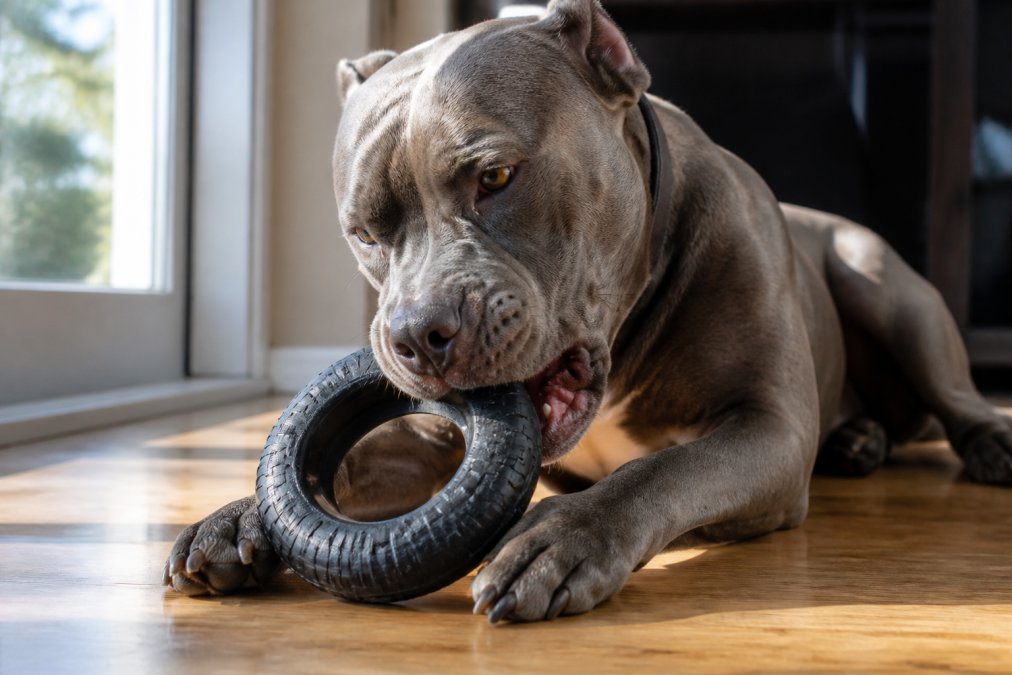
KONG Extreme is the benchmark against which most other chew toys are measured. It's made from KONG's strongest black natural rubber formula, which flexes under bite pressure rather than cracking. That flex is key to its longevity: rigid materials shatter, pliable ones absorb force.
The stuffable cavity lets you pack it with kibble, peanut butter, or frozen puree for 20-to-30 minutes of mental enrichment. Veterinarians and trainers recommend it widely. The main limitation: it's not truly indestructible, and supervision is warranted for extreme chewers.
Best for: Power chewers who need mental stimulation and treat-dispensing engagement.
GoughNuts MAXX Ring
GoughNuts MAXX Ring is built by mechanical and polymer engineers specifically for dogs who destroy ordinary toys in hours. The MAXX HD rubber compound is denser than standard chew toy rubber. The standout feature is the patented safety indicator: a red layer embedded in the core that becomes visible when the toy has reached its safety limit.
The lifetime replacement guarantee backs up the durability claim. It floats for water play. Trade-off: no squeaker, scent, or treat cavity, so it works best for dogs who chew from instinct rather than boredom.
Best for: Extreme power chewers who have destroyed every other rubber toy.
Nylabone Dura Chew Power Chew Textured Dog Bone
Nylon chew toys don't flex; they abrade slowly under chewing pressure. The Nylabone Dura Chew is infused with flavors like bacon or chicken throughout the material. The dental ridges clean teeth and reduce plaque as the dog chews, adding functional benefit rubber toys can't match.
Critical safety note: nylon is not edible. Small pieces can break off under aggressive chewing. Monitor regularly and replace when chunks become large enough to swallow. Available in multiple sizes to match your dog's weight class.
Best for: Aggressive chewers who benefit from simultaneous dental hygiene.
Benebone Wishbone Chew Toy
The Benebone Wishbone solves an ergonomic problem most chew toys ignore. The patented curved wishbone shape allows dogs to brace the toy with their paws for a satisfying chew. Real bacon, chicken, or peanut flavor is infused throughout the super-strong nylon.
Made in the USA. Limitation: Benebone publishes strict weight limits for each size, and exceeding them risks tooth damage. Very hard nylon can fracture teeth in dogs who bite with extreme force.
Best for: Dogs who enjoy flavored chew toys and need an easy-to-grip ergonomic design.
West Paw Zogoflex Tux
West Paw's Zogoflex material is the most environmentally considered option. The Tux is recyclable, non-toxic, BPA-free, and made in the USA. It's pliable enough to be gentle on teeth while resisting puncture from aggressive chewing. The stuffable cavity accommodates treats, kibble, or frozen purees, and the dishwasher-safe construction makes cleanup easy.
West Paw backs the Tux with a manufacturer's guarantee against dog damage. It floats for water fetch. Trade-off: treats can be harder for dogs to extract than from a standard KONG.
Best for: Tough chewers who need a treat-dispensing toy with environmental credentials and easy maintenance.
| Toy | Material | Stuffable | Safety Indicator | Made in USA | Best For |
|---|---|---|---|---|---|
| KONG Extreme | Natural rubber | Yes | No | No | Power chewers, mental stimulation |
| GoughNuts MAXX Ring | MAXX HD rubber | No | Yes (red layer) | Yes | Extreme chewers, water play |
| Nylabone Dura Chew | Nylon | No | No | No | Dental health, aggressive chewing |
| Benebone Wishbone | Nylon | No | No | Yes | Flavored chewing, grip-friendly |
| West Paw Zogoflex Tux | Zogoflex TPE | Yes | No | Yes | Eco-conscious owners, treat dispensing |
Safe Materials for Heavy Duty Dog Toys: Rubber vs. Nylon vs. Natural
Material selection is the most consequential decision when choosing heavy-duty dog toys.
Natural rubber is the gold standard for most aggressive chewers. It's flexible, which reduces tooth fracture risk, and it absorbs bite force rather than transmitting it back to the dog's teeth and jaw. KONG Extreme and GoughNuts MAXX use natural rubber compounds with different density levels.
Nylon is harder and more abrasion-resistant than rubber, extending product life, but the hardness creates real risk of tooth fracture for dogs who bite with maximum force. A useful field test: press your thumbnail firmly into the toy material. If it doesn't leave any mark, the toy is likely too hard for safe use.
Zogoflex and similar TPE compounds sit between rubber and nylon on the hardness spectrum. They're pliable like rubber but more puncture-resistant, and tend to be the most environmentally responsible option.
What to avoid: Latex toys tear easily and fragments can cause intestinal blockages. Rope toys present similar risk as fibers separate under heavy chewing. Squeaker toys without reinforced exteriors become choking hazards once breached.
Watch Out
Never leave an aggressive chewer unsupervised with any toy containing a squeaker, rope fiber, or thin latex exterior. Ingested fragments can cause intestinal blockages requiring emergency surgery.
How to Choose the Right Toy for Your Dog's Chewing Style
Choosing the right toy starts with an honest assessment of your dog's chewing motivation, not just their size.
Age-Specific Durability Needs: Puppies vs. Adult vs. Senior Dogs
Age changes both chewing behavior and appropriate material density.
Puppies chew primarily from teething discomfort and exploration. Their jaw strength is lower but motivation is high. Very hard nylon toys are not appropriate for puppies under 6 months because their developing teeth can fracture on dense materials. Softer rubber options are safer. As the American Veterinary Medical Association's pet care resources notes, dental development continues through the first year.
Adult dogs represent the widest range of chewing intensity. Match material density to observed chewing behavior, not breed stereotypes.
Senior dogs often develop dental sensitivity or reduced bite force. Returning to softer rubber options makes sense as dogs age past 8-10 years.
Interactive vs. Solo Play Toys for Power Chewers
Solo chew toys like the Benebone Wishbone or Nylabone Dura Chew are designed for unsupervised use. They satisfy the instinctual drive to chew without requiring human participation, making them right for dogs experiencing separation anxiety or boredom-driven destructive behavior.
Interactive toys like treat-dispensing options require engagement to extract a reward, creating a different cognitive experience. The West Paw Zogoflex Tux and KONG Extreme both work as interactive toys when stuffed, turning chew time into problem-solving. A dog chewing from anxiety needs different intervention than one chewing from boredom.
Dog Toy Safety Tips for Power Chewers
Safety comes down to choosing the right material and knowing when to retire a toy. Most owners get the first part right and consistently fail at the second.
Signs of a Worn-Out or Dangerous Toy
A toy that was safe when purchased can become hazardous as it wears. Learn to read wear patterns yourself.
Replace any toy immediately when you observe:
- Chunks or pieces breaking off that are large enough to swallow
- Visible cracks, splits, or deep gouges in rubber or nylon
- Fraying edges on nylon toys that create sharp points
- Any deformation that changes structural integrity
- The toy becoming small enough to fit entirely in the dog's mouth
Replacement Frequency Guidelines
Replacement frequency depends on chewing intensity, material type, and toy size.
- Extreme power chewers: Inspect every 3-5 days; replace nylon toys when surface shows deep gouging, rubber toys when chunks are visible
- Moderate chewers: Weekly inspection; replace when structural integrity is compromised
- Light chewers: Monthly inspection; replace based on visible wear
Pro Tip
Keep a rotation of 3-4 toys and cycle them every few days. Dogs engage more intensely with toys they haven't seen recently, which distributes wear more evenly and extends the life of your collection.
How to Keep Aggressive Chewers Occupied with Stuffable and Enrichment Toys
Stuffable toys are the single most effective tool for keeping aggressive chewers occupied. Fill a toy cavity with something the dog wants, make extraction require effort, and you've created a self-sustaining enrichment activity lasting 20-45 minutes.
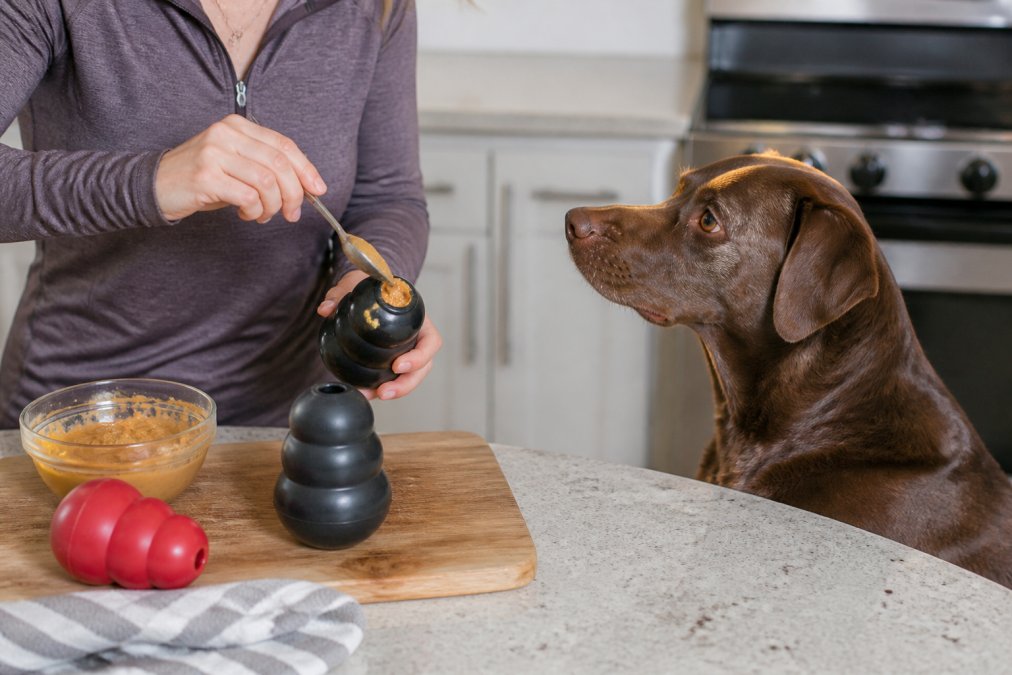
The KONG Extreme and West Paw Zogoflex Tux are the strongest performers. A toy packed loosely with dry kibble empties in 3 minutes. The same toy stuffed with peanut butter, frozen overnight with kibble mixed into a broth-and-kibble slurry, can occupy a determined chewer for 30 minutes or more. Freezing is the single biggest multiplier for engagement duration.
Behavioral Enrichment Integration: Turning Chew Time into Training Time
Stuffable toys aren't just boredom relief. They're a behavioral intervention tool.
For dogs with separation anxiety, a frozen KONG given 5-10 minutes before departure creates a positive association with the owner leaving. The dog connects departure with receiving a high-value reward, which can meaningfully reduce anxiety-driven destructive behavior over time.
For high-energy dogs engaging in destructive chewing from frustration, enrichment toys shift the behavior from destructive to constructive. The dog satisfies the same drive on a sanctioned object rather than furniture.
Key Takeaway
Stuffable chew toys work best as a behavioral system, not a one-off solution. Consistent use during predictable high-risk periods produces the most significant reduction in destructive behavior.
Environmental Impact of Chew Toy Materials
Most pet owners don't consider the environmental footprint of chew toys, though materials vary considerably in sustainability.
Nylon is petroleum-derived and not biodegradable. Nylabone and Benebone products persist in landfills indefinitely. For environmentally conscious owners, nylon represents the least sustainable choice, though longevity means fewer replacements over time.
Natural rubber is renewable when sourced responsibly and biodegradable under the right conditions, though the timeframe is long.
Zogoflex (West Paw) stands out. West Paw operates a closed-loop recycling program: owners can mail back worn Zogoflex toys for recycling. Toys are manufactured in Bozeman, Montana, reducing shipping emissions compared to overseas alternatives. According to the Environmental Protection Agency's guidance on sustainable materials management, choosing products with take-back programs is one of the most effective ways consumers can reduce material waste.
If environmental impact matters, prioritize Zogoflex toys and participate in the recycling program. If durability is primary, natural rubber remains the most dog-safe and widely available option.
Quick-Reference Chew Toy Selection Framework
| Dog Profile | Recommended Material | Avoid | Replacement Signal |
|---|---|---|---|
| Puppy (under 6 months) | Soft rubber, puppy nylon | Dense nylon, MAXX rubber | Any cracking or chunks |
| Adult moderate chewer | Natural rubber, Zogoflex | Latex, rope toys | Weekly inspection |
| Adult power chewer | MAXX HD rubber, dense nylon | Latex, plush without reinforcement | Every 3-5 day inspection |
| Senior dog (8+ years) | Soft rubber, Zogoflex | Hard nylon, MAXX rubber | Monthly or at first sign of wear |
| Anxiety-driven chewer | Stuffable rubber (frozen) | Solo nylon only | As above by age/intensity |
Finding the right durable chew toy for an aggressive chewer takes more than grabbing the first "indestructible" label. The real challenge is matching material density, toy function, and replacement discipline to your specific dog's chewing profile. Pawsibly Everything offers a curated selection of premium toys designed for this kind of informed, safety-first approach, alongside comfortable beds, grooming essentials, and everything else devoted pet parents need. Browse the full toy collection at Pawsibly Everything and find the right match for your dog's chewing style.
Frequently Asked Questions
What is the toughest dog toy for aggressive chewers?
The GoughNuts MAXX Ring is widely regarded as one of the toughest options for extreme power chewers. Made from a heavy-duty rubber compound and backed by a lifetime replacement guarantee, it features a patented red safety indicator in the core. When red is visible, it is time to replace the toy. The KONG Extreme, made from natural rubber, is another top choice recommended by veterinarians for dogs with high bite force and destructive chewing habits.
Can a dog still destroy indestructible toys?
Yes. No toy is truly indestructible despite marketing claims. The term 'indestructible' describes toys engineered to withstand heavy chewing far longer than standard options, not toys that last forever under all conditions. Supervised play is always recommended for aggressive chewers. Inspect toys regularly for signs of wear and tear, torn edges, or chunks breaking off. When those signs appear, replace the toy immediately to eliminate choking hazard risks.
What are the safest materials for heavy duty dog toys?
Natural rubber and high-density nylon are the two most common safe materials for heavy duty dog toys. Natural rubber, like that used in KONG Extreme and GoughNuts products, is non-toxic, tear-resistant, and gentler on teeth. Nylon options, like Nylabone and Benebone, are long-lasting but should be sized correctly for your dog's weight. Always look for toys labeled non-toxic and free from BPA, lead, and phthalates to meet basic safety standards for power chewers.
How do I keep an aggressive chewer occupied when I'm not home?
Stuffable toys are one of the most effective tools for keeping aggressive chewers occupied during solo play. Fill a KONG Extreme or West Paw Zogoflex Tux with kibble, peanut butter, or a frozen puree to extend engagement significantly. Rotating two or three toys prevents boredom from setting in. Treat-dispensing puzzle toys add an extra layer of mental stimulation, which helps reduce separation anxiety and destructive behavior in high-energy dogs left alone for stretches of time.
How often should I replace chew toys for a power chewer?
Replacement frequency depends on chew intensity and the toy's material density. As a general guideline, inspect toys after every play session and replace them when you notice deep gouges, missing chunks, fraying edges, or exposed inner layers. For aggressive chewers, nylon toys may need replacing every four to eight weeks, while high-quality rubber toys can last several months with proper supervision. The GoughNuts MAXX Ring takes the guesswork out by using a built-in red indicator to signal when replacement is needed.
This article was written using GrandRanker

