

Cart
0
Table of Contents
- Why DIY Enrichment Toys Matter for Power Chewers
- Safe Materials for Homemade Dog Toys
- DIY Puzzle Toys for Dogs: Step-by-Step Instructions
- How to Keep Aggressive Chewers Busy with DIY Options
- Safety Precautions and Supervision Guidelines
- Durability Testing and Post-Chew Maintenance
- When to Transition from DIY to Commercial Toys
- Frequently Asked Questions
Last Updated: September 21, 2026
Why DIY Enrichment Toys Matter for Power Chewers
Power chewers need mental stimulation, physical challenge, and durability. DIY enrichment toys for power chewers let you control materials, durability, and difficulty level, keeping your dog engaged while reducing destructive behavior and boredom.
Heavy chewers are often bored, anxious, or seeking cognitive engagement. Without mental stimulation, they turn to destructive behavior. A well-designed DIY enrichment toy redirects that energy into something productive and safe.
DIY options give you control: pick non-toxic materials, design for your dog's chewing style, and make toys for a fraction of commercial costs. You can replace them frequently without breaking the budget, keeping your dog's environment fresh.
Pro Tip
Power chewers often destroy toys within hours. The solution isn't buying more expensive toys, it's rotating through multiple affordable DIY options so your dog always has something new to work with.
Safe Materials for Homemade Dog Toys
Not all materials are safe for power chewers. Some break into swallowable pieces, others contain toxins, and some won't withstand serious chewing. Choosing the right base materials is essential for safe DIY enrichment.
Best materials for DIY enrichment toys for power chewers:
- Jute rope and hemp rope - Natural, durable, and safe when properly braided. These materials fray slightly but don't create large swallowable chunks
- Durable denim fabric - Old jeans work perfectly. The tight weave resists tearing, and dogs can't easily ingest pieces
- Rubber and silicone - Food-grade options are non-toxic and flexible enough to withstand intense chewing
- Cardboard and paper - Surprisingly durable when layered, and completely digestible if small amounts are swallowed
- Frozen treats - Broth, yogurt, or pumpkin puree frozen in ice cube trays or muffin tins
Materials to Avoid
Certain materials create serious safety risks for power chewers. Avoid these completely:
- Plastic bags and thin plastic - Break into small pieces that cause intestinal blockages
- String and twine - Can wrap around the digestive tract, requiring surgery
- Rawhide chews - Often treated with chemicals and can splinter into choking hazards
- Cooked bones - Splinter easily and can puncture the digestive tract
- Foam padding and stuffing - Expand in the stomach and cause blockages
- Painted or treated wood - Contains toxins that harm dogs
- Chocolate, grapes, raisins, xylitol - All toxic to dogs, even in small amounts
Rule: if you wouldn't put it in your own mouth, don't give it to your dog.
Watch Out
Ingestion risks are real. A power chewer can consume pieces of a toy faster than you think. If your dog swallows large chunks of any DIY toy, contact your veterinarian immediately. Intestinal blockages are life-threatening emergencies.
DIY Puzzle Toys for Dogs: Step-by-Step Instructions
Puzzle toys engage your dog's brain while slowing treat consumption. Here's how to make three versions for power chewers.
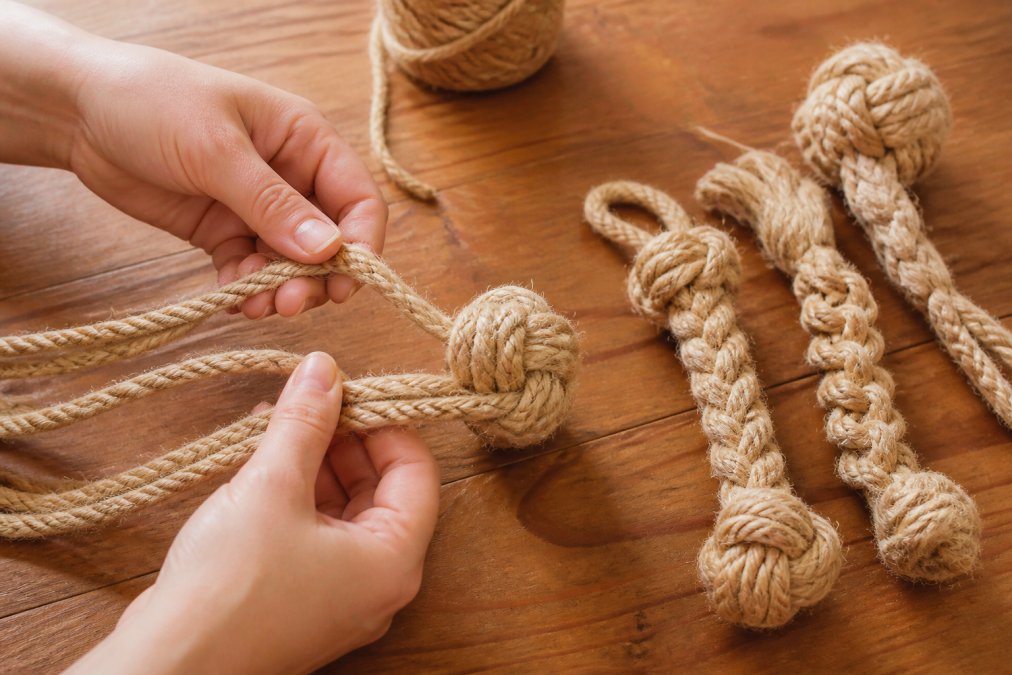
Rope and Jute Braiding Technique
A braided rope toy is durable, affordable, and simple to make, satisfying the urge to tug and shake.
What you'll need:
- Three 3-foot lengths of jute rope or natural hemp rope
- Scissors
- Your hands and about 10 minutes
Steps:
- Lay out three rope strands and tie together at one end.
- Braid tightly to resist fraying.
- Tie off the other end with bulky knots.
- Trim loose fibers with scissors.
- Inspect for weak spots and re-braid if needed.
Kibble Dispenser from Household Items
A kibble dispenser turns meals into mental challenges, slowing eating and providing cognitive stimulation.
What you'll need:
- A plastic water bottle (16-20 oz)
- Scissors or a utility knife
- Your dog's regular kibble
- Optional: peanut butter for extra motivation
Steps:
- Cut 4-6 kibble-sized holes around the bottle.
- Fill halfway with kibble.
- Cap tightly.
- Let your dog figure it out, most learn within minutes.
- Supervise the first session to ensure they manipulate rather than chew the plastic.
Frozen Treat Puzzles
Frozen enrichment keeps your dog occupied for extended periods while soothing sore gums.
What you'll need:
- Ice cube trays or muffin tins
- Low-sodium broth, plain yogurt, or pumpkin puree
- Optional: small kibble pieces, carrots, or apple chunks
- Freezer
Steps:
- Pour broth, yogurt, or pumpkin into ice cube trays or muffin tins.
- Add optional kibble or soft vegetables (avoid chocolate, grapes, raisins).
- Freeze overnight.
- Store in a freezer bag for up to 3 months.
- Offer on a mat or outside.
Key Takeaway
The best puzzle toy is one your dog will actually work on. Start simple with rope toys, then add complexity with dispensers and frozen treats as your dog's skills improve.
How to Keep Aggressive Chewers Busy with DIY Options
Power chewers need variety. Rotating through different toy types prevents boredom and reduces the chance your dog will destroy household items out of frustration.
Cardboard and Paper-Based Enrichment
Cardboard is underrated as enrichment material. It's safe, abundant, and satisfying for dogs to shred and chew.
Interactive Dog Puzzle Feeder Toy →
Simple cardboard enrichment:
- Crumpled paper balls - Stuff newspaper or brown paper into a cardboard box. Your dog tears through it to find treats hidden inside
- Layered cardboard sheets - Stack 5-10 sheets of cardboard and tape them together. Dogs enjoy peeling layers apart
- Cereal boxes with treats - Fill empty cereal boxes with crumpled paper and small treats. Your dog tears the box apart to find the reward
- Paper towel rolls - Stuff with kibble or treats, fold the ends closed. Your dog unrolls it to access the food
No-Sew Fabric Toys for Heavy Chewers
Fabric toys don't require sewing skills. They're quick to make and durable enough for serious chewing.
No-sew rope toy from old t-shirts:
- Cut an old t-shirt into three strips about 2 inches wide and 3 feet long
- Tie them together at one end
- Braid tightly, just like the jute rope method
- Tie off the other end
- Trim loose threads
No-sew tug toy from denim:
- Cut two pieces of old jeans into rectangles about 4 inches by 8 inches
- Stack them together
- Cut fringe around all four edges, leaving a 1-inch border in the middle
- Tie the center tightly with twine or rope
- Your dog now has a tug toy with lots of texture to grab
Safety Precautions and Supervision Guidelines
DIY toys require active management. They're not "set it and forget it" enrichment.
Supervision essentials:
- Always watch during first use. See how your dog interacts with the new toy. Do they chew appropriately, or are they trying to swallow large pieces?
- Limit unsupervised play time. Power chewers shouldn't have access to DIY toys when you're not home, at least not until you know they can handle them safely
- Inspect toys regularly. Check for loose threads, torn seams, or pieces that could become choking hazards
- Replace toys when they show wear. Don't wait until they're falling apart
- Know the signs of a problem. If your dog vomits, has diarrhea, or shows signs of abdominal pain after playing with a DIY toy, contact your vet immediately
Post-play checklist:
- Remove the toy after 20-30 minutes of play
- Check your dog's mouth for stuck pieces
- Wash the toy if it's reusable (fabric, rubber)
- Store toys in a secure location away from other pets
Durability Testing and Post-Chew Maintenance
Not all DIY toys last equally. Testing durability helps you understand which options work best for your specific dog.
How to test durability:
-
Supervise a 15-minute session. Watch how aggressively your dog chews. Do they shake it? Tear at it? Swallow pieces?
-
Inspect for damage. After 15 minutes, examine the toy carefully. Look for tears, loose threads, or pieces missing.
-
Repeat over 3-4 sessions. You'll start to see patterns. Some toys last one session. Others hold up for weeks.
-
Document what works. Keep notes on which materials, designs, and construction methods survive your dog's chewing style.
Maintenance for reusable toys:
- Wash fabric toys weekly in hot water with mild detergent
- Rinse rope toys thoroughly under running water to remove saliva and debris
- Air dry completely before storing to prevent mold
- Discard toys with visible mold, strong odors, or structural damage
Pro Tip
Keep a rotation schedule. If you have five DIY toys, wash one each day and rotate which toy your dog gets. This keeps toys fresher and prevents your dog from getting bored with any single option.
When to Transition from DIY to Commercial Toys
DIY toys are cost-effective and customizable, but they have limits. Some dogs need commercial-grade durability, or your lifestyle might not support frequent toy replacement.
Signs it's time to add commercial toys:
- Your dog destroys DIY toys faster than you can make them
- You don't have time for regular toy maintenance and rotation
- Your dog has successfully ingested toy pieces despite supervision
- You want toys designed specifically for power chewers with professional durability testing
- Your dog's anxiety or boredom is severe enough that DIY options alone aren't sufficient
Frequently Asked Questions
What materials are safe for DIY dog toys for power chewers?
Safe materials include natural jute rope, hemp rope, durable denim fabric, and untreated cardboard. Avoid plastic, foam, string, and anything with small parts that could become swallowing hazards. Always inspect homemade toys before giving them to your dog and supervise play sessions. Non-toxic, food-grade materials are essential for toys that will be chewed heavily.
How do I make DIY puzzle toys for dogs that work for aggressive chewers?
Create kibble dispensers using repurposed plastic containers with holes cut for food to fall out. Layer materials so your dog must work through multiple obstacles to access treats. Heavy chewers need reinforced designs with multiple layers of durable fabric or secured rope to prevent ingestion risks.
How often should I replace DIY enrichment toys for power chewers?
Inspect DIY toys daily for tears, loose threads, or broken pieces. Replace immediately if you notice damage that could lead to ingestion. Most DIY toys last 1-2 weeks with heavy chewers, depending on construction quality and material durability. Rotate toys to extend their lifespan and maintain mental stimulation. Consider commercial options like the Interactive Dog Puzzle Feeder Toy for longer-lasting alternatives designed specifically for destructive chewing.
Can DIY toys prevent destructive behavior in power chewers?
Yes. Enrichment toys reduce boredom and provide mental stimulation that channels natural chewing instincts away from furniture and shoes. Puzzle toys and foraging activities satisfy cognitive needs while keeping dogs physically engaged. Combining DIY options with supervised play and interactive toys like the Dog Treat Dispenser Ball creates a comprehensive approach to managing destructive behavior and separation anxiety.

