

Cart
0
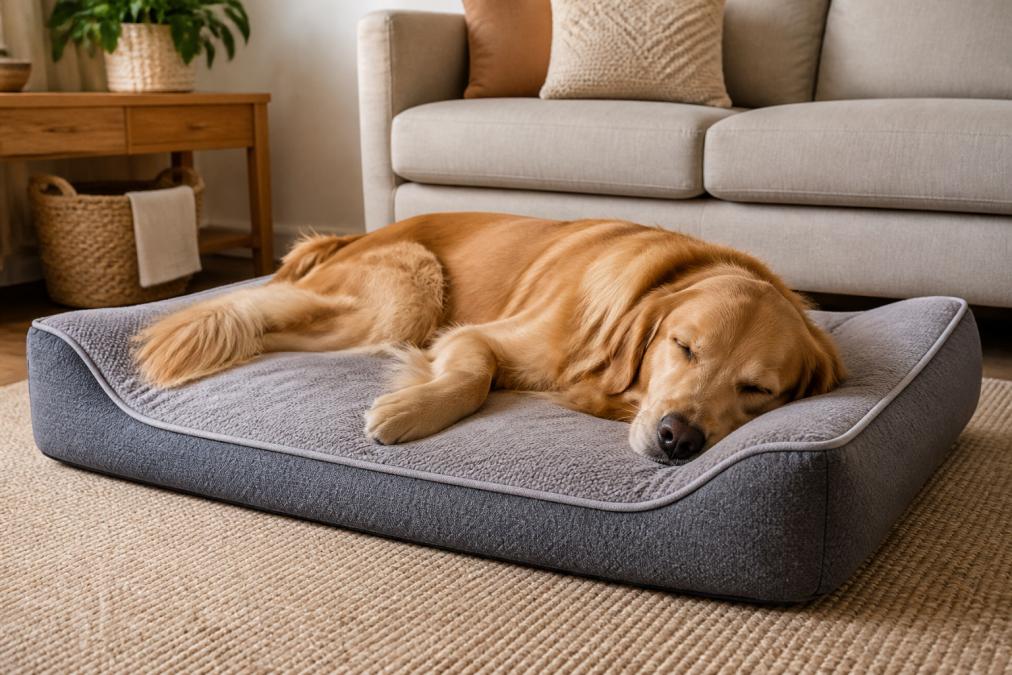
Table of Contents
- Why Memory Foam Matters for Your Dog's Health
- Top Memory Foam Pet Beds: Our 2026 Review
- Quick Comparison of Reviewed Beds
- Best Orthopedic Beds for Senior Dogs with Joint Issues
- How to Choose a Pet Bed Size for Your Dog
- Cleaning and Care for Washable Memory Foam Dog Bed Covers
- Foam Density and Material Quality: What to Look For
- Which Bed Should You Pick?
- Frequently Asked Questions
Last Updated: September 9, 2026
Why Memory Foam Matters for Your Dog's Health
A quality memory foam pet bed actively supports joints and distributes body weight evenly, which matters most for senior dogs and breeds prone to hip dysplasia.
Standard beds filled with loose polyester flatten within weeks, offering zero support. A true memory foam base, often high-density and CertiPUR-US certified, contours to your dog's body, relieving pressure points on elbows and hips (certipur.us).
TL;DR:
- Best for Anxious Cuddlers: Pet Calming Donut Bed, raised rim for security
- Best Unique Shape: Calming Fluffy Flower Pet Bed, supportive, machine washable
- Key Buying Factor: High-density foam and a washable, removable cover
Below, we break down the top picks for 2026, explain how to choose the correct size, and share the cleaning and material insights most guides skip.

Top Memory Foam Pet Beds: Our 2026 Review

Pet Calming Donut Bed: Best for Anxious Cuddlers
The Pet Calming Donut Bed is our top pick for dogs that love to curl up with their head supported. Its raised rim mimics the comfort of snuggling against a littermate, soothing anxious pets and encouraging natural nesting behavior. The bolstered edges also provide gentle head and neck support, often missing in flat mattress-style beds.
Available in S, M, L, it accommodates weights from small puppies within 2.5 kg up to larger dogs within 5 kg. The fluffy interior holds its shape well, giving your dog a secure, cave-like space to decompress.
Calming Fluffy Flower Pet Bed: A Unique Supportive Shape
The Calming Fluffy Flower Pet Bed takes a creative approach to orthopedic comfort. Shaped like a flower, the raised lace edges wrap around your pet's head, offering a unique alternative to the standard round donut. It is made from soft teddy fleece and filled with 100% polyester fiberfill that resists flattening, providing steady cushioning for senior dogs and those with joint pain.
The base features a non-slip bottom to keep the bed firmly in place during play, and the entire bed is machine washable. Toss it in the washer on a gentle cycle and tumble dry low, and it comes out looking new.

Quick Comparison of Reviewed Beds
To help you decide at a glance, here is how our top picks stack up against other strong options in the Pawsibly Everything lineup.
| Bed | Starting Price | Best For | Key Feature |
|---|---|---|---|
| Pet Calming Donut Bed | $66.01 | Anxious cuddlers | Raised rim, 4 sizes up to 22.5 kg |
| Calming Fluffy Flower Pet Bed | $36.59 | Unique support needs | Machine washable, non-slip base |
| Luxury Plush Dog Sofa Bed | $86.15 | Small dogs & cats | Sofa-style, raised sides |
| Removable And Washable Plush Bed | $65.86 | Easy cleaning | Corduroy backrest, washable cover |
The Calming Fluffy Flower Pet Bed offers excellent value, especially considering the washable cover and durable fill.
Best Orthopedic Beds for Senior Dogs with Joint Issues
Senior dogs need a bed engineered to address the specific biomechanics of arthritis, hip dysplasia, and degenerative joint disease. While most reviews stop at 'high-density foam,' the real differentiator lies in two measurable specifications: foam density and Indentation Load Deflection (ILD).
Foam Density (measured in pounds per cubic foot, or lb/ft³) tells you how much material is packed into the foam. For senior dogs, you want a minimum of 2.5 lb/ft³ density. Below that, the foam will break down and lose its supportive shape within 6 to 12 months of nightly use. Premium orthopedic beds often use 3.0 to 4.0 lb/ft³ foam, which can maintain its structural integrity for 3 to 5 years.
ILD Rating measures firmness on a scale that typically ranges from 10 (very soft) to 60 (very firm). Most pet bed manufacturers do not publish this number, so ask customer service before purchasing. For a senior dog with arthritis, the ideal range is 25 to 35 ILD, firm enough to prevent sinking too deeply but soft enough to cradle the hips and elbows, reducing pressure points.
Breed-Specific Ergonomic Considerations
A one-size-fits-all approach fails dogs with breed-specific orthopedic challenges. Consider these patterns:
- Labrador Retrievers and Golden Retrievers: Prone to hip dysplasia and elbow arthritis. These breeds need a flat, rectangular mattress-style bed with a thick (4-inch minimum) solid foam base. Avoid donut or bolster styles that force the dog into a curled position, which compresses already stressed hip joints. The Luxury Plush Dog Sofa Bed in our lineup, with its flat, high-density base, is a better match than a curved donut.
- German Shepherds: Extremely prone to degenerative myelopathy and hip dysplasia. They require a very firm, flat surface with a minimum of 5 inches of high-density foam. A bed with a non-slip bottom is critical because German Shepherds often 'paddle' their legs when rising, and a sliding bed can cause them to lose their footing and injure themselves.
- Dachshunds and Corgis: Their long spines make intervertebral disc disease (IVDD) a serious risk. These breeds need a bed with uniform support along the entire length of the spine. A flat, firm mattress with no raised edges is ideal, as it allows the dog to stretch out fully and keeps the spine in a neutral, aligned position. Avoid any bed with a deep 'sink-in' feel.
- Bulldogs and French Bulldogs: Brachycephalic breeds often have breathing issues that are aggravated by sleeping in a contorted position. They benefit from a bed with a slightly raised, but not high, bolster on one side only, allowing them to prop their head while keeping their airway open. Look for a bed with a breathable, moisture-wicking cover to prevent overheating.
The 'Rise Test' You Can Do at Home
When evaluating a bed for a senior dog, press your hand firmly into the center of the foam and hold for 5 seconds. High-quality memory foam should recover within 2 to 3 seconds. If it takes longer than 5 seconds, the foam is too soft and will cause your dog to sink into a 'hole,' making it exhausting to climb out. This slow-recovery foam is marketed as 'body-contouring,' but for a senior dog with arthritis, it is a mobility hazard.
Watch Out
If your senior dog has been diagnosed with arthritis, consult your veterinarian about the ideal sleeping surface firmness. Some dogs with severe hip dysplasia actually prefer a firmer surface than standard memory foam, while others with spinal issues need a slightly softer top layer over a firm base. A dual-layer bed, firm base foam with a 1-inch softer topper, often provides the best compromise.
How Our Top Picks Address Senior Needs
The Pet Calming Donut Bed, while excellent for anxious cuddlers, may not be suitable for senior dogs with mobility issues. The raised rim can become an obstacle for dogs with weak hind legs. If your senior dog has difficulty climbing, a flat, low-profile mattress-style bed may be a safer choice.
How to Choose a Pet Bed Size for Your Dog
Getting the size wrong is the most common mistake we see. To learn how to choose a pet bed size, measure your dog from the tip of the nose to the base of the tail while they are sleeping in their favorite curled-up position.
Add 4 to 6 inches to that measurement to find the ideal bed diameter. For donut-style beds, the raised rim should be tall enough to support their head but low enough that they can easily climb in and out.
| Dog Weight | Recommended Bed Size | Example Bed |
|---|---|---|
| Up to 5.5 lbs (2.5 kg) | S (40 cm) | Pet Calming Donut Bed |
| Up to 11 lbs (5 kg) | M (50 cm) | Pet Calming Donut Bed |
| Up to 27 lbs (12.5 kg) | L (60 cm) | Calming Fluffy Flower Pet Bed |
| Up to 50 lbs (22.5 kg) | XL (80 cm) | Pet Calming Donut Bed |
Cleaning and Care for Washable Memory Foam Dog Bed Covers
The cover is the first line of defense against dirt, dander, and accidents. A bed with a removable, washable memory foam dog bed covers system is non-negotiable for maintaining a hygienic sleep environment. Without it, odors and bacteria build up deep inside the foam, causing recurring skin irritation and allergies in sensitive pets.

Most quality beds, including the Calming Fluffy Flower Pet Bed, allow you to wash the entire bed on a gentle cycle. For beds with separate foam cores, always remove the inner foam and wash only the outer cover. Air drying is gentler on the fabric.
Watch Out
Never put a solid memory foam core in the washing machine. The agitation will tear the foam apart and ruin its structural integrity. Always spot-clean the foam itself and wash only the fabric cover.
Foam Density and Material Quality: What to Look For
Not all memory foam is created equal, and the difference between a bed that lasts 6 months and one that lasts 5 years comes down to specifications most manufacturers bury in fine print.
Density: The Durability Metric
Foam density is measured in pounds per cubic foot (lb/ft³). Higher density means more material, which translates directly to longer lifespan and better support.
- 1.5 to 2.0 lb/ft³: Low-density foam. This is what you find in cheap beds from big-box retailers. It will begin to develop permanent body impressions within 3 to 6 months and offers minimal joint support. Avoid this for any dog over 15 pounds.
- 2.5 to 3.0 lb/ft³: Mid-range density. This is the minimum acceptable threshold for an orthopedic bed. It will hold its shape for 1 to 2 years with nightly use and provides adequate support for most dogs.
- 3.5 to 4.5 lb/ft³: High-density foam. This is the premium tier, typically found in beds priced above $80. It maintains its structural integrity for 3 to 5 years and provides the firm, stable support that senior dogs and large breeds need.
ILD: The Firmness Metric Competitors Ignore
Indentation Load Deflection (ILD) measures how much force (in pounds) is required to compress a 15-inch square piece of foam by 25%. It is almost never mentioned in pet bed reviews because most manufacturers do not test or publish it.
- ILD 10-20: Soft. The foam compresses easily. Suitable for small dogs under 15 pounds or as a top comfort layer.
- ILD 25-35: Medium-firm. This is the sweet spot for most dogs. It provides enough give to contour around the elbows and hips while maintaining enough resistance to prevent the dog from sinking too deep.
- ILD 40-50: Firm. This is appropriate for very large breeds (over 90 pounds) or dogs with severe arthritis who need maximum resistance to rise easily.
Pro Tip
When you contact a manufacturer, ask two questions: 'What is the foam density in lb/ft³?' and 'What is the ILD rating?' If they cannot answer both, they are likely using low-quality foam and hiding it. A reputable manufacturer will know these numbers for every bed they sell.
A high-density, high-ILD foam (e.g., 3.5 lb/ft³ density with a 35 ILD) will feel firm but supportive. A low-density, high-ILD foam (e.g., 2.0 lb/ft³ with a 35 ILD) will feel hard and brittle, like a brick, because there is not enough material to provide cushioning.
Off-Gassing and VOCs: What You Are Actually Breathing
Memory foam is a petroleum-based product that can retain volatile organic compounds (VOCs) released into the air, a process called off-gassing. When you unbox a new bed, that distinct 'new foam' smell is the off-gassing of chemicals like toluene, benzene, and formaldehyde.
This matters because dogs have an olfactory system up to 100,000 times more sensitive than humans (PubMed). A smell you barely notice can be overwhelming and stressful for your dog. Second, prolonged exposure to high VOC levels has been linked to respiratory irritation in both humans and pets (the EPA).
The solution is to look for foam that is CertiPUR-US certified. This third-party certification program verifies that the foam meets specific standards for content, emissions, and durability. Certified foams are:
- Made without ozone depleters
- Made without PBDEs, TDCPP, or TCEP flame retardants
- Made without mercury, lead, and other heavy metals
- Low-emission (VOC) for indoor air quality
- Tested for physical performance and durability
A bed that is CertiPUR-US certified has undergone lab testing to ensure it will not off-gas harmful levels of chemicals. If a product page does not mention this certification, ask the manufacturer directly.
End-of-Life: What Happens When the Bed Wears Out
A high-density memory foam bed will eventually wear out, and when it does, it should not end up in a landfill where it will take hundreds of years to decompose. Here is what you can do:
- Check for recycling programs: Some foam manufacturers, including those that supply pet bed brands, participate in foam recycling programs. Contact the manufacturer and ask if they have a take-back program.
- Repurpose the foam: A worn memory foam slab can be cut to size and repurposed as a car seat cushion for your dog, a kneeling pad for gardening, or a protective layer under a dog crate. The foam's structure may be compromised for sleeping, but it still provides cushioning for other uses.
- Local foam recyclers: Search for 'polyurethane foam recycling' in your area. Some municipal waste facilities accept foam separately from general trash. The Polyurethane Foam Association maintains resources on recycling options.
- Donate to animal shelters: If the bed is still structurally sound but your dog has outgrown it, many shelters and rescue organizations accept gently used pet beds. Call ahead to confirm they have the capacity to launder and quarantine donated items.
Cover Fabric: The Overlooked Variable
While the foam determines support, the cover determines longevity and hygiene. Look for these characteristics:
- Tear-resistant Oxford fabric or ballistic nylon: These woven materials resist claw punctures far better than plush fleece or velvet. If you have a dog that scratches before settling, a plush cover will develop holes within weeks.
- Waterproof inner liner: Between the cover and the foam, there should be a waterproof membrane. This prevents accidents from seeping into the foam, which is impossible to fully clean. Without this liner, urine will soak into the foam, creating a permanent odor and a breeding ground for bacteria.
- YKK zippers: A high-quality zipper is essential because you will be removing and washing the cover frequently. Cheap zippers fail after a few wash cycles, rendering the bed unusable. Look for a brand that specifies the zipper quality.
The Calming Fluffy Flower Pet Bed uses a teddy fleece cover that is soft. For dogs that scratch or dig, the Removable And Washable Plush Bed with its corduroy backrest offers a balance of softness and abrasion resistance.
Which Bed Should You Pick?
If you want a bed that combines security with support, the Pet Calming Donut Bed is a great option for dogs that love to curl up. For those who prioritize easy maintenance and a playful aesthetic, the Calming Fluffy Flower Pet Bed delivers excellent value with its sturdy fill and non-slip, machine-washable design.
Finding the right bed is about matching the support to your dog's sleeping style and health needs. Whether you have a puppy that chews everything or a senior dog needing serious joint relief, prioritize high-density foam and a durable, washable cover. At Pawsibly Everything, we curate beds crafted from luxurious plush and ice velvet fabrics that focus on your pet's comfort and well-being. Explore our collection of supportive and cozy memory foam pet beds to find the perfect fit for your companion.
Frequently Asked Questions
Are memory foam dog beds good for joint health?
Yes. High-density memory foam contours to a dog's body, which helps distribute weight evenly and reduces pressure on sensitive joints like hips and elbows. This is particularly helpful for dogs with arthritis or hip dysplasia. Look for beds with a solid foam slab rather than shredded foam, as they provide more consistent support and are less likely to develop lumps over time.
How long should a memory foam pet bed last?
A quality memory foam pet bed should last between 2 and 4 years with regular use. The lifespan depends on the foam density and how well you maintain it. Beds with higher density foam (measured in ILD ratings) resist sagging longer. Using a removable, washable cover protects the foam core from oils, dirt, and moisture, which extends the bed's life significantly.
How do I clean a memory foam pet bed?
Always check the care label first. The best approach is to use a bed with a removable, machine-washable cover. Wash the cover on a gentle cycle with cold water and tumble dry on low. For the foam core, spot clean with a mild detergent and warm water, then air dry completely. Avoid putting memory foam in the washing machine, as it can break down the internal structure.
What is the best bed size for a large breed dog?
For large breeds like Labradors or German Shepherds, measure your dog from nose to tail base while they are stretched out, then add 6 to 12 inches for comfortable lounging. Look for beds with a diameter or length of at least 36 inches. A bed that is too small can worsen joint pain, while a bed that is too large may not provide enough warmth and security.

