

Cart
0
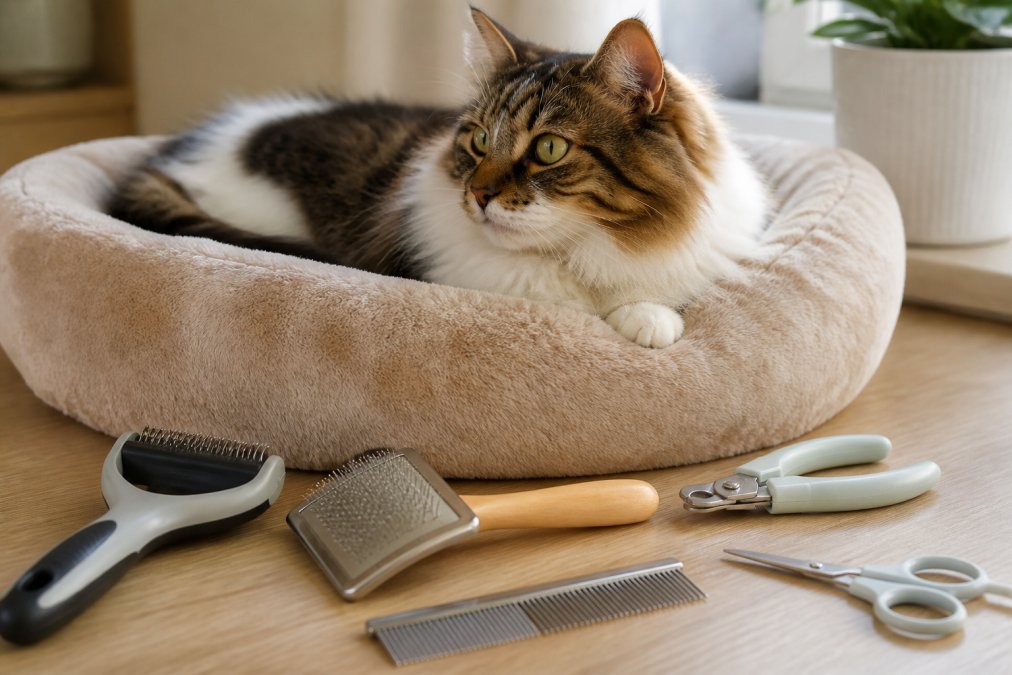
Table of Contents
- Essential Grooming Tools for Cats
- How to Remove Mats from Cat Fur Safely
- Cat Nail Trimming Safety Tips
- Introducing Grooming Tools to Your Cat
- Tool Sanitation and Maintenance
- Age-Specific Grooming Needs
- Conclusion
Last Updated: August 12, 2026
Essential Grooming Tools for Cats
Keeping your cat's coat healthy and mat-free requires the right equipment. At Pawsibly Everything, we understand that safe grooming tools for cats aren't one-size-fits-all, different coat types demand different approaches. The tools you choose directly impact both your cat's comfort and your ease during grooming sessions.
A slicker brush works best for medium to long-haired cats, penetrating deep into the coat to catch tangles before they become mats. For short-haired cats, a flea comb or rubber grooming glove provides gentler daily maintenance. Match the tool to your cat's specific coat type rather than defaulting to the cheapest option.
Brushes and Combs for Different Coat Types
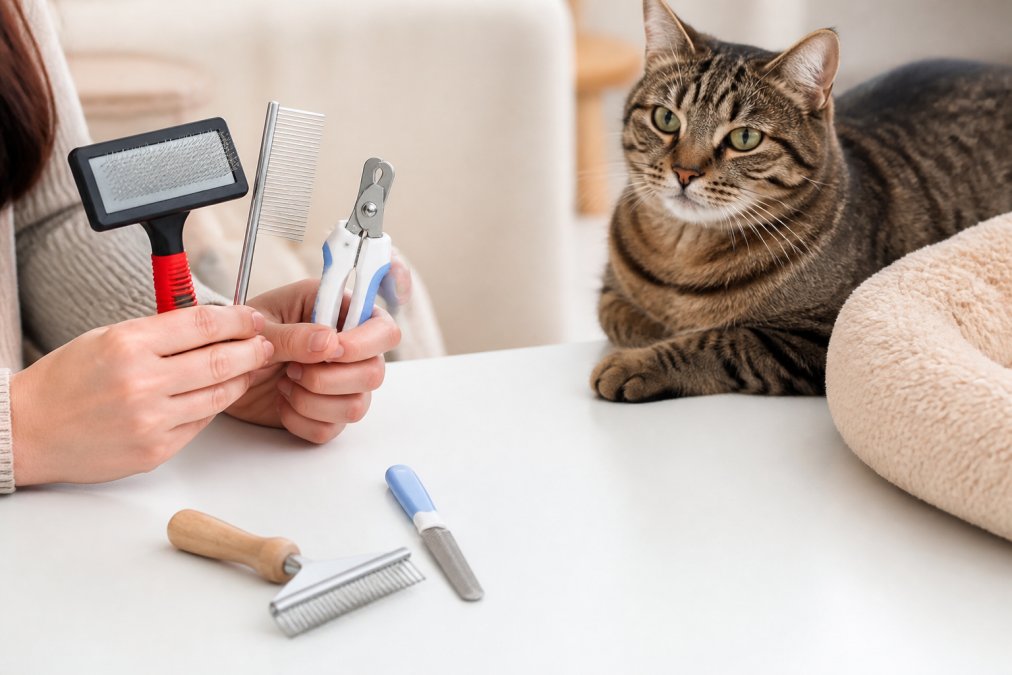
Long-haired cats need tools that reach through their dense undercoat without causing discomfort. A slicker brush with fine, angled wire bristles removes loose fur and detangles effectively. The Pet Pumpkin Grooming Self Cleaning Slicker Brush from Pawsibly Everything features a self-cleaning mechanism, pressing a button retracts the bristles and ejects collected hair, making cleanup quick.

Short-haired cats benefit from different tools. A rubber grooming glove like the Pet Bathing 2-in-1 Grooming Glove removes loose hair while providing a gentle massage many cats find calming. This dual-sided design works during baths and dry grooming.
The Pet Grooming Steel Cat Comb deserves special attention for its precision. Unlike brushes, a steel comb with fine teeth catches smaller tangles and mats that brushes might miss. For cats prone to matting, a comb becomes an essential daily tool.
| Coat Type | Best Primary Tool | Secondary Tool | Frequency |
|---|---|---|---|
| Long-haired | Slicker brush | Steel comb | 3-4 times weekly |
| Medium-haired | Slicker brush | Rubber glove | 2-3 times weekly |
| Short-haired | Rubber glove | Flea comb | 1-2 times weekly |
| Double-coated | Undercoat rake | Slicker brush | 2-3 times weekly |
Nail Trimming Tools
Cat nails grow continuously and require regular trimming to prevent overgrowth, which can curl into the paw pad and cause pain. The Professional Pet Nail Clipper from Pawsibly Everything features stainless steel blades designed for clean, precise cuts. Stainless steel resists rust and maintains sharpness longer, meaning less pressure per cut and lower injury risk.
Two main clipper styles exist: guillotine-style and scissor-style. Guillotine clippers work well for most cats because they require less hand strength and offer better visibility. Scissor-style clippers give more control but demand stronger grip strength.
Keep styptic powder on hand during nail trimming. If you accidentally cut into the pink quick beneath the nail, styptic powder stops bleeding within seconds.
Specialized Grooming Accessories
A grooming glove serves purposes beyond regular brushing. During baths, it distributes shampoo while massaging the skin. Some cats that resist traditional brushes accept grooming gloves more readily.
Mat splitters offer precision for small, localized tangles. These tools feature micro-serrated stainless steel blades that grip fine hairs and cut through knots without pulling. They work best on mats smaller than a pea.
For cats that shed heavily or are prone to hairballs, an undercoat rake removes loose undercoat hair before it becomes ingested during self-grooming.
How to Remove Mats from Cat Fur Safely
Mat removal requires patience and proper technique. Rushing causes pain, damages the coat, and teaches your cat to fear grooming sessions.
Identifying and Assessing Matting
Mats develop when loose fur tangles around live hair strands, tightening as the cat moves. Early-stage tangles are loose and easily removed with a slicker brush. Mature mats are dense and often attached directly to the skin.
Press gently at the base of the mat where it connects to the skin. If you can slip your finger underneath, the mat hasn't attached to skin and can be safely removed at home. If the mat is flush against the skin, professional grooming is safer. Attempting to cut out a mat attached to skin risks accidental lacerations.
Step-by-Step Mat Removal Process
Step 1: Assess the mat carefully. Determine its size, density, and attachment point. Small, loose mats can be handled at home; large or skin-attached mats require professional attention.
Step 2: Prepare your tools. Gather your slicker brush, steel comb, mat splitter, and treats. Have styptic powder nearby.
Step 3: Desensitize the area. Gently run your fingers around the mat for a minute without attempting removal. Let your cat become accustomed to the touch.
Step 4: Work from the outside in. Never pull directly on the mat. Use your slicker brush to work the outer edges, gradually loosening the outer layer. This prevents pain and maintains trust.
Step 5: Use the comb to check progress. After brushing, run your steel comb through the area. Repeat brushing and combing until the comb glides through smoothly.
Step 6: Apply mat splitter only if necessary. For stubborn tangles, a mat splitter can cut through the tangle without cutting hair. Hold it parallel to the skin and cut upward, away from the body. Never saw back and forth.
Step 7: Finish with a full-coat comb. Once the mat is removed, comb the entire area to ensure no remaining tangles exist.
Most home mat removal sessions take 15-30 minutes per mat. If a session exceeds 30 minutes, stop and schedule professional grooming.
Cat Nail Trimming Safety Tips
Nail trimming intimidates many cat owners, but understanding feline nail anatomy and proper technique makes it manageable.
Understanding the Anatomy of Cat Nails
A cat's nail contains a living core called the quick, surrounded by hard keratin. The quick contains blood vessels and nerves. Cutting into the quick causes bleeding and pain. The quick appears as a pink or dark center when you look at the nail's cross-section.
Transparent or light-colored nails make the quick visible. Dark or black nails hide the quick, making it impossible to see where it ends. For dark nails, cut conservatively, remove only the sharp tip, roughly 2-3 millimeters.
Safe Trimming Techniques and Preventing Injury
Position your cat comfortably in your lap or on a table at waist height. Gently press the paw pad to extend the nail. Hold the clipper perpendicular to the nail and cut in a single, smooth motion.
Trim only the clear or white portion of the nail. For dark nails, trim conservatively, you'd rather leave a slightly longer nail than cut too short.
Never attempt trimming if your cat is struggling or highly stressed. Stop and try again another day. Building positive associations matters more than completing it immediately.
Keep your Professional Pet Nail Clipper from Pawsibly Everything sharp. Dull clippers crush the nail rather than cutting cleanly. Replace clippers annually or when you notice crushing rather than clean cuts.

If you accidentally cut the quick, apply styptic powder immediately. Press gently for 30 seconds. If bleeding doesn't stop after two applications, contact your veterinarian.
Introducing Grooming Tools to Your Cat
Most cats don't naturally accept grooming tools. They require gradual introduction through behavioral desensitization and positive reinforcement.
Behavioral Desensitization Techniques
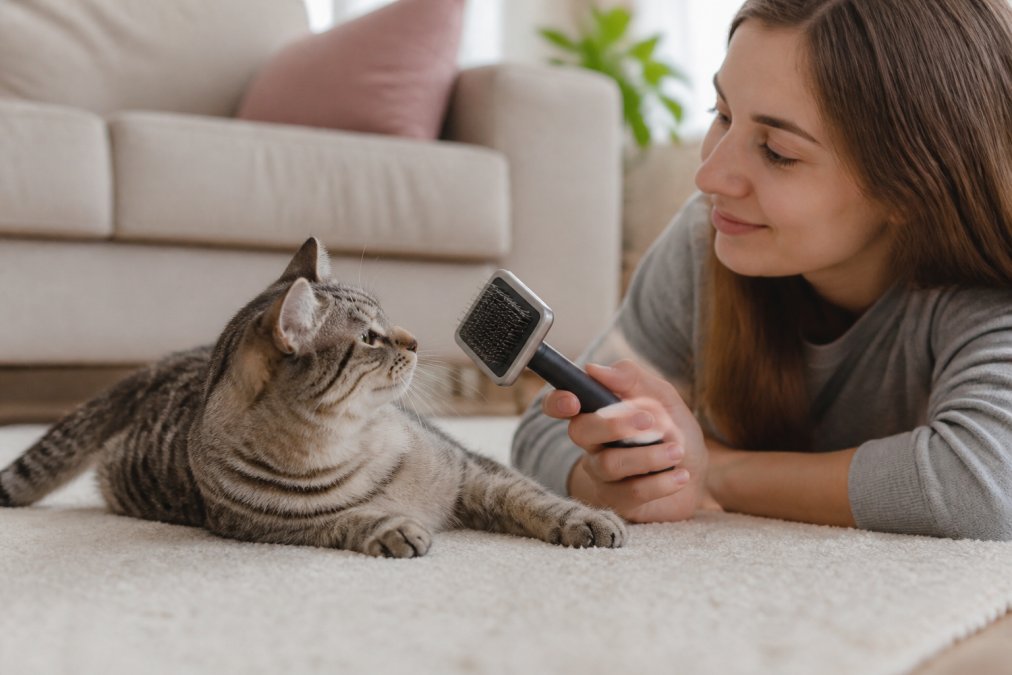
Desensitization works by gradually increasing your cat's exposure to grooming tools in a non-threatening context. Start by placing the grooming tools near your cat's favorite resting spot. Don't use them yet, just let your cat become accustomed to their presence.
Next, hold the tool near your cat without touching them. Reward calm behavior with treats or gentle praise. Only after your cat accepts the tool's presence should you make contact. Touch the tool gently to your cat's leg or side, not the face. Reward immediately and keep this first contact brief.
Building Positive Associations
Pair grooming tools with high-value rewards. Use treats your cat rarely receives during regular play. When your cat sees the slicker brush appear, they should anticipate something positive.
Start grooming sessions with just 30 seconds of gentle brushing. Stop before your cat becomes frustrated. Ending on a positive note teaches your cat that grooming sessions are brief and manageable.
Never force grooming on a resistant cat. Patience during introduction creates a cat that tolerates grooming throughout their life. Some cats respond better to grooming during specific times, early morning or late evening often works better than midday.
Tool Sanitation and Maintenance
Grooming tools contact your cat's skin and fur daily. Regular cleaning prevents bacterial buildup and extends tool lifespan.
Wash brushes and combs weekly with warm soapy water. Use a soft brush to remove accumulated fur and debris from between bristles. Rinse thoroughly and air-dry completely before storing.
For nail clippers, wipe the blades with a damp cloth after each use. Once weekly, soak the clipper in warm soapy water for five minutes, then dry completely. Check blade alignment monthly.
Store all grooming tools in a clean, dry location away from humidity. Replace tools when they show signs of wear, bristles that don't spring back, blades that no longer cut cleanly, or cracked handles all indicate replacement time.
Age-Specific Grooming Needs
A kitten's grooming needs differ significantly from an adult cat's, and senior cats require modified approaches.
Kittens have fine, delicate fur that tangles easily but responds well to gentle brushing. Start grooming kittens early, even daily gentle brushing with a soft brush or rubber glove. Early exposure creates cats that accept grooming throughout their lives. Kittens' nails need trimming every 2-3 weeks.
Adult cats benefit from regular grooming focused on preventing mats and maintaining coat health. Frequency depends on coat type: long-haired cats need 3-4 weekly sessions, while short-haired cats manage with 1-2 weekly sessions. Nail trimming every 2-3 weeks prevents overgrowth.
Senior cats, typically over 10 years old, often experience arthritis and reduced tolerance for handling. Keep grooming sessions brief and gentle. Use softer brushes that don't pull on aging skin. For senior cats with mobility issues, consider grooming them on elevated surfaces to minimize awkward positioning.
Grooming your cat with safe, appropriate tools transforms what could be stressful into a bonding opportunity. The investment in quality equipment and proper technique pays dividends through your cat's healthier coat, better nail health, and reduced anxiety around grooming. Pawsibly Everything provides professional-grade grooming tools designed with both cat comfort and owner ease in mind. Start with the right tools, introduce them gradually, and regular grooming becomes a natural part of your cat care routine.
Frequently Asked Questions
What is the best grooming tool for cats?
The best grooming tool depends on your cat's coat type. For long-haired cats, a slicker brush like the Pet Pumpkin Grooming Self Cleaning Slicker Brush ($17.96) removes tangles and mats effectively. Short-haired cats benefit from a grooming glove for gentle massage and loose hair removal. For cats prone to shedding and hairballs, an undercoat rake or deshedding tool works well. Always choose tools with safety features like rounded edges and gentle bristles to protect your cat's skin.
How often should you groom a cat to prevent matting?
Short-haired cats need brushing 1-2 times per week, while long-haired cats require 3-5 sessions weekly to prevent mats and tangles. Daily grooming is ideal during shedding seasons. Regular grooming also reduces hairball formation and keeps your cat's skin healthy. Cats with sensitive skin or those prone to matting may need more frequent attention. Establish a consistent grooming routine early to help your cat stay comfortable with the process.
How do you groom an unwilling cat?
Start with short 5-minute sessions using positive reinforcement like treats and praise. Use a grooming glove for a gentler introduction, as many cats find it less intimidating than brushes. Work during calm times when your cat is relaxed. Desensitize your cat gradually by letting them see and smell the tools before use. Keep sessions stress-free and stop if your cat becomes anxious. Patience and consistency help most unwilling cats eventually accept grooming as part of their routine.
What should I do if my cat has a bleeding nail after trimming?
Stop trimming immediately and apply styptic powder to the nail to stop bleeding. If you don't have styptic powder, use a clean cloth with gentle pressure for 2-3 minutes. Keep the nail clean and monitor for signs of infection. If bleeding doesn't stop within 10 minutes or if your cat shows signs of pain or infection, contact your veterinarian. To prevent this, trim only the clear or white part of the nail, avoiding the pink quick inside, and use sharp, quality nail clippers like the Professional Pet Nail Clipper ($13.22).
This article was written using GrandRanker

