

Cart
0
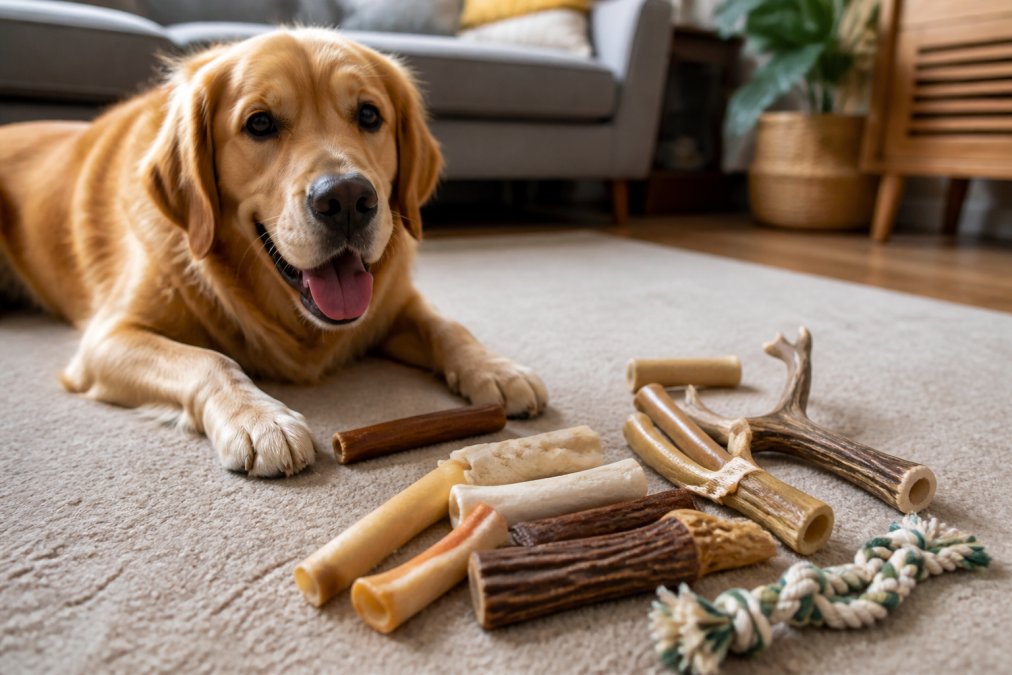
Table of Contents
- Why Rawhide Is Dangerous for Dogs
- Long-Lasting Rawhide-Free Chews That Satisfy Aggressive Chewers
- Rubber and TPR Chews for Dental Health
- Dog Chew Safety Tips: What Every Pet Parent Should Know
- Are Yak Cheese Chews Safe for Dogs?
- Natural and Digestible Chew Options
- Choosing the Right Chew by Breed and Jaw Strength
- Conclusion
- Frequently Asked Questions
Last Updated: September 23, 2026
Why Rawhide Is Dangerous for Dogs
Rawhide chews have been a go-to option for dog owners for decades, but safe alternatives to rawhide for dogs far outweigh the risks of rawhide itself. The problem isn't just one thing, it's a cascade of hazards that veterinarians warn about regularly.
Rawhide is processed animal skin, typically from cattle hides. When dogs chew it, pieces can break off and become choking hazards or cause intestinal blockages. These blockages don't always show up immediately. A dog might seem fine for days, then suddenly face a medical emergency requiring surgery. The digestibility issue is real: rawhide doesn't break down easily in the stomach, and large chunks can lodge in the digestive tract.
Beyond blockages, rawhide often contains chemical residues from the tanning process. Many rawhide chews are bleached and treated with preservatives to extend shelf life. Some contain salmonella or E. coli contamination, risks that affect both your dog and your household. Even "natural" rawhide marketed as chemical-free can still splinter, creating sharp fragments that damage gums and the esophagus.
The aggressive chewer problem is particularly acute. Dogs with strong jaws can break rawhide into large pieces that they swallow whole, dramatically increasing blockage risk. Puppies and senior dogs with weaker teeth may choke on smaller pieces. There's no safe way to predict how your individual dog will react to rawhide.
Watch Out
Rawhide-related intestinal blockages can cost $2,000-$5,000 in emergency veterinary surgery. Prevention through safer alternatives is far cheaper than treatment.
Long-Lasting Rawhide-Free Chews That Satisfy Aggressive Chewers
Aggressive chewers need toys that won't splinter, won't cause blockages, and can withstand serious jaw pressure. The key is finding chews with natural ingredients and digestible construction.
Bully sticks are one of the safest long-lasting alternatives to rawhide for dogs. They're made from beef muscle (pizzle), are fully digestible, and break down naturally in the stomach. Unlike rawhide, bully sticks don't create blockage risk. They last longer than many treats but are still manageable in size. For aggressive chewers, bully sticks provide the satisfaction of extended chewing without the danger. They do have a distinct smell that some owners find unpleasant, but that's a minor tradeoff for safety.
Yak cheese chews (also called Himalayan dog chews) are another excellent option. Made from hardened cheese curds, they're extremely durable and long-lasting. As the dog chews, the cheese softens and becomes digestible. The remaining small piece can be microwaved into a puffed treat, eliminating waste. Yak cheese chews provide hours of chewing satisfaction without splinter risk or blockage concerns.
Natural beef tendon chews offer similar benefits. These are fully digestible, long-lasting, and safe for aggressive chewers. They provide a substantial chewing experience without the hazards of rawhide. The texture helps with dental health by naturally scraping plaque buildup.
At Pawsibly Everything, we stock the Dog Bite Resistant Rubber Grinding Toys in three sizes based on weight: small (under 9kg), medium (7-16kg), and large (13-30kg). These puzzle bone-style toys are engineered for bite resistance and satisfy the chewing instinct without digestibility concerns. They're washable and reusable, making them economical for long-term use.

Pro Tip
Rotate chews regularly to prevent boredom and reduce the risk of obsessive chewing on a single toy. A dog with three or four different long-lasting chew options will stay more engaged and less likely to resort to destructive chewing.
Rubber and TPR Chews for Dental Health
Rubber and TPR (thermoplastic rubber) chews serve a different purpose than digestible alternatives. They're not meant to be consumed, but rather to promote dental health through mechanical action.
TPR material is safe, non-toxic, and designed with enough elasticity to avoid damaging teeth. The serrated surface on many TPR chews mimics the action of brushing, helping to reduce dental plaque and tartar buildup. The grooved design prevents damage to gums while still providing effective cleaning action.
The Pawsibly Everything Chew Toys For Dog Teeth Cleaning uses TPR construction with a hexagonal design. At just $6.51, these are affordable enough to have multiple toys around the house. The hollow center allows you to stuff them with treats or kibble, turning them into interactive puzzle toys that reduce anxiety and boredom while cleaning teeth.

For dogs that need more substantial dental work, the Spiked Dog Chew Toy Stick Dental Cleaning Toy ($18.22) features dental spikes that massage gums and scrape away plaque. The high-density, non-toxic rubber won't splinter. The grooved center holds peanut butter or treat paste, making it both a dental tool and an enrichment toy.

Rubber chews work best as part of a rotation strategy. They're not meant to replace brushing, but they complement dental care routines and help maintain oral health between professional cleanings.
Dog Chew Safety Tips: What Every Pet Parent Should Know
Safe chew selection depends on understanding your dog's individual characteristics. Not every alternative works for every dog, and supervision remains critical regardless of which chew you choose.
Start with size-appropriate chews. A toy that's too small becomes a choking hazard. A toy that's too large frustrates your dog and goes unused. The general rule: the chew should be large enough that your dog can't swallow it whole.
Chew Toys For Dog Teeth Cleaning →
Supervision matters, especially with new chews. Watch your dog during the first few sessions to see how aggressively they chew and whether they try to swallow large pieces. Some dogs are naturally cautious; others are reckless. Your observation determines whether a particular chew is safe for your individual dog.
Remove chews when they become small enough to swallow. Don't wait until they're gone. A small piece can still cause blockage, even if it seems harmless. Once a yak cheese chew is down to a marble-sized remainder, remove it and microwave the piece into a treat or discard it.
Introduce new chews gradually. A dog's digestive system needs time to adjust to new foods and materials. If you're switching from rawhide to bully sticks, don't do it all at once. Mix in the new chew gradually over a week to avoid digestive upset.
Key Takeaway
The safest chew is one you supervise, that matches your dog's size and chewing style, and that you remove before it becomes a choking or blockage risk.
Watch for signs of digestive distress. Vomiting, constipation, loss of appetite, or lethargy after introducing a new chew warrant a call to your veterinarian. Some dogs have sensitivities to specific materials or proteins.
Are Yak Cheese Chews Safe for Dogs?
Yak cheese chews are among the safest long-lasting alternatives to rawhide for dogs when used correctly. They're fully digestible, splinter-free, and designed to be consumed gradually.
The safety profile is strong because yak cheese is a natural food product with minimal processing. Unlike rawhide, which requires chemical tanning, yak cheese chews are made by curdling and hardening cheese. Dogs can safely consume the entire chew as it softens and breaks down.
The main safety consideration is size. For small dogs, a full-sized yak cheese chew might be too large initially. Some owners cut them in half or offer them only under supervision. For medium and large dogs, they're appropriately sized to prevent swallowing whole.
One practical advantage: the leftover piece. Once the chew is worn down to a small nub, you can microwave it in a paper bag.
Natural and Digestible Chew Options
The safest alternatives to rawhide for dogs are those that break down completely in the digestive system. Natural ingredients mean fewer chemical concerns and better digestibility.
Choosing the Right Chew by Breed and Jaw Strength
Different breeds have different chewing capabilities, and matching the chew to your dog's jaw strength is essential for both safety and satisfaction.

Best For
Yak cheese chews work best for medium to large dogs that are moderate to aggressive chewers. Small dogs may need them cut in half. Senior dogs tolerate them well if their teeth are still functional.
Conclusion
Rawhide poses genuine risks that safer alternatives eliminate entirely. Choking hazards, intestinal blockages, chemical exposure, and splinter damage are all preventable by switching to digestible, natural chew options.
| Chew Type | Best For | Digestibility | Durability | Price Range |
|---|---|---|---|---|
| Bully sticks | All sizes, moderate chewers | Fully digestible | 2-4 hours | $3-$8 |
| Yak cheese chews | Medium-large dogs, aggressive chewers | Fully digestible | 4-6 hours | $8-$15 |
| Beef tendon | All sizes, moderate-aggressive chewers | Fully digestible | 2-3 hours | $5-$12 |
| Rubber TPR toys | All sizes, dental health focus | Not consumed | Indefinite | $6-$35 |
| Frozen carrots | All sizes, puppies | Fully digestible | 15-30 minutes | Free |
| Collagen sticks | Senior dogs, joint support needed | Fully digestible | 1-2 hours | $4-$10 |
Frequently Asked Questions
What is the healthiest thing for dogs to chew on?
The healthiest chews combine digestibility, dental benefits, and safety. Natural rubber toys like our Chew Toys For Dog Teeth Cleaning ($6.51) offer serrated surfaces that clean teeth and reduce plaque without splintering. For aggressive chewers, rubber grinding toys sized to your dog's weight (S for under 9kg, M for 7-16kg, L for 13-30kg) provide long-lasting engagement while satisfying natural chewing behavior. Look for toys made from non-toxic materials that won't cause intestinal blockage if swallowed whole.
Are bully sticks a safe alternative to rawhide?
Bully sticks are among the safest long-lasting rawhide-free chews available. Unlike rawhide, which can splinter and cause choking hazards or intestinal blockage, bully sticks are fully digestible and break down naturally in the stomach. They provide excellent protein bioavailability and satisfy aggressive chewers for extended periods. However, supervision is still important, especially for puppies or dogs prone to swallowing without chewing thoroughly. Always choose appropriate sizes for your dog's jaw strength.
Why is rawhide considered dangerous for dogs?
Rawhide poses multiple safety risks. It can splinter into sharp pieces that cause choking hazards or intestinal blockage, a serious condition requiring emergency surgery. Rawhide is also poorly digestible, large pieces may lodge in the stomach or intestines, causing gastrointestinal distress and potential organ damage. Additionally, many rawhide products are treated with chemical preservatives and undergo processing that leaves residues. Dogs that swallow chunks whole face the greatest risk, making safer alternatives essential for peace of mind.
How do I know if a chew is safe for my dog's specific needs?
Choose chews based on three factors: digestibility, jaw strength, and any allergies. For puppies teething, our Dog Bite Resistant Rubber Grinding Toys ($33.94) come in size-specific options matched to weight ranges. For allergies, select single-ingredient chews or rubber toys without common allergens. Always supervise initial chewing to ensure your dog chews rather than swallows whole. If your dog has a history of gastrointestinal issues, stick with fully digestible options like bully sticks or natural rubber toys that won't cause blockage if ingested.

