

Cart
0
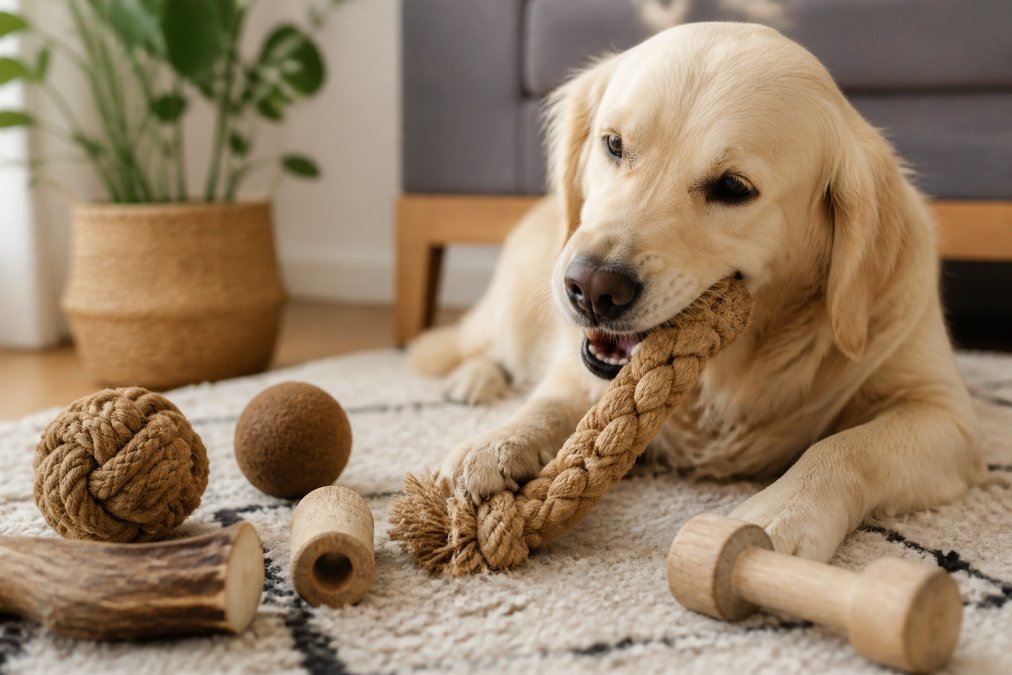
Table of Contents
- Why Natural Dog Toys Beat Plastic
- Comparing Non-Toxic Dog Chew Toys: Rubber, Hemp, and More
- Hemp Dog Toys for Aggressive Chewers: What to Look For
- Top Natural Alternatives from Pawsibly Everything
- How to Clean Natural Dog Toys (and Keep Them Safe)
- What to Avoid: Spotting Hidden Plastics and Toxins
- Making the Switch: A Simple Plan
- Frequently Asked Questions
Last Updated: September 18, 2026
Why Natural Dog Toys Beat Plastic
Natural alternatives to plastic dog toys matter because you cannot inspect a dog's mouth after every play session, dogs chew for hours and swallow what flakes off unseen.
Watch Out
A dog that swallows rope fibers can develop a dangerous intestinal blockage that requires surgery. Never leave a rope toy with an unsupervised dog, no matter how tough the rope claims to be.
Comparing Non-Toxic Dog Chew Toys: Rubber, Hemp, and More
Natural rubber and hemp rope cover most chewing needs but solve different problems: rubber handles solo chewing and dental work, hemp handles interactive tug and fetch.
| Material | Best For | Chew Resistance | Typical Failure Mode | End of Life |
|---|---|---|---|---|
| Natural rubber | Solo chewers, dental cleaning | High | Chunks torn off at stress points | Slow to break down; some curbside programs accept it |
| Hemp rope | Tug, fetch, interactive play | Moderate | Fraying into swallowable strands | Biodegradable; compostable in industrial setups |
| Organic cotton | Light chewers, puppies | Low | Shredding into clumps | Biodegradable; home compostable |
| Wool | Gentle play, seniors | Low | Felted clumps pulled loose | Biodegradable; home compostable |
| Sisal | Light gnawing, cats | Moderate | Bristle shedding | Biodegradable; home compostable |
How to Tell Natural Rubber from Synthetic Rubber
"Rubber" on a label is not a guarantee. Natural rubber comes from Hevea brasiliensis latex and is marketed as "natural rubber," "plant-based rubber," or "latex." Synthetic rubber is petrochemical, often listed as SBR, EPDM, or just "rubber."
A few practical tells:
- Smell: natural rubber has a faint, earthy, latex-like odor. Synthetic rubber smells sharper and more chemical.
- Flex: natural rubber stretches and snaps back. Synthetic rubber tends to feel stiffer and holds a crease.
- Label language: look for a stated plant source. "Natural rubber" alone is acceptable; "rubber" alone is not.
Natural Rubber: Bounce and Durability
Natural rubber is the closest thing to a plastic toy that is not plastic. It bounces, flexes under pressure, and does not splinter like hard plastic; a good rubber toy gives slightly when bitten, which is easier on teeth and gums.
Hemp Rope: For Tug and Fetch
Hemp rope is the workhorse of interactive play: strong, mold-resistant, and it gives you a handle for tug without your hand near the dog's teeth. Hemp fiber is longer and coarser than cotton, so a tight braid holds its twist longer.
Cotton, Wool, and Sisal: The Softer End of the Spectrum
- Organic cotton is soft on puppy gums but shreds fast, supervised play only. "Organic" matters because conventional cotton is one of the most pesticide-intensive crops, and residues can linger in finished fiber.
- Wool is the senior-dog material: soft and low-impact on aging teeth, but it felts into dense clumps that can be swallowed. Best for gentle mouthing, not gnawing.
- Sisal is a stiff agave-family fiber, excellent for light gnawing and cats, and it biodegrades cleanly. It loses shape when soaked, so keep it dry.
The Identification Rule That Cuts Through Marketing
Most "natural" claims on pet toy packaging are unregulated marketing language. The U.S. Consumer Product Safety Commission does not hold pet toys to the same material-disclosure standards as children's toys, so verification falls on you.

Key Takeaway
Match the material to the chewing style, not the marketing. Solo power chewer: natural rubber. Interactive tugger: hemp rope. Puppy or senior: cotton or wool under supervision. Light gnawer or cat: sisal.
Hemp Dog Toys for Aggressive Chewers: What to Look For
Hemp dog toys for aggressive chewers need dense, tightly twisted fiber and a reinforced knot, a loose braid is a swallowing hazard.
Look for these four things:
- Tight twist: fibers packed so densely you cannot pull a strand free with your fingers
- Reinforced knots: ends knotted and sealed, not just cut
- No dye smell: a strong chemical odor suggests synthetic dyes
- Honest sizing: a rope too thin for the jaw gets chewed through fast
Top Natural Alternatives from Pawsibly Everything
Pawsibly Everything stocks a focused range of natural rubber and sisal toys built for real chewing, each one a specific answer to a specific problem.
Chew Toys For Dog Teeth Cleaning
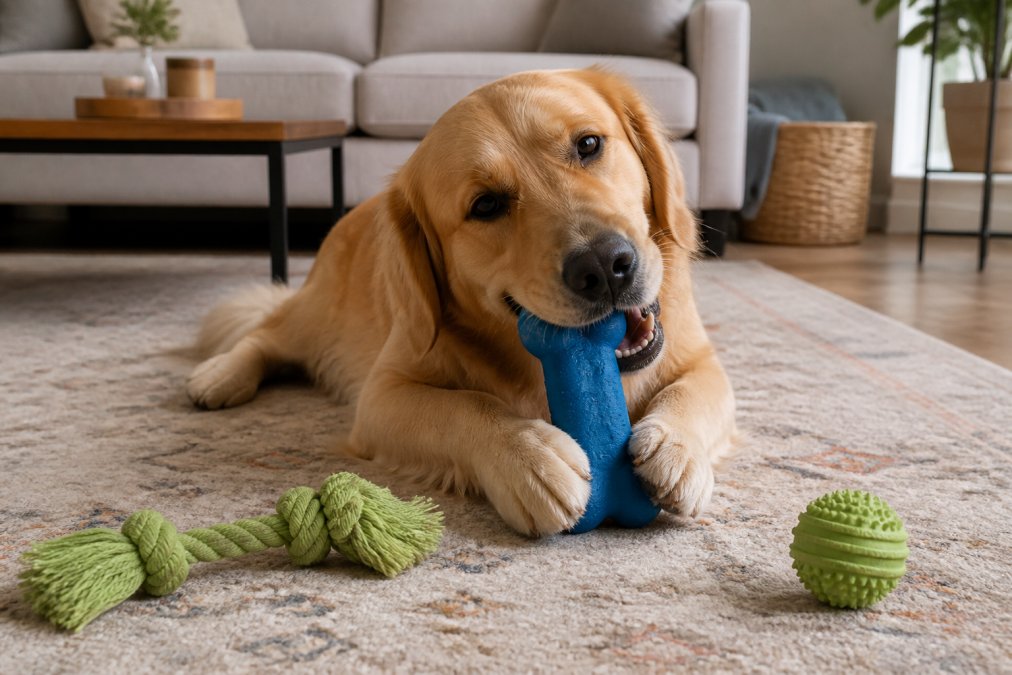
The Chew Toys For Dog Teeth Cleaning is the entry point at $6.51, made from TPR, a tough rubber with enough bite resistance to hold up without damaging teeth. The serrated, skid-proof surface avoids gum damage, side grooves work plaque off as your dog chews, and the hollow center takes treats. It washes clean and comes in blue, green, or pink.

Best for: puppies and light-to-moderate chewers.
Vocal Rugby Pet Toys
The Vocal Rugby Pet Toys costs $15.62 and measures 165 by 56 millimeters at 200 grams. It is natural rubber, the material to prioritize if you are moving away from plastic, with strong bite resistance, teeth-grinding and cleaning action, and a built-in sound for solo play. Colors include blue, red, light blue, and green.
Dog Bite Resistant Rubber Grinding Toys
At $33.94, the Dog Bite Resistant Rubber Grinding Toys is the heavy-duty pick, in three weight-matched sizes: small for dogs under 9 kg, medium for 7 to 16 kg, and large for 13 to 30 kg. Sizing by weight matters more than breed, too small gets swallowed, too large loses interest, and the puzzle bone shape gives a grip point.

Dog Treat Dispenser Ball Toy
The Dog Treat Dispenser Ball Toy is $21.89 and does two jobs at once, slow feeder and dental toy, in heavy-duty natural rubber. Side-slotted grooves hold kibble or peanut butter; as the dog rolls and chews, elastic rubber teeth scrape plaque and massage gums. It bounces quietly and rinses under warm water in seconds.
Key Takeaway
If you buy only one toy from this list, buy the treat dispenser ball. It covers dental cleaning, slow feeding, and boredom in a single item, which is the best value per dollar for most households.
How to Clean Natural Dog Toys (and Keep Them Safe)
Cleaning natural dog toys takes five minutes a week and prevents most problems: rubber and sisal rinse, rope needs deeper cleaning because fibers trap saliva and dirt. The other half of toy hygiene is knowing when a toy is done and how to dispose of it.
Chew Toys For Dog Teeth Cleaning →
Use this routine:
- Rubber toys: wash in warm water with a mild, fragrance-free soap, then air dry completely
- Rope toys: soak in warm water, work the fibers with your fingers, rinse until the water runs clear, then air dry in sunlight
- Sisal toys: wipe with a damp cloth and air dry; do not soak, since sisal loses shape when saturated
- Wool and cotton toys: hand wash in cool water with a gentle detergent, squeeze (do not wring), and air dry flat
- Between washes: check for cracks, missing chunks, and loose strands every few days
When to Retire a Natural Toy
Natural materials fail differently than plastic:
- Natural rubber: retire when you can see a chunk missing, when the surface develops deep cracks, or when the toy no longer springs back after a squeeze.
- Hemp rope: retire at the first frayed strand. Do not trim and keep using; the trimmed end unravels faster.
- Cotton and wool: retire when the toy starts shedding clumps or when the fabric thins enough to see through.
- Sisal: retire when bristles shed freely or the weave loosens.
Owners often keep a "favorite" toy past its safe life because the dog still likes it, but preference is not a safety signal.
Disposal and End-of-Life: What Most Guides Skip
Compostable in a home bin:
- Untreated hemp rope (no dyes, no synthetic core)
- Organic cotton toys with no plastic squeaker
- Wool toys with no synthetic stuffing
- Sisal toys with no glue or plastic backing
Cut rope and fabric toys into short lengths before composting, and remove any squeaker, plastic liner, or synthetic thread first, those will not compost.
Not home-compostable:
- Natural rubber. It is plant-derived, but it biodegrades very slowly and most home bins will not break it down in a reasonable timeframe. Check whether your municipal yard-waste or organics program accepts rubber; many do not.
- Any toy with a plastic squeaker, synthetic stuffing, or glued-on decoration.
Recycling:
Watch Out
Do not compost a toy your dog was actively chewing if it has been in contact with a sick dog or with feces. Compost piles do not reliably reach temperatures that kill all pathogens, and the finished compost may end up on a vegetable garden.
Pro Tip
Keep a small bin next to your dog's toy area for retired toys. Sorting them by material as you retire them makes the compost-or-trash decision a five-second call instead of a research project.
What to Avoid: Spotting Hidden Plastics and Toxins
Hidden plastic shows up in toys that market themselves as natural, the label is not proof.
Watch for these red flags:
- "Vinyl" or "PVC" in the material list, both are plastic
- Strong chemical or plastic smell straight out of the package
- Phthalates or BPA listed anywhere in the ingredients
- Sharp molded seams that can cut gums
- Paint or dye that rubs off on a damp cloth
Making the Switch: A Simple Plan
Switching to natural alternatives to plastic dog toys works best as a phased replacement, not a purge. Dogs get attached to familiar toys, and you learn more about their chewing style with each new material.
Try this order:
- Week one: add one natural rubber chew and watch how your dog uses it
- Week two: replace the most damaged plastic toy with a rubber or sisal option
- Week three: introduce a rope toy for supervised tug only
- Week four: add a treat dispenser for solo enrichment
- Ongoing: retire each plastic toy as it wears out rather than throwing them all away at once
Pro Tip
Photograph each new toy on the day you buy it. When a toy starts failing, the before-and-after comparison tells you exactly how long that material lasts for your dog, which is the only durability data that actually matters for your household.
Frequently Asked Questions
What is the safest material for dog toys?
Natural rubber and organic cotton are among the safest materials for dog toys. Natural rubber is durable, non-toxic, and flexible, making it ideal for chewers. Organic cotton is free from synthetic pesticides and safe if ingested in small amounts. Hemp rope is another excellent choice for tug and fetch. Pawsibly Everything offers a range of natural rubber and TPR toys.
How do I know if a dog toy is non-toxic?
Look for toys labeled non-toxic, food-grade, or made from natural rubber, organic cotton, or hemp. Reputable brands list materials clearly. If a toy claims to be 'natural' but doesn't specify the material, be cautious. Pawsibly Everything's chew toys are made from safe TPR and natural rubber. When in doubt, choose toys from trusted pet supply stores that prioritize pet safety.
How do I clean natural dog toys?
Most natural rubber and TPR toys can be washed with warm water and mild dish soap, then rinsed thoroughly and air-dried. Avoid harsh chemicals or bleach. Regular cleaning prevents bacteria buildup. Pawsibly Everything's chew toys are washable and reusable, making them easy to keep sanitary for your dog's health.
Are natural rubber dog toys safe for aggressive chewers?
Yes, natural rubber toys are a great choice for aggressive chewers because they are durable and flexible, so they don't splinter like hard plastic. Look for toys specifically rated for power chewers, like the Dog Bite Resistant Rubber Grinding Toys from Pawsibly Everything. These come in multiple sizes to match your dog's weight. Always supervise your dog with any toy and replace it if it shows signs of wear. Natural rubber is non-toxic, but still monitor closely.
What can I use instead of a KONG?
You can use a natural rubber treat dispenser ball or a spiked chew stick with a treat compartment. Pawsibly Everything's Dog Treat Dispenser Ball Toy works like a KONG by holding kibble or peanut butter, providing interactive enrichment and slow feeding. The Spiked Dog Chew Toy Stick also has a center cutout for treats. Both are made from non-toxic rubber and are durable for daily use. These alternatives offer similar mental stimulation and dental benefits without synthetic plastics.

