

Cart
0
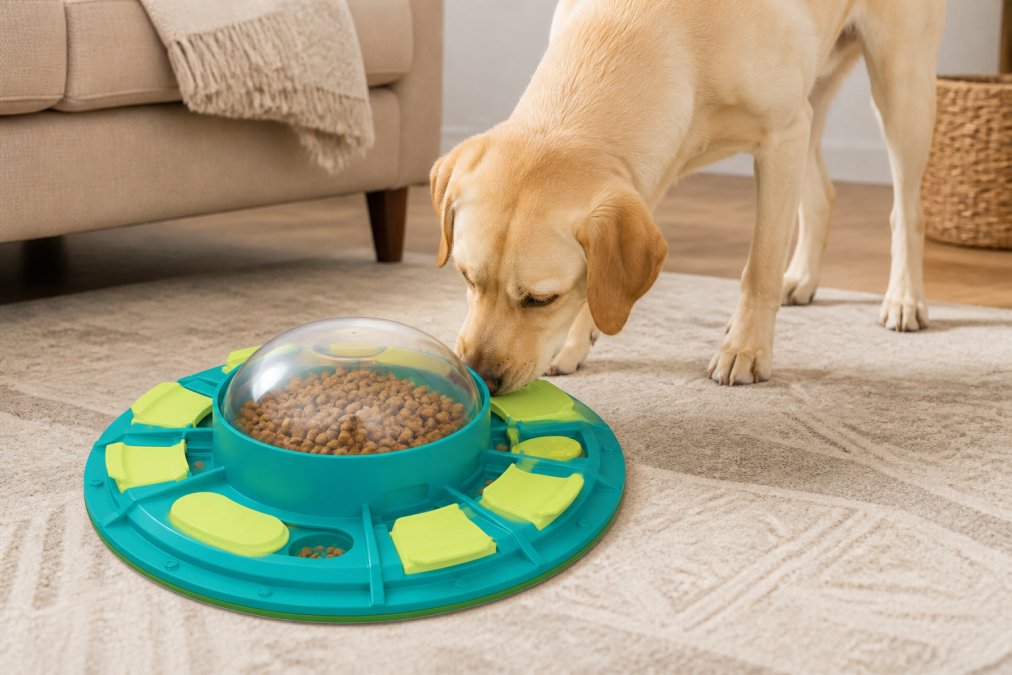
Table of Contents
- Why Mental Stimulation Matters More Than You Think
- Interactive Puzzle Toys and Food-Dispensing Games
- Scent Work and Nose Games for Cognitive Engagement
- DIY Dog Enrichment Ideas You Can Make at Home
- Training Sessions and Brain Games to Tire Out Your Dog Mentally
- Durable Toys for Aggressive Chewers and High-Energy Dogs
- Recognizing Boredom and Adjusting Your Approach
- Conclusion
Last Updated: August 25, 2026
Why Mental Stimulation Matters More Than You Think
A bored dog isn't just restless. A bored dog becomes destructive. Chewed furniture, shredded cushions, constant barking, and behavioral problems that escalate quickly, these aren't character flaws. They're signs your dog's brain isn't getting what it needs.
Mental stimulation for bored dogs addresses something many pet parents overlook: physical exercise alone doesn't cut it. Your dog can run for an hour and still destroy your home by evening. The difference lies in cognitive engagement. When a dog's mind is actively working, solving problems, and engaging with enrichment activities, that mental fatigue translates into calm, settled behavior that physical exercise alone cannot achieve.
This matters because destructive behavior linked to boredom often escalates into separation anxiety, obsessive behaviors, and aggression. The earlier you introduce mental stimulation for bored dogs, the better your dog's long-term behavior and emotional health. The right enrichment tools can transform not just behavior, but the entire household dynamic.
The activities we'll cover below range from interactive toys to training games to DIY enrichment you can create with items already in your home. Each one taps into your dog's natural instincts, foraging, problem-solving, scent work, and play, in ways that tire the mind as effectively as a long walk tires the body.
Interactive Puzzle Toys and Food-Dispensing Games
Interactive puzzle toys are the foundation of any serious mental stimulation strategy. Unlike a regular toy your dog destroys in an afternoon, a puzzle feeder makes your dog work for every bite, turning mealtime into a cognitive challenge.
Food-dispensing toys come in several formats. The simplest are puzzle feeders with compartments your dog must manipulate to access kibble. More advanced versions require multiple steps, sliding, rotating, lifting, before food releases. The beauty of this approach is that it satisfies your dog's natural foraging instincts while slowing down fast eaters, which reduces bloating and improves digestion.
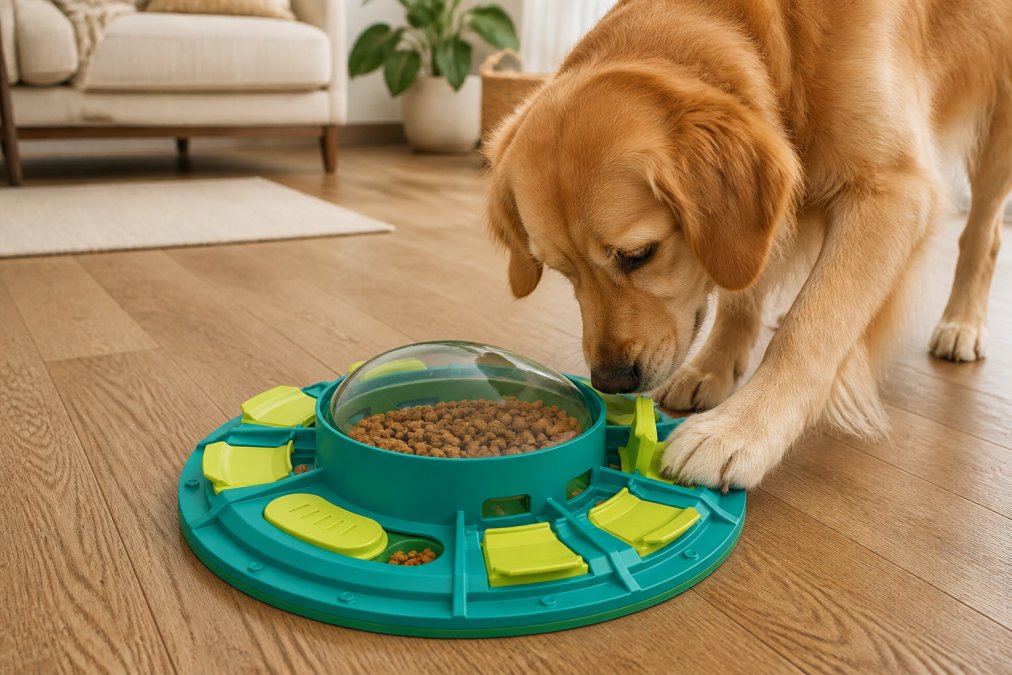
The Interactive Dog Puzzle Feeder Toy Multi-Function from Pawsibly Everything ($27.12) features a multi-functional UFO layout with a large central dome that holds kibble. Dogs must navigate the puzzle's design to access food, which keeps them engaged for 10-15 minutes per meal, far longer than dumping kibble into a bowl. This type of toy works especially well for dogs prone to fast eating or those who need consistent mental engagement throughout the day.

For dogs that respond better to treat-based motivation, the Dog Treat Dispenser Ball Toy ($21.89) combines rubber construction with side-slotted grooves that dispense treats as your dog rolls and manipulates it. This toy works for both floor play and interactive sessions where you roll it for your dog to chase and problem-solve.
A step up in complexity is the Dog Treat Dispenser Ball Launcher ($34.23), which uses gravity and physics to dispense treats as your dog interacts with it. This launcher-style toy works well for high-energy dogs who need more dynamic engagement than a stationary puzzle.
The key to success with puzzle toys is rotation. Use the same puzzle every day and your dog habituates, it becomes routine rather than challenging. Rotate between two or three different puzzles throughout the week to maintain novelty and cognitive demand. Start with easier puzzles if your dog is new to this type of enrichment, then gradually increase difficulty.
Scent Work and Nose Games for Cognitive Engagement
Scent work taps into one of your dog's most powerful senses. A dog's nose contains roughly 300 million olfactory receptors compared to your 6 million (peer-reviewed research). Nose work isn't just enriching, it's profoundly engaging for your dog's brain in ways that few other activities can match.
The simplest nose work activity is a hide-and-seek game with treats or toys. Hide treats around your home, starting in obvious spots, then gradually increasing difficulty. Your dog uses scent to locate rewards, engaging problem-solving and focus simultaneously. This activity works indoors on rainy days and requires no special equipment.
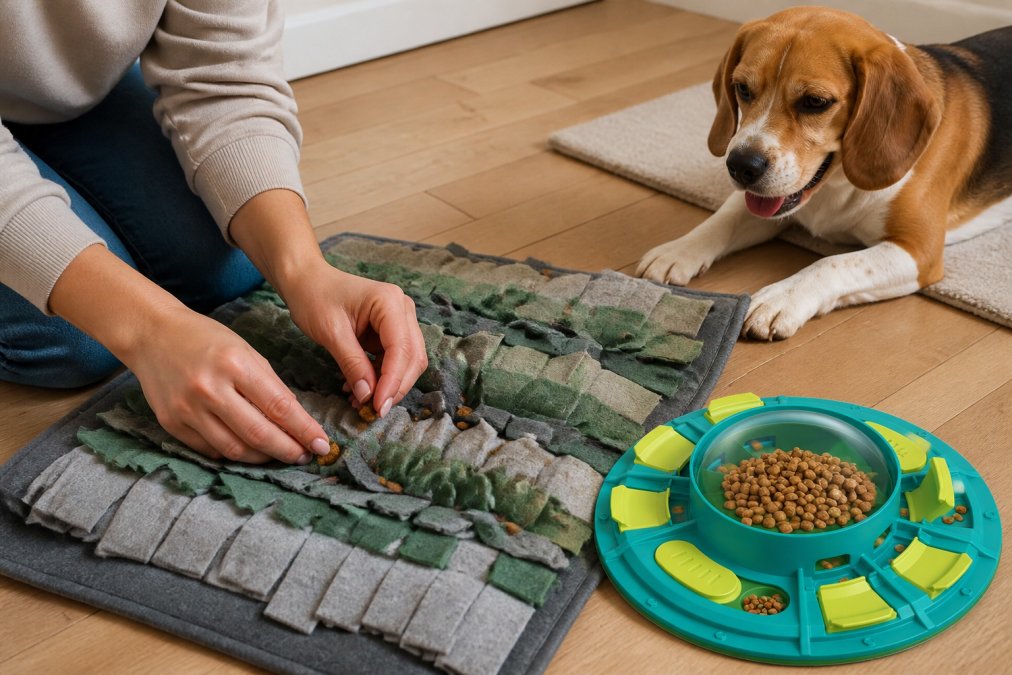
A step up is the snuffle mat, a fabric mat with strips and pockets where you hide treats. Your dog must use their nose and paws to dig through the fabric, simulating natural foraging behavior. You can purchase snuffle mats or make one yourself using an old towel and strips of fabric tied through a rubber mat base.
For more structured scent work, introduce scent discrimination games where your dog learns to identify a specific smell (like a cotton ball scented with essential oils) and alert you when they find it. This builds impulse control, focus, and problem-solving skills simultaneously.
Scent work sessions should last 10-20 minutes (avsab.org). Unlike physical exercise, mental work through scent engagement can tire a dog quickly, you'll notice your dog settling down and resting after a focused nose work session. This is exactly what you're after: genuine mental fatigue that translates into calm behavior.
DIY Dog Enrichment Ideas You Can Make at Home
You don't need to spend hundreds on commercial toys. Many effective enrichment activities use materials already in your home, making them budget-friendly and customizable to your dog's preferences.
Muffin Tin Puzzle: Place treats in a muffin tin, then cover each cup with a tennis ball. Your dog must remove the balls to access treats. This works for 5-10 minutes and teaches problem-solving with minimal setup.
Towel Roll: Roll treats inside a hand towel or old blanket, then roll the whole thing up. Your dog unrolls the towel to find treats. Adjust difficulty by rolling it tighter or adding layers.
Frozen Treats: Mix kibble or treats with water in a container, freeze overnight, then thaw slightly before giving to your dog. The frozen texture requires licking and chewing effort, extending engagement time significantly.
Cardboard Box Puzzle: Fill a cardboard box with crumpled paper, towels, and hidden treats. Your dog digs through the box to find rewards. This mimics natural foraging and is especially satisfying for dogs with strong digging instincts.
PVC Pipe Puzzle: Drill holes in a PVC pipe, cap one end, and fill with treats. Your dog rolls and manipulates the pipe to shake treats out. This requires moderate effort and works well for medium to large dogs.
Safety matters with DIY enrichment. Avoid small pieces that could become choking hazards, supervise initially to ensure your dog doesn't ingest non-food materials, and inspect homemade toys regularly for wear. Remove any toy that's falling apart or showing damage.
The advantage of DIY enrichment is customization. You know exactly what materials are safe for your dog, and you can adjust difficulty based on your dog's skill level and engagement.
Training Sessions and Brain Games to Tire Out Your Dog Mentally
Training isn't just about obedience. Structured training sessions are some of the most effective mental stimulation activities available because they require focus, problem-solving, and impulse control simultaneously.
A 15-minute training session, working on new commands, refining existing ones, or practicing tricks, can tire a dog as much as a 30-minute walk (the NIH). The mental demand is that significant. Your dog must pay attention, process information, and execute commands while managing impulse control.
Brain games take training further. Teach your dog to identify toys by name ("Get the ball," "Get the rope"). Start with one toy, reward heavily when your dog selects it correctly, then add a second toy. Over weeks, you can build a dog that retrieves specific items by name. This requires memory, discrimination, and focus.
Another brain game is "which hand?", hide a treat in one closed hand, let your dog sniff both hands, and reward when they nudge the correct hand. This teaches problem-solving and discrimination skills.
The Interactive Dog Ball ($14.89) from Pawsibly Everything adds a motion element to mental stimulation. Motion-activated sensors trigger spontaneous rolling and bouncing, creating unpredictable movement that engages your dog's prey drive and problem-solving instincts. This type of toy works well for dogs that need constant novelty to stay engaged.

Structure matters. Keep training sessions short, 5-15 minutes is ideal, and always end on a positive note. Multiple short sessions throughout the day are more effective than one long session. Your dog's attention span and learning capacity have limits; respect those limits and you'll see faster progress and better engagement.
Durable Toys for Aggressive Chewers and High-Energy Dogs
Not all dogs are gentle with toys. Aggressive chewers and high-energy dogs need toys built to withstand serious abuse. A toy that lasts one week isn't enrichment, it's a waste of money.
Durable toys for aggressive chewers share specific characteristics: heavy-duty rubber or nylon construction, reinforced seams, and designs that don't have small pieces that separate easily. Avoid toys with squeakers or stuffing if your dog is an aggressive chewer, these become hazards when destroyed.
The Dog Treat Dispenser Ball Toy uses flexible, heavy-duty natural rubber specifically designed to withstand aggressive chewing. The grooved design provides texture and engagement without compromising structural integrity. This toy works for power chewers because the rubber flexes under pressure rather than breaking apart.

For truly aggressive chewers, look for toys made from nylon or reinforced rubber without any stuffing, squeakers, or loose parts. Some toys are designed for similar purposes.
Rotate toys regularly. Even durable toys wear down with time. Inspect them weekly for damage, and replace any toy showing significant wear. A toy with a hole or tear becomes a choking hazard, not enrichment.
High-energy dogs benefit from toys that combine durability with interactive elements. The Dog Treat Dispenser Ball Launcher provides both, it's mechanically sound for aggressive play and requires active engagement from your dog. Launcher-style toys work well because they create unpredictable movement that keeps high-energy dogs mentally and physically engaged.
Recognizing Boredom and Adjusting Your Approach
Not all destructive behavior signals boredom. Some indicates anxiety, health issues, or other problems. But certain signs point specifically to insufficient mental stimulation.
A bored dog typically shows these patterns: destructive behavior that increases during alone time, constant seeking of attention, restlessness even after physical exercise, obsessive behaviors like excessive licking or spinning, and difficulty settling down. These behaviors often escalate if mental stimulation isn't introduced.
The key distinction: a dog with sufficient mental stimulation shows calm, settled behavior between activities. They rest contentedly. A mentally understimulated dog struggles to settle, they seem always searching for something to do.
Adjust your enrichment based on your dog's response. If a puzzle toy holds your dog's attention for only 2 minutes, it's too easy, increase difficulty or try a different style. If your dog ignores enrichment entirely, the activity might not match their motivations. Some dogs are food-motivated and thrive with treat-based puzzles. Others prefer play-based engagement or scent work.
Senior dogs need mental stimulation too, though the intensity differs. Older dogs benefit from slower-paced enrichment like snuffle mats and gentle puzzle feeders. Adjust difficulty downward and watch for signs of frustration, senior dogs may have less patience for overly complex puzzles.
Breed-specific needs matter significantly. Herding breeds (Border Collies, Australian Shepherds) thrive with training-based mental stimulation and games that require quick decision-making. Scent hounds (Beagles, Bloodhounds) excel at nose work and scent-based enrichment. Retriever breeds often prefer interactive play and problem-solving with toys. Understanding your dog's breed tendencies helps you select enrichment that genuinely engages them.
Track what works. Keep notes on which toys, games, and activities hold your dog's attention longest and produce the calmest behavior afterward. Use those insights to build a rotation that maximizes engagement while preventing habituation.
Mental stimulation for bored dogs isn't optional enrichment, it's foundational to your dog's behavioral health and emotional well-being. A dog with sufficient cognitive engagement is calmer, better behaved, and more content than one stuck in a cycle of boredom and destructive behavior.
Start with one or two enrichment activities that match your dog's motivations and energy level. The Interactive Dog Puzzle Feeder Toy Multi-Function from Pawsibly Everything offers an excellent entry point, turning daily meals into cognitive challenges while fitting seamlessly into your routine. As your dog builds skills and tolerance, expand into scent work, training games, and DIY enrichment. The goal isn't to exhaust your dog with constant activity, it's to provide regular, meaningful mental engagement that keeps their brain active and their behavior balanced.
Frequently Asked Questions
Q: How do I know if my dog is bored?
A: Bored dogs often display destructive behavior like chewing furniture, excessive barking, or digging. You might notice restlessness, pacing, or lack of interest in regular activities. Some dogs become withdrawn or develop separation anxiety. If your dog seems to have endless energy and can't settle, mental stimulation through puzzle toys, scent work, and training sessions can help redirect that energy productively.
Q: What's the best way to tire out a dog mentally?
A: Mental stimulation tires dogs as effectively as physical exercise. Use puzzle feeders like the Interactive Dog Puzzle Feeder Toy ($27.12) to engage problem-solving skills, practice obedience training with positive reinforcement, play hide-and-seek games, or introduce nose work activities. These cognitive activities create mental fatigue that reduces destructive behavior and promotes better sleep and impulse control.
Q: Are DIY dog enrichment ideas safe?
A: DIY enrichment can be safe if you supervise play and avoid small parts that could be choking hazards. Use food-safe containers, avoid toxic foods like chocolate or xylitol, and inspect homemade toys regularly for damage. Always monitor your dog during new activities. Commercial puzzle toys from Pawsibly Everything are designed with safety in mind, making them reliable alternatives if you prefer ready-made options.
Q: What toys work best for aggressive chewers?
A: Aggressive chewers need durable toys made from heavy-duty materials. The Dog Treat Dispenser Ball Toy ($21.89) features flexible, natural rubber designed to withstand powerful jaws. For extreme chewers, the Dog Treat Dispenser Ball Launcher ($34.23) combines durability with interactive play. Always supervise chewing sessions and replace toys showing signs of wear to prevent ingestion of rubber fragments.
This article was written using GrandRanker

