

Cart
0
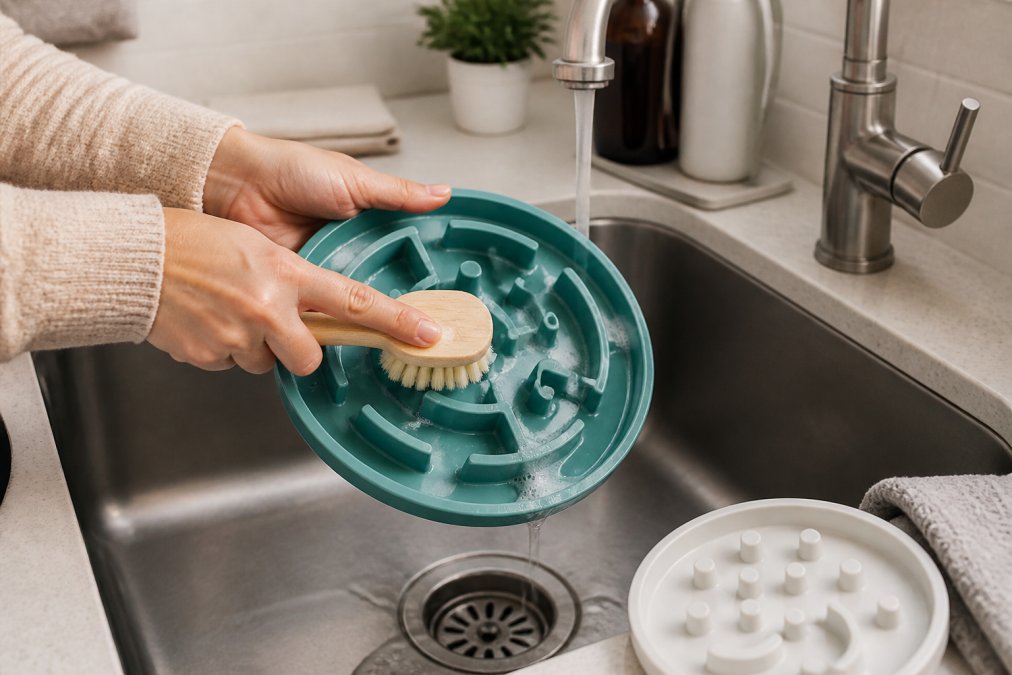
Table of Contents
- Why Cleaning Puzzle Feeders Is Essential for Feline Health
- How Often to Wash Cat Food Bowls and Puzzle Feeders
- Step-by-Step: How to Clean Puzzle Feeders for Cats
- Removing Dried Wet Food from Puzzle Feeders
- Safe Cleaning Agents for Pet Toys and Feeders
- Drying Techniques to Prevent Mold and Moisture Traps
- Material-Specific Cleaning: Plastic, Silicone, and Ceramic
- Common Mistakes to Avoid When Cleaning Puzzle Feeders
- Frequently Asked Questions
Last Updated: September 16, 2026
Why Cleaning Puzzle Feeders Is Essential for Feline Health
Puzzle feeders are excellent cat enrichment, but they collect food residue in ways a plain bowl never does. Left uncleaned, that residue breeds bacteria and mold.

How Often to Wash Cat Food Bowls and Puzzle Feeders
Wash cat food bowls and puzzle feeders daily, and deep clean them at least once a week. Dry food feeders can go a day or two between washes, but any feeder holding wet food or lickable treats needs a full wash after every use.
Here is a practical schedule to follow:
| Feeder Type | Routine Wash | Deep Clean |
|---|---|---|
| Dry kibble puzzle feeder | Every 1-2 days | Weekly |
| Wet food or lick mat | After every meal | Every 2-3 days |
| Multiple-cat household | Daily | Every 3-4 days |
Step-by-Step: How to Clean Puzzle Feeders for Cats
Cleaning a puzzle feeder takes about ten minutes once it becomes a habit: disassemble, pre-rinse, scrub every crevice, sanitize, rinse, and air-dry completely.
Disassembly and Pre-Rinse
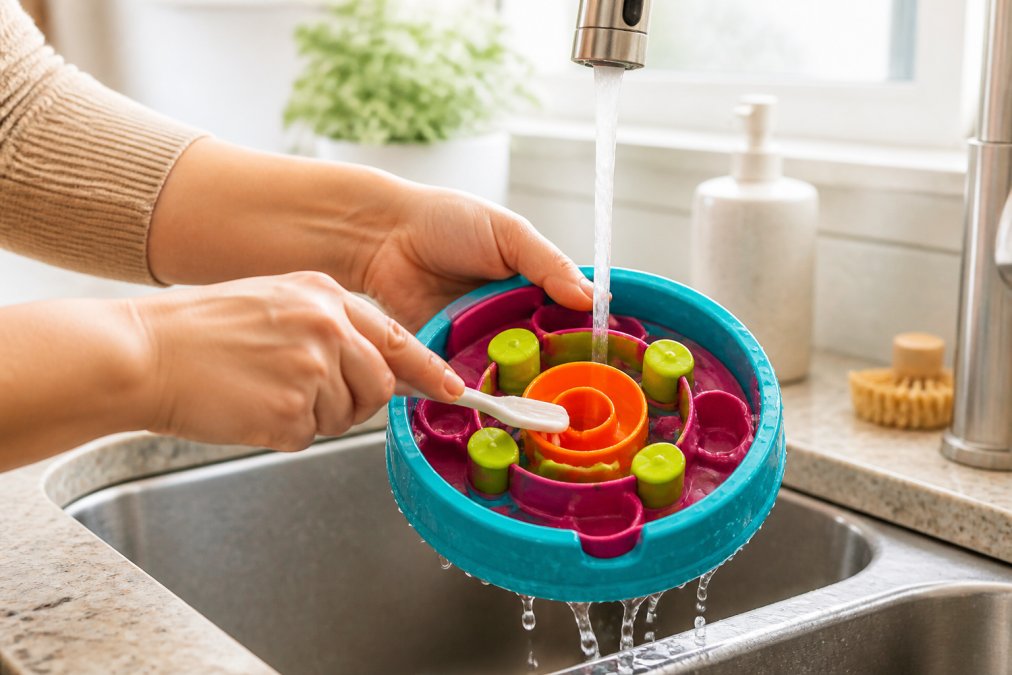
Take the feeder apart completely, many multi-part feeders have removable inserts, sliding panels, or a base that separates from the top. Soak the pieces in warm soapy water for five minutes, then rinse to clear loose residue before scrubbing.
Washing and Scrubbing Crevices
Use a soft scrub brush or bottle brush to work warm soapy water into every track and corner, especially the deepest crevices a sponge cannot reach. Rinse until the water runs clear and no soap remains.
Removing Dried Wet Food from Puzzle Feeders
Soak dried wet food in warm water for 10-15 minutes before scrubbing. The soak softens the hardened residue so a soft brush lifts it away without scraping.
Pro Tip
A dedicated bottle brush and a small detail brush are the two tools that make puzzle feeder cleaning genuinely easy. Keep them with your pet supplies so you never skip the deep clean because the right tool is missing.
Safe Cleaning Agents for Pet Toys and Feeders
Safe cleaning agents for pet toys and feeders are mild dish soap and warm water. Avoid bleach, ammonia, and heavy fragrances, which leave residue a cat can ingest.
Watch Out
Never soak a feeder in bleach or a scented all-purpose cleaner. Cats groom their paws and faces after eating, so residue on the feeder becomes residue they ingest. Stick to mild soap and a vinegar rinse.
Drying Techniques to Prevent Mold and Moisture Traps
Drying is the step people rush, and it determines whether your cleaning routine actually works. A feeder that looks dry can hold a teaspoon of water in a hidden channel, the leading cause of mold. Mold needs moisture, organic residue, and a dark enclosed space; a reassembled damp feeder supplies all three.
Why Complex Feeders Trap Water
Multi-part puzzle feeders are engineered to be difficult to empty, that is the point. The same channels, tracks, hollow bases, and interlocking inserts that hold kibble also hold water. Set upright to dry, gravity pulls water into the base cavity and under every insert; stack the pieces and you seal those wet surfaces together, leaving the enclosed space humid for hours or days.
The Correct Drying Protocol
- Shake each piece over the sink immediately after the final rinse to eject standing water from channels and hollows.
- Separate every component. Never dry a multi-part feeder assembled or stacked. Each insert, panel, and base should have its own footprint on the rack.
- Position for drainage. Place hollow pieces opening-down or at an angle so water runs out rather than pooling. A dish rack with vertical tines works better than a flat mat for this.
- Maximize airflow. Leave space between pieces. A crowded rack traps humid air against surfaces.
- Allow several hours, not minutes. Most feeders need at least 2-4 hours of open air to dry fully in a typical kitchen. Humid climates take longer.
- Do a touch test before refilling. Run a finger along the deepest track and the inside of the base. If you feel any coolness or dampness, it is not dry, give it more time.
Towel Drying: Helpful, Not Sufficient
A clean microfiber towel removes surface water quickly but cannot reach inside narrow channels. Towel-dry the accessible surfaces, then air-dry the whole feeder open for at least another hour. Towel-drying alone and immediately reassembling is the most common way people create a moisture trap.
Heat Drying: When It Helps and When It Hurts
A dishwasher's heated dry cycle can fully dry plastic and silicone, but only if the manufacturer rates the feeder for it and pieces are positioned so water cannot pool. For ceramic, wood, and top-rack-only items, skip heated dry and air-dry. Never use an oven, microwave, or hair dryer: uneven heat warps plastic, cracks ceramic, and scorches wood.
Signs of a Moisture Trap
Check for these after drying and before refilling:
- A musty or sour smell inside the base or a channel
- Visible condensation on the underside of an insert
- Dark speckling or fuzzy growth in a crevice you cannot easily reach
- A base that feels cool to the touch after hours of air drying
If you find any of these, rewash, sanitize with a diluted white vinegar rinse, and dry fully before the next use. If mold has reached a porous material like wood or scratched plastic, replace the feeder, surface cleaning will not remove growth that has penetrated the material.
Preventing the Trap in the First Place
The best drying technique is a feeder design that drains. Feeders with open bases, removable inserts, and no sealed internal cavities dry in a fraction of the time. Look for feeders that disassemble completely with no enclosed hollows; if yours has a sealed base, store it disassembled so residual moisture can escape.
Watch Out
Never reassemble a puzzle feeder while any component is still damp. A sealed damp interior is the ideal environment for mold, and mold spores in a cat's food area are a health risk you can avoid with a few extra hours of open-air drying.
Material-Specific Cleaning: Plastic, Silicone, and Ceramic
Most guides say "wash with mild soap" and stop there. That fails the moment you own a wooden puzzle box, a silicone lick mat, or a plastic feeder with a dishwasher-safe claim you are not sure you trust. Cleaning method should follow material, because heat tolerance, porosity, and scratch resistance differ sharply.
Hard Plastic (Polypropylene, ABS, and Similar)
Hard plastic is the most common puzzle feeder material and the most forgiving, up to a point. Hand wash in warm water with mild dish soap and a soft brush. Dishwasher use depends on the manufacturer's label: many are top-rack safe only, and the heated dry cycle warps them, not the wash.
Silicone
Silicone is heat-tolerant and flexible, making it the easiest material to sanitize. Warm soapy water handles daily cleaning, and most food-grade silicone is dishwasher safe on either rack. Its failure mode is abrasion, not heat: steel wool, scouring pads, and stiff brushes create microscopic channels that hold wet-food oils, so use a soft sponge.
Ceramic and Stoneware
Ceramic feeders are heavy, stable, and non-porous when the glaze is intact, but the glaze is the whole game. Hand wash with mild soap and a soft sponge, and skip the dishwasher: even dishwasher-safe ceramic can chip, and a chipped edge exposes porous clay that harbors bacteria and can cut a cat's tongue or lip.

Wood and Bamboo
Wood puzzle feeders and bamboo lick mats need the most care because wood is porous. Never soak wood, water penetrates the grain, swells fibers, and creates a permanent damp interior where mold thrives. Wipe with a damp cloth and mild soap, dry immediately and completely, and never put wood in the dishwasher.
Cardboard and Paper-Based Puzzle Boxes
Cardboard puzzle boxes are disposable by design and cannot be washed, moisture destroys the structure and creates a mold habitat. Shake out loose kibble dust after each use, wipe with a dry cloth, and replace the box when soiled, torn, or odorous. Most households replace one every one to two weeks; if your cat eats wet food from it, replace after every use.
Mixed-Material Feeders
Many puzzle feeders combine a plastic base with silicone inserts, or a wooden frame with ceramic bowls. Clean each component by its own material rules and never assume the whole unit shares one part's dishwasher rating. Disassemble fully first, a silicone insert left in a plastic base during a dishwasher cycle can trap water and cause both warping and a moisture trap.
Key Takeaway
Match the method to the material: plastic and silicone tolerate heat with care, ceramic and wood do not, and cardboard is disposable. When in doubt, hand wash with mild soap, dry completely, and check for surface damage before the next use.
Common Mistakes to Avoid When Cleaning Puzzle Feeders
The biggest mistake is skipping the deep clean because the feeder looks clean on top. Food residue hides in crevices you cannot see, and that is where bacterial growth starts.
Other mistakes to avoid:
- Reassembling the feeder while it is still damp, which creates a moisture trap
- Using bleach or scented cleaners that leave harmful residue
- Scrubbing dried food without soaking first, which scratches the surface
- Ignoring the dishwasher-safety instructions and warping a plastic feeder
- Forgetting the base and inserts, which collect just as much residue as the top
Frequently Asked Questions
Are puzzle feeders good for cats?
Yes, puzzle feeders provide essential mental stimulation and slow down fast eaters. By mimicking natural foraging, they reduce boredom and can help prevent destructive behaviors. For cats with specific health needs, always consult your veterinarian before changing their feeding setup. Products like the Slow Feeder Dog Bowls Silicone Puzzle Feeder offer a labyrinth design that prolongs mealtime, which supports better digestion and reduces the risk of choking or vomiting.
Can you use Dawn dish soap to clean cat toys?
Dawn dish soap is a common choice for cleaning pet supplies because it cuts through grease and food residue effectively. However, you must rinse items thoroughly with warm water to remove all soap residue, as ingesting it can cause digestive upset. For a gentler approach, look for unscented, pet-safe dish soaps. Always avoid harsh chemicals or bleach unless you are properly diluting them and rinsing completely.
How do you sanitize a puzzle feeder safely?
Sanitizing goes beyond basic washing to kill bacteria. A safe method is soaking the feeder in a diluted white vinegar solution (one part vinegar to four parts water) for 10 to 15 minutes, then scrubbing and rinsing well. For plastic and silicone feeders, check if they are dishwasher-safe; the high heat of a dishwasher's sanitizing cycle is an effective way to disinfect. Always ensure the feeder is completely dry before adding food.
How often should you wash cat puzzle feeders?
You should wash puzzle feeders after every use, especially if you feed wet food. For dry food or treats, a daily rinse and a weekly deep clean with soap and hot water are usually sufficient. If your cat has allergies or a compromised immune system, sanitize the feeder more frequently. Regular washing prevents bacterial growth and food residue buildup that can cause feline health issues.
Keeping a puzzle feeder clean takes ten minutes, but the payoff is a healthier, more hygienic feeding routine for your cat. Pawsibly Everything makes that routine easier with feeding and grooming essentials designed for real, busy pet parents. Explore our easy-to-clean slow feeders, durable toys, and comfortable bedding, then add to cart and give your companion the care they deserve.

