

Cart
0
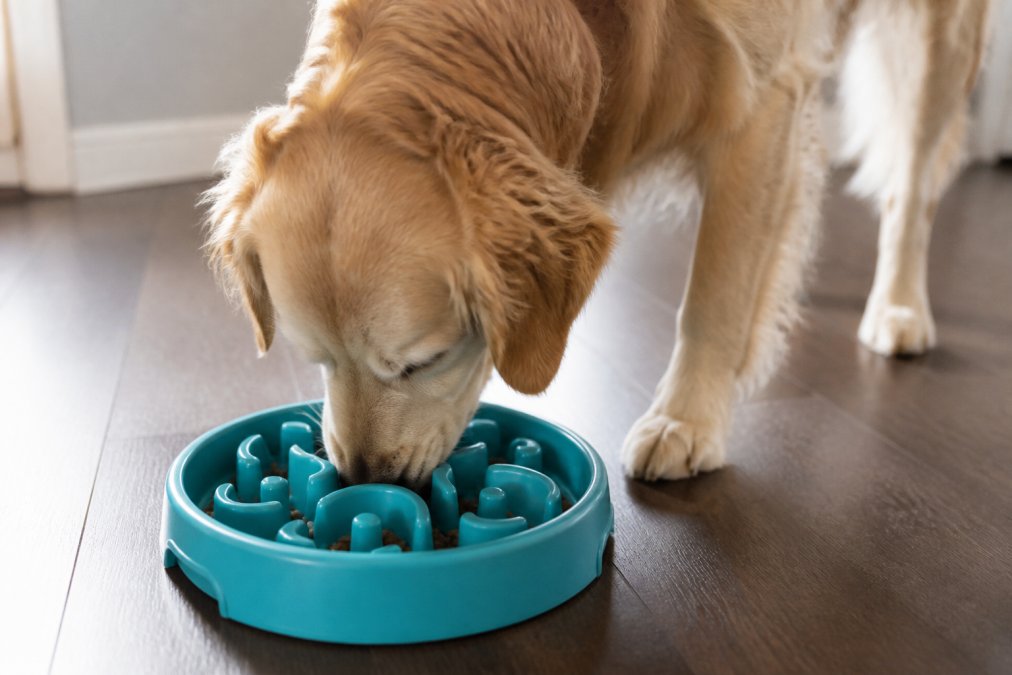
Table of Contents
- What Makes Puzzle Feeders Different From Regular Bowls
- How to Stop a Dog From Eating Too Fast With the Right Feeder
- Puzzle Feeder vs Slow Feeder Comparison: Which One Fits Your Dog
- Benefits of Mental Stimulation for Dogs Who Gobble Their Food
- Top Puzzle Feeders Worth Buying for Fast Eaters
- Safety, Cleaning, and Calorie Management for Puzzle Feeders
- Conclusion
- Frequently Asked Questions
Last Updated: September 10, 2026
What Makes Puzzle Feeders Different From Regular Bowls
A puzzle feeder requires a dog to work for each mouthful of kibble, turning a two-minute gulp into a ten-to-twenty-minute problem-solving session.

A regular bowl offers zero resistance. Puzzle feeders add obstacles, mazes, sliding panels, or rolling mechanisms that break eating into dozens of small physical actions.
The practical difference shows up in three places:
- Pace: Food that would vanish in seconds gets stretched out by design, not willpower.
- Engagement: Nose, paw, and tongue all get used, which taps into natural foraging behavior.
- Portion awareness: Owners actually see how much the dog is eating and how fast, rather than guessing.
How to Stop a Dog From Eating Too Fast With the Right Feeder
The most effective way to stop a dog from eating too fast is to replace the flat bowl with a feeder that physically prevents gulping. Telling a dog to slow down doesn't work; the equipment does.
Here's the sequence that works in practice:
- Measure the current mealtime. Time it with a stopwatch for three days. Owners are often shocked to find the bowl empty in under 60 seconds.
- Switch to a maze or obstacle design. A labyrinth-style bowl forces the dog to navigate raised ridges to reach kibble, and mealtime often extends dramatically on the first try.
- Start easier than you think. Begin with a shallow maze and increase difficulty only once the dog finishes confidently.
- Feed at the same times, in the same spot. Consistency reduces anxiety and keeps the routine from feeling like punishment.
- Watch the first week closely. If the dog walks away or whines, the puzzle is too hard. If it's still inhaling food, it's too easy.
A common mistake is jumping straight to a complex multi-compartment puzzle on day one. That's how you create a dog that refuses to eat at all.
The Link Between Fast Eating and Bloat
Fast eating is one of several risk factors for bloat, a life-threatening condition in which the stomach fills with gas and can twist on itself (avma.org). The twisting form, gastric dilatation-volvulus (GDV), requires immediate veterinary care.
When a dog swallows food rapidly, it also swallows air, contributing to gastric distension. Large-breed, deep-chested dogs are higher risk, and many veterinarians recommend slowing mealtime as part of a broader prevention approach (merckvetmanual.com).
Watch Out
Slowing down mealtime is a risk-reduction measure, not a guarantee. If your dog shows a distended abdomen, retching without producing vomit, restlessness, or drooling, contact a veterinarian immediately. GDV progresses in hours and cannot be managed at home.
If you have a deep-chested breed, ask your vet about the full picture, including feeding schedule, exercise timing around meals, and whether gastropexy is worth discussing.
Puzzle Feeder vs Slow Feeder Comparison: Which One Fits Your Dog
A slow feeder and a puzzle feeder both slow eating, but at different difficulty levels. A slow feeder uses fixed obstacles to make food harder to reach. A puzzle feeder adds moving parts, removable pieces, or rolling mechanisms that require problem-solving. Choosing between them comes down to your dog's temperament, your cleaning tolerance, and how long you want mealtime to take.
| Feature | Slow Feeder Bowl | Puzzle Feeder |
|---|---|---|
| Difficulty | Fixed, always the same | Adjustable, can increase over time |
| Mental demand | Low to moderate | Moderate to high |
| Best for | Dogs that gulp and get frustrated easily | Dogs that gulp and need a challenge |
| Cleaning | Usually dishwasher-safe | Often hand-wash only |
| Best for nervous dogs | Yes, gentler introduction | Start with the easiest level only |
| Typical mealtime | 5-15 minutes | 10-25 minutes |
| Washability | Wide, open channels; food rarely trapped | Narrow crevices, sliding tracks, and hidden compartments trap residue |
| Failure mode | Dog learns to flip the bowl or eat around ridges | Dog gives up, walks away, or loses interest |
| Cost range | Roughly $10-$25 | Roughly $15-$40 depending on complexity |
For most fast eaters, start with a slow feeder bowl and graduate to a puzzle feeder. A dog that has never worked for food needs to learn the concept before difficulty ramps up.

The Washability Question Most Guides Skip
Hygiene is where puzzle feeders quietly fail in real households. A slow feeder bowl with wide, open channels rinses clean in seconds and is usually top-rack dishwasher-safe. A puzzle feeder with sliding tracks, flip lids, and removable compartments traps kibble dust, saliva, and spreadable treats where a sponge can't reach, and those residues become a bacterial breeding ground.
A practical washability check before you buy:
- Count the crevices. If you can't see the bottom of every compartment without disassembling the feeder, plan on a weekly deep clean, not just a rinse.
- Check for removable parts. Feeders whose lids and sliders pop out are far easier to sanitize than sealed units.
- Confirm dishwasher status. Many plastic and rubber puzzle feeders are hand-wash only because heat warps moving parts. Check the manufacturer's guidance.
- Avoid scratched surfaces. Steel wool and stiff brushes create grooves where bacteria collect. Use a soft bottle brush and mild dish soap.
- Dry fully before reloading. Moisture trapped in a closed compartment leads to odor and mold.
A simple rule: if cleaning the feeder takes longer than the dog takes to eat from it, you won't keep using it. Buy for washability, not just difficulty.
Pro Tip
Run a "test meal" with a small handful of kibble before committing a full portion to a new puzzle. If the dog solves it in under two minutes, the puzzle is too easy. If it gives up after five minutes, it's too hard. Adjust before the next meal.
A slow feeder wins for anxious dogs, seniors, flat-faced breeds that struggle to grip moving parts, and dogs recovering from dental work or surgery. A puzzle feeder wins for high-energy dogs, working breeds, dogs whose mealtime is over in under a minute, and dogs that need mental work as much as slower eating.
If your dog falls in between, you don't have to pick one. Many owners rotate a slow feeder bowl for everyday meals and bring out a puzzle feeder two or three times a week as enrichment, which extends the life of both products and keeps the puzzle novel.
Benefits of Mental Stimulation for Dogs Who Gobble Their Food
Mental stimulation for dogs is the cognitive equivalent of a walk, and for fast eaters it does double duty: the dog slows down physically while working through a problem mentally, addressing both eating speed and the boredom that drives frantic behavior.
The benefits owners report most often:
- Reduced destructive behavior. A dog that has spent fifteen minutes working for dinner is far less likely to redecorate the couch afterward.
- Better frustration tolerance. Working through a puzzle teaches a dog to persist when something doesn't open on the first try.
- Improved focus. Interactive feeding builds the same attention muscles used in training sessions.
- Weight management support. Slower eating gives the body time to register fullness, which can help with portion control over time.
Interactive feeding also taps into foraging behavior domestic dogs still carry from their ancestors. Giving a dog a job at mealtime satisfies an instinct a flat bowl ignores.
For dogs with separation anxiety, a puzzle feeder used at departure time can redirect anxious energy into a task. It isn't a cure, but many owners find it reduces the intensity of the first thirty minutes alone.
Top Puzzle Feeders Worth Buying for Fast Eaters
The best puzzle feeder for a fast eater matches the dog's current skill level and is easy enough to clean that you'll use it daily.

Interactive Dog Puzzle Feeder Toy Multi-Function
The multi-function interactive puzzle feeder from Pawsibly Everything uses a UFO-style layout with a clear central dome holding kibble, surrounded by flip lids, hidden compartments, and sliding channels. Dogs push, nudge, and slide sections open with nose or paws.
Pros:
- Level-two difficulty suits dogs that have already mastered a basic maze bowl
- Non-slip rubber pads keep the unit stable on hardwood and tile
- Wipes clean or hand-washes in seconds
Cons:
- Not dishwasher-safe, so daily hand-washing is required
- Too complex for a first-time puzzle dog without a gradual introduction
Priced at $27.12, it's a strong pick for owners whose dog has already outgrown a simple slow feeder and needs a genuine challenge.
Dog Treat Dispenser Ball Toy
The rubber treat dispenser ball from Pawsibly Everything combines physical exercise with cognitive work. Kibble goes into side cavities, and the dog rolls, nudges, and chews the ball to release it. Inner rubber spikes scrape plaque as the dog works.
Pros:
- Doubles as a dental cleaning tool, which matters for dogs that eat fast and don't chew enough
- Heavy-duty natural rubber handles aggressive chewers better than plastic puzzles
- Quiet bounce makes it apartment-friendly
Cons:
- Small kibble can fall out too quickly if the cavities aren't packed tightly
- Not ideal for flat-faced breeds that struggle to grip a rolling ball
At $21.89, this is a great choice for high-energy dogs that need to burn physical energy, not just mental energy, at mealtime.
Best For
Dogs that gulp their food and then need an outlet for leftover energy. The ball handles both jobs at once, which is why it's a pick we recommend for adolescent and working-breed dogs.
If you want a feeder that works while you're away, the automatic treat dispenser at $17.70 rolls across the floor and drops kibble at an adjustable rate, which is a practical option for owners who work outside the home.

Safety, Cleaning, and Calorie Management for Puzzle Feeders
Cleaning and calorie tracking are the two areas where puzzle feeders fail in real households, and both are fixable with a simple routine. A feeder you don't clean or a portion you don't measure stops being worth the money fast.
A Cleaning Protocol That Actually Gets Followed
The goal is a routine short enough to do daily and thorough enough that bacteria never gets a foothold:
- Scrape and rinse immediately after the meal. Kibble dust and saliva harden as they dry, and dried residue is hardest to remove. A ten-second rinse prevents most buildup.
- Wash with warm water and mild dish soap. Use a soft bottle brush for sliding tracks and hidden compartments. Avoid steel wool and stiff brushes, which scratch plastic and rubber and create grooves where bacteria collect.
- Disassemble anything that comes apart. Wash removable lids, sliders, and trays separately. If a part doesn't come out, work the brush into the crevice from both ends.
- Check the dishwasher guidance. Many plastic and rubber puzzle feeders are hand-wash only because heat warps moving parts and can crack rubber.
- Dry fully before reloading. Moisture trapped in a closed compartment leads to odor and mold. Air-dry upside down on a rack, or towel-dry the crevices.
- Do a weekly deep clean. Soak the feeder in warm soapy water, scrub every compartment, and let it dry completely. This is non-negotiable for any feeder used with wet food, peanut butter, yogurt, or other spreads.
A quick rule of thumb: if you can't see the bottom of every compartment without taking the feeder apart, plan on the weekly deep clean rather than a daily rinse. And if the feeder takes longer to clean than the dog takes to eat from it, you won't keep using it.
Watch Out
Never leave wet food or spreadable treats in a puzzle feeder for more than a couple of hours. Warm, moist, enclosed spaces are ideal for bacterial growth, and a dog that licks the same hidden corner every day is exposed to whatever grows there.
Calorie Management: Treat the Puzzle as the Bowl, Not a Bonus
The most common mistake with puzzle feeders is treating the food inside as extra rather than as the meal. Load a puzzle with a full portion of kibble and also feed a regular bowl, and you've doubled the meal. Add peanut butter and training treats, and you've added real calories on top of the daily ration.
A simple calorie-integration routine:
- Weigh the full daily ration before loading the feeder, not after. A kitchen scale is more accurate than a scoop.
- Count every treat that goes into the puzzle as part of the daily total. Puzzle feeders are not a supplement to the bowl; they are the bowl.
- Measure spreadables. A tablespoon of peanut butter can carry roughly 90 to 100 calories depending on the brand, a meaningful chunk of a small dog's daily intake (the FDA). Measure it, don't eyeball it.
- Reduce the kibble portion when you add high-calorie spreads. If you're using a tablespoon of peanut butter, subtract an equivalent amount of kibble from the day's ration.
- Recheck body condition monthly, especially in the first two months after switching. Run your hands along the ribs and spine. If you can't feel the ribs easily, the portions are too generous.
- Keep a simple log for the first two weeks. Note the weight of food loaded, any treats or spreads added, and how long mealtime took. Patterns show up fast.
For dogs on a weight-management plan, a puzzle feeder and a kitchen scale together make portion control far easier than eyeballing a scoop. The feeder slows the eating; the scale controls the amount.
Key Takeaway
The feeder doesn't control portions. You do. Weigh the food first, load the puzzle second, and treat the puzzle as the bowl, not as a supplement to it. Clean it like you'd clean anything your dog eats from, and measure like the calories count, because they do.
Conclusion
Fast eating is a real problem with real consequences, and the equipment you choose either addresses it or doesn't. Puzzle feeders work because they change the mechanics of mealtime rather than relying on the dog to self-regulate.
If you're ready to make the switch, Pawsibly Everything carries slow feeder bowls, interactive puzzle feeders, and treat-dispensing toys designed for exactly this problem. Start with a slow feeder bowl for gentle introduction, graduate to a multi-function puzzle feeder for a real challenge, and add a rubber dispenser ball for dogs that need physical output alongside mental work. Add to Cart and give your dog a mealtime that actually takes time.
Frequently Asked Questions
Are puzzle feeders good for dogs?
Yes, puzzle feeders are good for most dogs. They slow down eating, which supports digestive health and reduces the risk of bloat. They also provide mental stimulation that satisfies foraging instincts and can reduce boredom-related behaviors. Dogs who eat too fast, gulp their kibble, or need more enrichment during the day benefit the most.
Do slow feeders actually work for dogs?
Slow feeders work by adding obstacles between your dog and their food. A silicone labyrinth bowl can stretch a meal from under a minute to several minutes. The key is matching the difficulty to your dog. If the feeder is too easy, they will still eat fast. If it is too hard, they may get frustrated and give up.
What are the differences between a slow feeder and a puzzle feeder for dogs?
A slow feeder is a bowl with raised ridges or maze patterns that make your dog work around obstacles to reach kibble. A puzzle feeder adds problem-solving, like sliding doors, flip lids, or rolling dispensers. Slow feeders focus on pace. Puzzle feeders add cognitive challenge and foraging behavior, which can be better for high-energy or easily bored dogs.
Can puzzle feeders help prevent bloat in dogs?
Puzzle feeders can help reduce eating speed, which is one factor linked to bloat. Gastric dilatation-volvulus is a serious condition with multiple risk factors, including genetics, breed, and exercise timing. A puzzle feeder is not a guaranteed prevention method, but slowing down mealtime is a practical step that supports gastric health alongside veterinary guidance.
Are there any downsides to using puzzle feeders for fast eaters?
Some dogs get frustrated if the puzzle is too hard, especially nervous or senior dogs. Cleaning can also be tricky if the feeder has deep crevices. Start with an easier design and supervise the first few sessions. If your dog gives up or shows stress, switch to a simpler slow feeder bowl or a treat-dispensing ball.

