

Cart
0
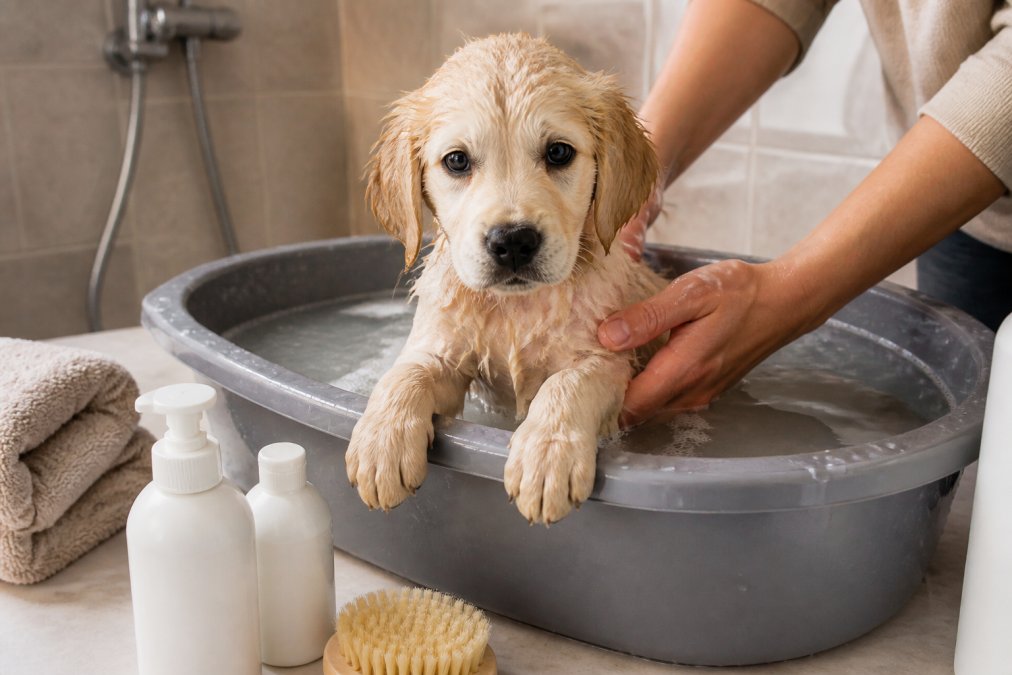
Table of Contents
- When Is It Safe to Give a Puppy Their First Bath?
- Puppy Grooming Essentials Checklist: What You'll Need
- How to Bathe a Puppy: Step-by-Step in the Tub
- How to Dry a Puppy After a Bath Without Causing Stress
- How Often to Bathe a Puppy (and When to Skip It)
- Post-Bath Reinforcement and Breed-Specific Coat Care
- Troubleshooting Bath-Time Fears and Apartment Setup
- Frequently Asked Questions
Last Updated: September 11, 2026
When Is It Safe to Give a Puppy Their First Bath?
Most puppies can safely have their first bath once they are fully weaned and able to regulate their body temperature, which typically happens around eight weeks of age (avma.org). Before that point, a damp cloth and warm water are safer than a full soak.
This guide from Pawsibly Everything walks you through exactly how to bathe a puppy for the first time without causing stress, chilling, or skin irritation. The timing matters more than most new owners realize. A puppy's coat and skin are still developing, and their ability to hold body heat is limited compared to an adult dog. Bathing too early, or too often, can dry out the skin and make a puppy uncomfortable.
A common mistake is treating a puppy like a small adult dog. Adult bathing routines assume a mature coat, a stable body temperature, and a dog that already tolerates water. Puppies have none of those advantages yet. The first bath is really a training session as much as a cleaning session.
For general health and vaccination guidance, the American Veterinary Medical Association is a reliable reference point for new owners. Your own veterinarian can confirm whether your puppy is ready based on their individual health status.
Puppy Grooming Essentials Checklist: What You'll Need
Gathering every tool before the water runs is the single biggest thing you can do to reduce bath-time chaos. A puppy left alone in a tub while you search for a towel will try to climb out.
Here is the puppy grooming essentials checklist to have within arm's reach:
- Puppy-safe shampoo, diluted in a small cup of warm water
- Two or three absorbent towels
- A non-slip mat for the tub floor
- A gentle grooming glove or soft brush
- A cup or pitcher for rinsing
- Cotton balls for ear protection
- Treats for positive reinforcement
- A hair dryer set to the lowest heat setting, if you plan to use one
Choosing a Puppy-Safe Shampoo
Puppy-safe shampoo is a formula made specifically for a dog's skin pH, free of harsh detergents and fragrances that strip natural oils. Human shampoo is too acidic for a dog's coat and can cause itching and flaking (akc.org).

A 500 ml bottle of Pet Bath Shampoo Dog Grooming Products gives you a gentle, pet-specific formula that cleans without stripping the coat. Diluting a small amount in warm water before applying helps you spread it evenly and rinse it out faster, which shortens the whole process.

How to Bathe a Puppy: Step-by-Step in the Tub
Bathing a puppy takes about ten to fifteen minutes from start to finish once you are set up. The goal is a calm, quick, thorough wash that ends before your puppy gets cold or frustrated.

Testing Water Temperature and Getting Them Wet
Lukewarm water, roughly the temperature you would use for a baby's bath, is the target. Test it against the inside of your wrist before your puppy goes anywhere near the tub.
Fill the tub only two to three inches deep. A shallow pool feels less threatening and keeps your puppy's head well clear of the water. Place a non-slip mat down first so their paws do not slide, then lower them in gently with one hand supporting the chest and hindquarters.
Use a cup to dampen the coat slowly, starting at the back and working forward. Avoid pouring water directly over the face. If your puppy startles, pause, offer a treat, and let them settle before continuing.
Lathering, Rinsing, and Handling the Head and Face
Work shampoo through the coat with your hands or a soft grooming glove, starting at the neck and moving down the back, sides, legs, and hindquarters. Lather in the direction the coat grows.
The head and face need the most care. Use a damp cloth rather than running water for the muzzle and cheeks, and keep shampoo well away from the eyes to prevent irritation. A small amount of cotton in each ear canal keeps water out.
Rinse until the water runs completely clear. Leftover shampoo residue is one of the most common causes of post-bath itching, so this step deserves extra time. A Pet Bathing 2-in-1 Grooming Glove lets you lather and scrub while keeping your own hands dry, and the flexible silicone side doubles as a massager that most puppies tolerate well.
How to Dry a Puppy After a Bath Without Causing Stress
Drying is where most first baths go wrong. A puppy that stays damp and cold can shiver for hours, and the drying method you choose depends entirely on coat type. Towel drying works for short coats, but double-coated, curly, and long-haired puppies need a different approach to prevent matting and skin problems.
Start with a warm towel and press gently to absorb the bulk of the water. Do not rub vigorously, as this tangles long coats and irritates skin. Switch to a second dry towel for the damp coat, then assess whether you need a dryer.
Coat-Specific Drying Techniques
| Coat Type | Drying Method | Key Risk |
|---|---|---|
| Short, smooth | Towel dry, air dry in warm room | Chilling if left damp |
| Double coat | Towel dry, then low-heat dryer to undercoat | Undercoat stays damp, causing odor and skin issues |
| Curly or wool | Towel blot, then full low-heat dryer with comb-out | Matting if air-dried |
| Long, silky | Towel blot, gentle comb while damp, low-heat dryer | Tangles and breakage |
For double-coated puppies, the undercoat holds water like a sponge. A low-heat dryer with a concentrator nozzle helps push air through the coat without burning the skin. Keep the dryer at least a foot away and move it constantly. For curly coats, use a slicker brush or wide-tooth comb while drying to prevent mats from forming as the hair dries.
Hair Dryer Safety
If you use a hair dryer, set it to the lowest heat and lowest fan speed. Keep it moving constantly and stop immediately if your puppy panics. Puppy skin burns easily, and the noise alone frightens many young dogs. Never leave a puppy unattended with a running dryer.
Pay extra attention to the belly, armpits, and between the toes, where dampness lingers and hypothermia risk is highest. Once dry, keep your puppy in a warm room away from drafts.
Post-Bath Reinforcement: The Step Most Guides Skip
The minutes right after a bath teach your puppy whether bathing is safe. Offer a high-value treat, quiet praise, and a favorite toy the moment the towel comes off. Do not wait until they settle down. You are rewarding calm tolerance of the bath, not the calm that follows it.
Some puppies get the "zoomies" after a bath, racing around the house. This is normal. It is a release of pent-up energy and stress. Let them run in a safe, warm area, but keep them away from drafts and cold floors until fully dry. A post-bath chew toy or puzzle feeder can redirect that energy into a calm activity.
Pro Tip
Keep a dedicated "bath towel" that stays in the bathroom. The familiar scent reduces stress for the next bath.
Apartment Drying Setup
In a small apartment, drying space is limited. Close the bathroom door and lay a towel on the floor to catch drips. If you use a dryer, run it on low in the bathroom with the door closed to contain noise and hair. For small breeds, a sink or shower stall works as well as a tub, but always use a non-slip mat.
A Pet Bathing 2-in-1 Grooming Glove can help work through damp coats during the towel-dry stage, especially for curly or dense fur.
How Often to Bathe a Puppy (and When to Skip It)
Most puppies need a bath only every four to six weeks, and some coats can go longer. Over-bathing strips natural oils and leads to dry, itchy skin. But the right frequency depends on coat type, lifestyle, and environment, not a one-size-fits-all schedule.
Breed-Specific Bathing Frequency
| Coat Type | Recommended Frequency | Why |
|---|---|---|
| Short, smooth | Every 4-6 weeks | Natural oils distribute easily; less prone to matting |
| Double coat | Every 6-8 weeks | Over-bathing strips insulating oils; undercoat needs thorough drying |
| Curly or wool | Every 3-4 weeks | Oils and debris trap near skin; mats form quickly |
| Long, silky | Every 2-3 weeks | Tangles and dirt accumulate fast; regular bathing prevents matting |
For double-coated puppies, bathing too often can damage the insulating undercoat and lead to skin problems. For curly-coated breeds, waiting too long between baths allows mats to form close to the skin, which can be painful to remove.
When to Skip the Bath Entirely
Skip the bath if your puppy is unwell, has an open cut or skin infection, or has recently had a vaccination. Stress and chilling can affect how they feel afterward. If your puppy has a skin condition, ask your veterinarian before bathing, as some medicated shampoos require specific frequency.
Between baths, spot-clean dirty paws and use pet-safe wipes for small messes. A Massaging Pet Shampoo Brush can help work through dense coats during spot cleaning without a full bath.

Lifestyle and Environmental Factors
A puppy that rolls in mud daily needs more frequent rinsing than one that stays indoors. Apartment dwellers may find their puppy gets dirtier from city sidewalks and parks, while a puppy with a fenced yard may stay cleaner. Seasonal changes matter too: winter baths require extra drying to prevent chilling, while summer baths can be more frequent if your puppy swims or plays in water.
The Takeaway
When in doubt, less is more. A healthy puppy with a balanced diet and regular brushing does not need frequent bathing. Over-bathing is a common mistake that leads to dry skin and itching. If your puppy smells or feels greasy, a quick rinse or wipe-down may be enough between full baths.
Post-Bath Reinforcement and Breed-Specific Coat Care
Post-bath behavioral reinforcement is the step almost every guide skips, and it is the one that decides how the next bath goes. The minutes right after a bath teach your puppy whether bathing is safe.
Offer a high-value treat, quiet praise, and a favorite toy the moment the towel comes off. Do not wait until they settle down. You are rewarding calm tolerance of the bath, not the calm that follows it.
Coat type changes the routine:
| Coat Type | Bath Frequency | Drying Priority |
|---|---|---|
| Short, smooth | Every 4-6 weeks | Quick towel dry |
| Double coat | Every 6-8 weeks | Thorough undercoat drying |
| Curly or wool | Every 3-4 weeks | Full dryer, mat prevention |
| Long, silky | Every 2-3 weeks | Gentle comb-out while damp |
A Massaging Pet Shampoo Brush helps work shampoo through dense or curly coats without pulling, which keeps bath time shorter for breeds prone to matting. For double-coated puppies, a soft silicone tool such as the Pet Silicone Massage Brush loosens surface debris between baths so you can stretch the interval.
Troubleshooting Bath-Time Fears and Apartment Setup
Bath-time anxiety is normal in puppies and usually fades with short, repeated, low-pressure sessions. Desensitization works better than force.
Start by letting your puppy stand in the dry tub with a treat. Next session, add an inch of water. Then add a cup of water, and only then shampoo. Each step should end on a positive note.
For apartment dwellers, the setup matters as much as the technique. A handheld shower attachment or a pitcher reduces water pressure and noise, both of which spook puppies. Lay a towel outside the tub to catch splashes, keep the bathroom door closed so your puppy cannot bolt, and run the water before bringing them in so the sound is not a surprise.
What most guides miss is that the bathroom itself is often the scary part, not the water. Let your puppy explore the dry tub and bathroom during calm moments, with treats and praise, several days before the first bath.
Frequently Asked Questions
At what age can you bathe a puppy for the first time?
Most puppies can have their first bath around 8 weeks old, once they are fully weaned and settled into your home. Before that, a damp washcloth works for spot cleaning. Puppies younger than 8 weeks have trouble regulating body temperature, so a full bath raises the hypothermia risk. If your puppy came home at 8 weeks, wait a few days to let them adjust before introducing water.
Is it safe to use human shampoo on a puppy?
No. Human shampoo is formulated for a different skin pH and can strip a puppy's coat, causing dryness, itching, and irritation. Always use a dog-specific shampoo made for puppies, like the Pet Bath Shampoo Dog Grooming Products from Pawsibly Everything ($27.10). It cleans gently without disrupting the skin barrier. If your puppy has sensitive skin, dilute the shampoo before applying it.
How do I keep my puppy calm during their first bath?
Start with desensitization before the bath: let your puppy sniff the dry tub, hear running water, and explore the supplies. Keep the water lukewarm, use gentle handling, and speak in a soft voice. A non-slip mat helps them feel secure. Offer treats and praise throughout, and keep the first bath short, around 5 minutes. If they panic, pause and try again the next day.
What should I avoid doing when bathing a puppy?
Never leave your puppy unattended in the tub, and avoid pouring water directly over their head or ears, which can cause ear infections and eye irritation. Do not use human shampoo, hot water, or a high-pressure spray. Skip the bath if your puppy has an open wound or was just vaccinated. Also, avoid bathing more than once a month unless your vet recommends it, since over-bathing strips natural oils.
Bath time is one of the first real tests of trust between you and a new puppy, and it sets the tone for every grooming routine that follows. Pawsibly Everything carries the grooming essentials that make that routine easier, from pet-specific shampoo and dual-sided bathing gloves to massaging brushes built for delicate coats. Get started with Pawsibly Everything and give your puppy a calm, comfortable first bath.

