

Cart
0

Table of Contents
- Signs of Dermatitis in Dogs and When to Seek Help
- What You'll Need Before You Start
- How to Bathe a Dog With Sensitive Skin
- Brushing a Dog With Sensitive Skin
- Drying Your Dog Thoroughly and Gently
- Common Mistakes to Avoid
- Frequently Asked Questions
Last Updated: October 13, 2026
Signs of Dermatitis in Dogs and When to Seek Help
Red patches, excessive licking, or a dull coat signal that you need to groom dog sensitive skin with a gentler approach.
Recognizing skin irritation symptoms
Watch for these common signs that your dog may have sensitive skin:
- Redness or inflammation on the skin
- Excessive scratching, licking, or chewing at the coat
- Dry, flaky skin or visible dander
- Itching that worsens after bathing
- Unpleasant odor coming from the coat
- Hair loss or bald patches
- Scabs or crusty areas on the skin
Many dogs develop these symptoms after harsh shampoos, frequent bathing, or environmental allergens. Grooming a dog with sensitive skin requires patience and the right products.
Note when symptoms appear, more scratching after bath time, or itching in certain seasons, to identify triggers.
When to contact a veterinarian
Some skin issues need professional attention. Contact your vet if your dog shows:
- Severe redness, swelling, or oozing
- Signs of infection like pus or crusting
- Hair loss that spreads across large areas
- Itching that doesn't improve after two weeks of gentle grooming
- Behavior changes like constant licking or restlessness
- Foul-smelling discharge from the skin
Your vet can rule out allergies, infections, or parasites requiring medication, and recommend specific treatments. Don't wait if symptoms seem severe or worsening.
What You'll Need Before You Start
Poor-quality tools and harsh products worsen sensitive skin, so invest in gentle-care items.
Choosing the right dog shampoo for sensitive skin
The shampoo matters most when grooming a dog with sensitive skin. Look for hypoallergenic or sensitive-skin formulas with fewer harsh chemicals and less fragrance.
Key features to look for:
- Fragrance-free or unscented formulas
- Natural or oatmeal-based ingredients
- Moisturizing properties to prevent dryness
- pH-balanced for canine skin
- Free from sulfates and parabens
The Pet Bath Shampoo Dog Grooming Products from Pawsibly Everything offers a gentle 500 ml formula that cleans without stripping natural oils.

Avoid strong perfumes, artificial colors, and harsh detergents, which trigger irritation.
Essential grooming tools for gentle handling
Choose soft-bristled brushes and gentle handling equipment over harsh metal combs to prevent skin damage and stress.
Essential tools include:
- Soft-bristled brush for daily brushing
- Gentle massage brush for bathing
- Grooming gloves for sensitive handling
- Towels for drying (microfiber works well)
- Spray bottle for water application
- Non-slip mat for the bathing area
The Massaging Pet Shampoo Brush from Pawsibly Everything has soft bristles and an ergonomic, dual-sided design that lets you bathe and massage simultaneously. Its soft TPR material won't hurt your dog's skin.
The Pet Silicone Massage Brush offers a removable soft comb and easy-to-clean design, ideal for dogs that resist grooming.
How to Bathe a Dog With Sensitive Skin
Bathing is the most critical part of how to groom dog sensitive skin. The wrong technique or water temperature triggers irritation, but a gentle, well-sequenced routine, preparation, washing, rinsing, drying, cleans effectively.
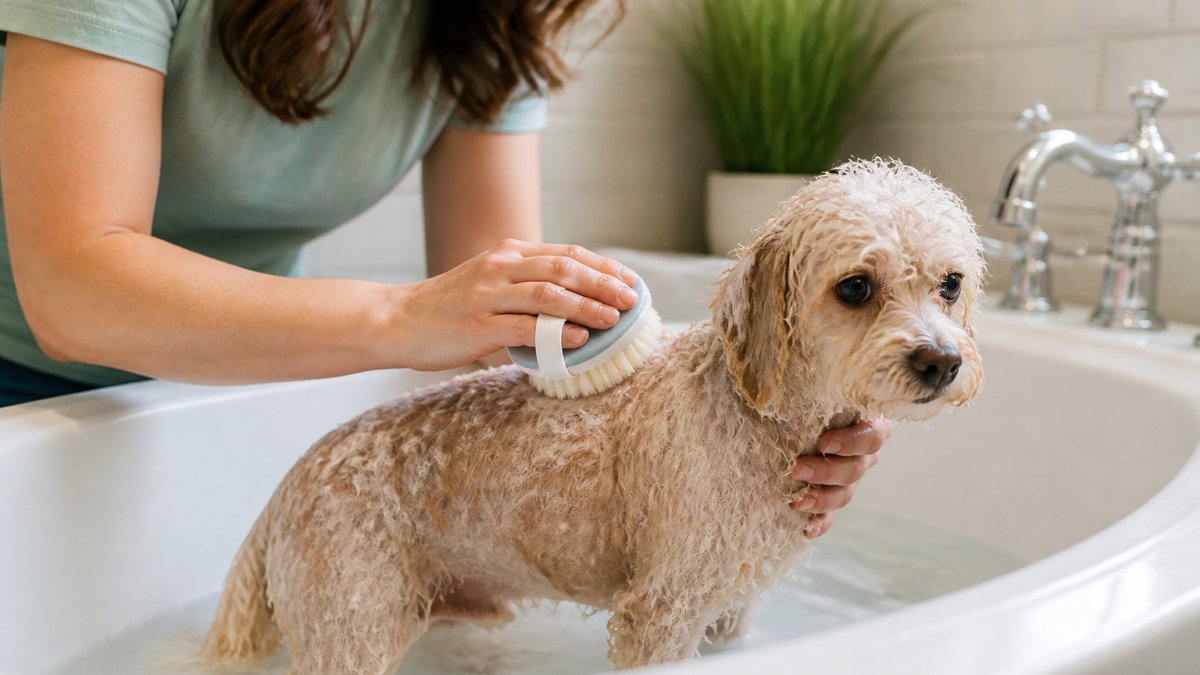
The complete ordered routine
Follow these steps in sequence for a safe bathing experience:
- Prepare the space - Use a non-slip mat and keep all supplies within arm's reach. Fill a pitcher or have a gentle spray attachment ready.
- Brush out loose hair first - A quick, gentle brush before the bath removes loose hair and debris, keeping water cleaner and preventing matting against wet skin.
- Test water temperature - Use lukewarm water, around 85-90 degrees Fahrenheit. Test it on your inner wrist first. Water that is too hot or too cold irritates sensitive skin.
- Wet the coat gradually - Start from the neck and work backward. Avoid spraying directly on the face or ears. Use a gentle spray or cup to pour water, not a high-pressure nozzle.
- Apply shampoo carefully - Dilute the shampoo with water to make it gentler and easier to distribute. Lather gently with your fingers or a soft brush; do not scrub aggressively.
- Rinse thoroughly - Leftover shampoo residue causes itching and irritation. Rinse multiple times until the water runs completely clear, then rinse once more. This step is crucial for sensitive skin care.
- Dry immediately - Damp skin creates an environment for irritation and infection. Use a soft towel and pat gently rather than rubbing.
A low-stress plan for dogs that resist grooming
If your dog panics, bolts, or freezes at bath time, forcing a full bath makes the next one harder. The fix is gradual desensitization.
- Start outside the tub. Let your dog walk in and out of the dry bathroom with treats and no water, over several days.
- Add water without a bath. Run a shallow inch of lukewarm water, let your dog stand in it briefly, then reward and end the session.
- Wet one area at a time. Pour water over a single leg or the back, reward, and stop. Build to a full wet-down over multiple short sessions.
- Keep sessions short. Five minutes or less at first. End every session while your dog is still calm, not after they have already panicked.
- Use a non-slip surface and a calm voice. Sliding and shouting both raise stress. A stable mat and quiet tone do more than any tool.
Key Takeaway
For a resistant dog, the goal of the first several sessions is not a clean dog, it is a dog that stays calm. Cleanliness follows once the routine feels safe.
Patch testing new products safely
Before using a new shampoo or grooming product on your whole dog, patch test a small area first to prevent widespread reactions.
Here is how to patch test:
- Choose a small, less visible area like the inside of the back leg
- Apply a small amount of the new product
- Leave it for 24 hours without rinsing
- Watch for redness, itching, or irritation during this period
- If no reaction occurs, you can safely use the product on the full coat
Change only one product at a time, if you switch several products in the same week and a reaction appears, you won't know the cause.
Water temperature and bathing frequency
Lukewarm water (85-90 degrees Fahrenheit) is ideal for dogs with skin irritation; hot water triggers itching and cold water shocks the system.
Bathe sensitive-skinned dogs only when necessary, typically every 4-6 weeks unless visibly dirty or on medicated baths, since frequent bathing strips protective oils.
Pet Bath Shampoo Dog Grooming Products →
If your dog swims or gets muddy, rinse with plain water first to remove surface dirt without a full shampoo bath.
Watch Out
If your dog's skin worsens after a bath, more redness, more scratching, or new scabs, stop and reassess. A reaction that does not settle within a day or two is a reason to call your veterinarian, not to bathe again.
Brushing a Dog With Sensitive Skin
Regular brushing removes loose hair, dander, and debris that irritate sensitive skin, and lets you spot hot spots, bald patches, or scabs early. The right brush and stroke depend on coat type, the wrong tool commonly causes grooming-related irritation.
Match the tool to the coat
Coat type, not breed, should drive tool selection. Here is how the four main coat types differ:
- Short, smooth coats (think Beagle, Boxer, or a short-haired mixed breed): Use a rubber curry brush or a soft-bristled brush. A curry lifts loose hair and stimulates circulation without scraping skin. Avoid slicker brushes with stiff metal pins, on a short coat they go straight to the skin.
- Long, silky coats (think Yorkie, Maltese, or a long-haired mix): Use a pin brush with coated tips and a wide-tooth metal comb for the feathering on the legs, ears, and tail. Work in small sections. A slicker brush is fine for the body but keep the pressure feather-light over bony areas.
- Curly or woolly coats (think Poodle, Bichon, or a Doodle): These coats mat easily and trap moisture against the skin. Use a slicker brush with flexible pins plus a metal comb to check for tangles down to the skin. Never brush a dry, matted curly coat, spritz lightly with water or a dog-safe detangler first, then work mats out from the tip toward the skin in small increments.
- Double coats (think Husky, German Shepherd, or a Golden Retriever): Use an undercoat rake with rounded teeth to reach the dense undercoat, plus a slicker for the topcoat. A common mistake is shaving a double coat to "fix" shedding, this can disrupt the coat's insulating and temperature-regulating function and expose sensitive skin to sun and irritants.
Pro Tip
If you are unsure which brush suits your dog, start with the gentlest option (a rubber curry or soft-bristled brush) and only move to a slicker or rake if the coat needs it. It is easier to add pressure than to undo irritation.
Stroke technique that protects skin
Brush 2-3 times per week with gentle, slow strokes in the direction of hair growth. Let the brush glide, if skin indents under the pins, you are pressing too hard.
Pay special attention to areas prone to irritation and matting:
- Behind the ears
- Under the armpits
- Between the toes
- Along the belly
- Around the tail base
- The "pants" and feathering on the back legs
On these thinner-skinned areas, switch to a softer tool or your fingertips. A flinch at the armpits or belly is information, not stubbornness.
Reading your dog's signals
If your dog pulls away, yelps, lip-licks, yawns, or freezes, you are likely hitting a sensitive area or brushing too hard.
For dogs with sensitive skin, keep sessions to five to ten minutes and stop while your dog is still comfortable.
Many dogs with sensitive skin enjoy grooming once they realize it won't hurt. Soft-bristled and massage-style brushes add a gentle massage sensation to hair removal, building positive associations.
Drying Your Dog Thoroughly and Gently
How you dry your dog matters as much as how you bathe them, damp skin invites irritation, infection, and odor.
Use a soft microfiber towel and pat your dog dry rather than rubbing vigorously. Rubbing can irritate the skin and cause matting in longer coats. Work section by section, paying special attention to areas that stay damp:
- Armpits and skin folds
- Between the toes
- Under the tail
- Behind the ears
- The belly area
If your dog tolerates it, use a low-heat blow dryer on cool or warm (never hot), held several inches away and kept moving.
Never put a damp dog in a crate or enclosed space, trapped moisture creates ideal conditions for skin problems.
Common Mistakes to Avoid
Avoid these common mistakes to protect your dog's sensitive skin.
Using water that's too hot - Hot water opens pores and irritates sensitive skin.
Brushing wet hair aggressively - Wet hair is more fragile and prone to breaking.
Ignoring early signs of irritation - Small problems become big ones quickly.
Rushing the grooming process - Taking your time prevents accidental skin damage and reduces stress.
Pawsibly Everything offers grooming tools designed for sensitive skin care. Our Pet Bath Shampoo, Massaging Pet Shampoo Brush, and Pet Bathing 2-in-1 Grooming Glove work together for a complete at-home routine that keeps your dog comfortable and clean.

Frequently Asked Questions
What are the signs of dermatitis in dogs?
Common signs include excessive scratching, redness, flaky or dry skin, hair loss, and a musty odor. Your dog may also lick or bite at irritated areas. If you notice these symptoms persisting for more than a few days, contact your veterinarian to rule out allergies, parasites, or infections requiring professional treatment.
How should you bathe a dog with sensitive skin?
Use lukewarm water (around 85-90°F) and a fragrance-free, hypoallergenic shampoo formulated for sensitive skin. Wet the coat thoroughly, apply shampoo with gentle circular motions, and rinse completely to remove all residue. Avoid scrubbing hard or using hot water, which can strip natural oils and increase irritation. Limit baths to once every 4-6 weeks unless your vet recommends otherwise.
What dog shampoo for sensitive skin should I use?
Look for unscented, fragrance-free formulas with simple ingredients and no harsh chemicals. The Pet Bath Shampoo Dog Grooming Products from Pawsibly Everything ($27.10 for 500 ml) is designed to clean and beautify without unnecessary additives. Always patch test a new product on a small area of skin 24 hours before full use to check for reactions.
How often should I brush a dog with sensitive skin?
Brush 2-3 times per week using soft-bristled tools or silicone brushes that won't irritate the skin. Gentle, consistent brushing removes loose hair, dander, and debris that can trap allergens and cause itching. Use light pressure and avoid matting, which can pull on the skin and cause discomfort.

