

Cart
0

Table of Contents
- Why Comfortable Bird Perches Matter for Cage Setup
- Bird Foot Health and Perch Selection: Understanding Bumblefoot Prevention
- Best Perch Diameter for Parrots and Other Bird Species
- Materials That Create Comfortable Perches: Natural and Safe Options
- How to Clean Bird Perches: Sanitization and Maintenance Steps
- Perch Placement and Cage Layout for Ergonomic Support
- Installing and Securing Perches Safely in Your Cage
- Conclusion
Last Updated: August 21, 2026
Why Comfortable Bird Perches Matter for Cage Setup
Your bird spends most of its life on perches, relying on the same few branches or rods for hours at a time. Selecting comfortable bird perches isn't a minor detail, it's foundational to your pet's physical health and mental well-being. The right perch setup prevents serious foot problems, reduces stress, and encourages natural behaviors like preening and foraging. A bird standing on an uncomfortable perch experiences constant pressure on the same foot joints, leading to soreness, inflammation, and potentially permanent damage.
Perch selection affects more than just foot comfort. The texture, diameter, and placement influence mental stimulation, movement patterns, and healthy behaviors. A bird that refuses to move around its cage often becomes bored, anxious, and destructive.
Pro Tip
The most overlooked factor in cage setup is perch variety. Birds need different diameters and textures across their cage to exercise different muscle groups and prevent repetitive stress on the same joints.
Bird Foot Health and Perch Selection: Understanding Bumblefoot Prevention
Bumblefoot, clinically known as pododermatitis, is one of the most common foot problems in captive birds (peer-reviewed research). This condition develops when pressure, friction, or poor grip on a perch damages the sensitive skin on the bottom of the foot, allowing bacteria to invade and cause infection.
The connection between perch comfort and bumblefoot prevention is direct. Birds standing on perches that are too thick, too thin, or made of slippery material must work harder to maintain their grip, creating pressure points where bumblefoot begins. A bird on a comfortable, grippy perch with the right diameter distributes weight evenly across its foot and can relax its grip muscles.
Prevention starts with natural bark texture, which provides better grip than smooth plastic or metal, varied diameters to prevent the same pressure points from bearing weight repeatedly, and appropriate heights and angles to reduce joint strain.
Key Takeaway
Bumblefoot develops from repeated pressure on the same foot areas combined with poor grip. The best prevention is a perch setup that distributes weight evenly and gives your bird's feet something natural to grip.
Best Perch Diameter for Parrots and Other Bird Species
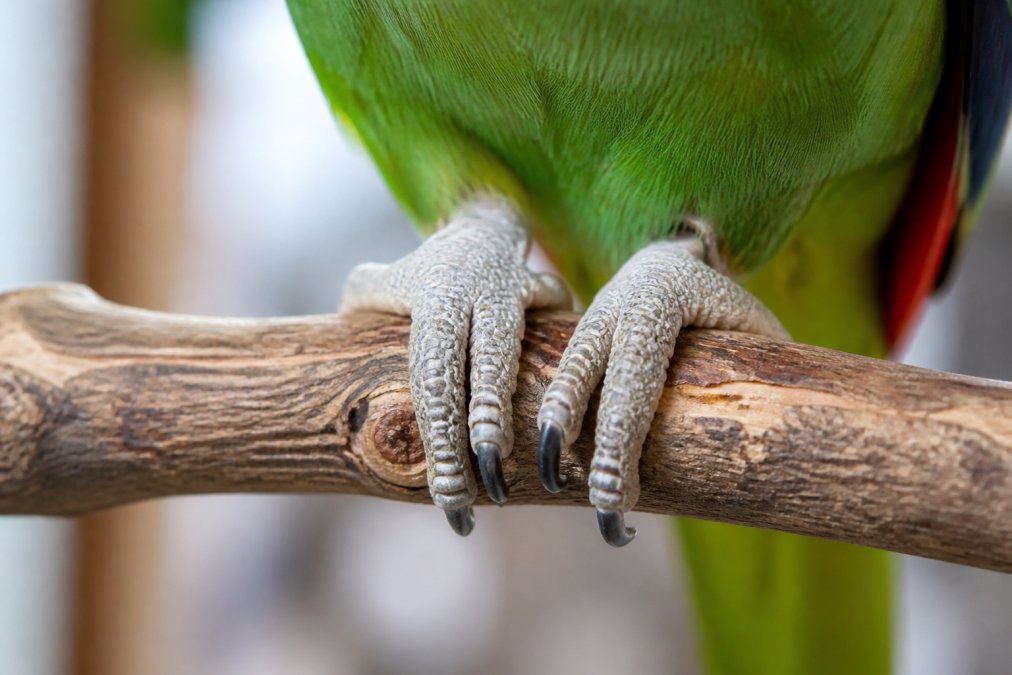
The ideal perch diameter depends entirely on your bird's foot size. A perch that's too thick forces the bird's toes to stretch unnaturally wide, straining the joints. A perch that's too thin prevents secure gripping, causing constant tension as the bird maintains balance.
Measuring Your Bird's Feet for Proper Fit
To find the right diameter, measure your bird's foot when relaxed and gripping something. Wrap a soft measuring tape around the bird's foot while it's standing on your finger. A properly fitting perch should allow the bird's toes to overlap slightly when gripping, roughly 50% to 75% of the toe should wrap around the perch.
Watch how your bird grips different diameters. On the right diameter, the bird settles into a relaxed stance. On an incorrect diameter, you'll see uncomfortable shifting or overly tight gripping.
Small birds like finches and canaries need perches between 0.5 to 0.75 inches in diameter. Medium parrots like African Greys and Amazons typically do best with 1 to 1.5 inch diameter perches. Large macaws require 1.5 to 2 inches. Individual birds vary, so observe your specific bird's comfort level.
Watch Out
A perch that's too thin looks easier to grip but actually causes more strain. Your bird has to work constantly to avoid falling, creating tension in the foot and leg muscles that leads to fatigue and soreness over time.
Perch-to-Cage Ratio: How Many Perches Your Bird Needs
One perch isn't enough. Birds need multiple perches to move around, exercise different muscle groups, and engage in natural behaviors. Provide at least one perch for every 12 to 18 inches of cage length. A 36-inch cage should have at least 2 to 3 perches, ideally 3 to 4. A larger flight cage might accommodate 5 to 8 perches.
Space perches 8 to 12 inches apart horizontally, allowing your bird to step from one to another without flying. This encourages movement and exercise while keeping the cage layout manageable.
Materials That Create Comfortable Perches: Natural and Safe Options
The material determines grip quality, durability, splintering risk, and health safety. Understanding your options helps you build a perch setup that lasts and keeps your bird safe.
Manzanita Wood and Natural Bark Texture
Manzanita wood is one of the best natural perch materials available. It's dense, hard, and naturally textured with bark that provides excellent grip. Birds instinctively prefer natural bark texture because it mimics what they'd encounter in nature. The grip isn't slippery, so birds don't have to work as hard to stay balanced.
Manzanita perches last a long time and don't splinter easily. Other hardwoods with natural bark, apple wood, willow, and pear wood, work similarly well. Avoid softwoods like pine, cedar, and redwood, which splinter easily and can release harmful oils.
Rope Perches, Sand-Coated, and Heated Options
Rope perches offer flexible grip that some birds enjoy. However, they require careful monitoring. Frayed fibers can wrap around toes or beaks, and some birds chew them aggressively, creating a choking hazard. Inspect them regularly and replace them as soon as fraying begins.
Sand-coated perches provide excellent grip through their rough surface, mimicking natural bark. The downside is that the coating can wear off over time. Heated perches are designed for birds needing warmth, particularly those recovering from illness, but they're not necessary for most healthy birds in temperature-controlled homes.
Toxic Wood Species to Avoid
Avocado wood contains persin, a compound toxic to birds (aspca.org). Cherry, peach, and apricot wood contain compounds that break down into cyanide-like substances (peer-reviewed research). Treated wood of any kind, pressure-treated lumber, painted wood, or wood treated with pesticides, is dangerous. Avoid any wood you can't identify. Stick to known safe species like apple, willow, and oak.
How to Clean Bird Perches: Sanitization and Maintenance Steps
Clean perches regularly to prevent bacterial and fungal growth. Most bird owners should clean perches at least weekly, more frequently if the bird is sick or if you notice visible soiling.
Remove the perch from the cage and use warm water and a soft brush to scrub away droppings, food debris, and visible dirt. For stubborn buildup, soak the perch in warm water for 10 to 15 minutes before scrubbing. Avoid harsh chemicals; plain water and a brush are usually sufficient.
For deeper sanitization, use a dilute bleach solution: one part bleach to nine parts water. Soak the perch for 10 minutes, scrub gently, then rinse thoroughly multiple times to remove all bleach residue. Allow the perch to dry completely before returning it to the cage.
Replace perches showing signs of splintering, cracking, or permanent mold discoloration. Keep spare perches on hand so you always have a clean one available while others dry or soak.
Pro Tip
Keep 2 to 3 sets of perches and rotate them weekly, one set in the cage, one set drying, one set soaking. This ensures your bird always has clean perches while giving you time for thorough cleaning.
Perch Placement and Cage Layout for Ergonomic Support
Where you place perches matters as much as what they're made of. Perch placement affects how your bird moves, which muscles it uses, and how much stress it places on its joints.
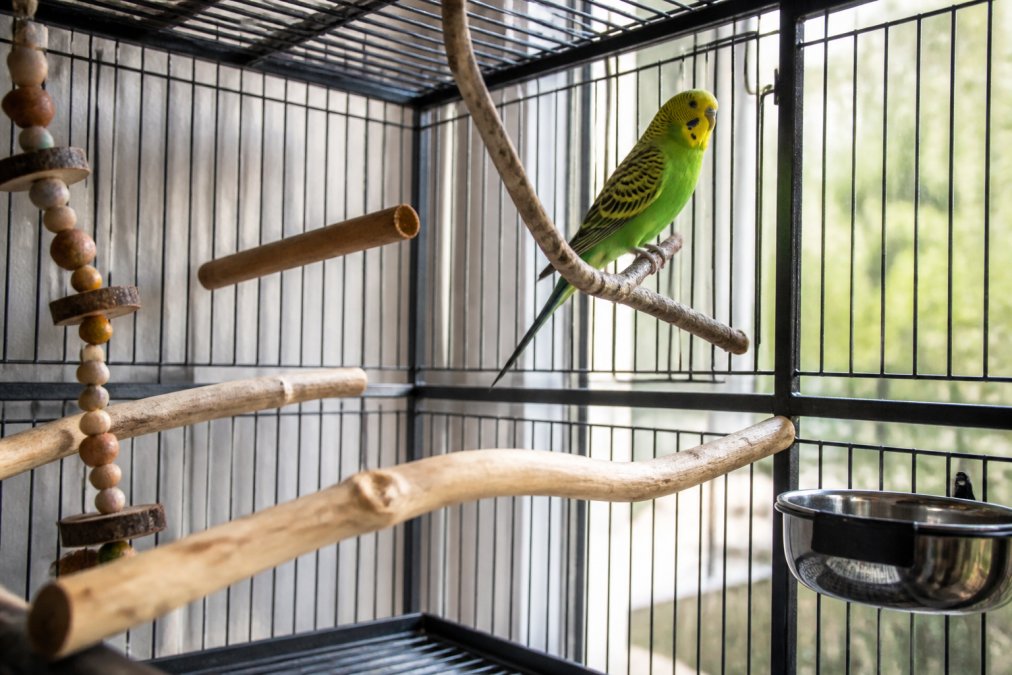
The highest perch should be at eye level or slightly above when you're standing in front of the cage. Birds naturally prefer sleeping on the highest available perch. Position perches at varying heights and angles rather than in a straight line, encouraging movement and natural grip engagement.
Leave at least 6 inches of clearance on each side of the perch for small to medium birds, and up to 12 inches for larger parrots. This allows your bird to flap its wings without hitting the cage bars and move away from the perch without feeling trapped.
Positioning for Aging Birds and Joint Health
Older birds often develop arthritis or joint stiffness. Position perches closer together, within 6 to 8 inches rather than 12 inches, so your bird doesn't have to stretch far to move between them. Provide at least one perch at a lower height where your bird can rest without exertion.
Slightly thicker perches can be easier on arthritic feet because they allow less gripping effort, but don't go so thick that your bird can't grip securely. The goal is finding the balance that minimizes strain while maintaining grip security.
Installing and Securing Perches Safely in Your Cage
How you install a perch determines whether it stays secure and safe. A loose perch can shift unexpectedly, causing your bird to lose balance and injure itself.
For cages with horizontal bars, use stainless steel hardware and wing-nut attachments designed specifically for bird cages. Tighten the hardware firmly; the perch shouldn't move when you push on it. For cages with vertical bars, use cage clips or specialized perch hangers that grip the bars without damaging them. Avoid using zip ties or rope, which can fray or loosen over time.
After installation, test the perch stability by applying firm pressure. A secure perch won't move more than a quarter inch in any direction. Check the installation weekly, especially on wooden perches that may shrink slightly as they dry.
Choosing comfortable bird perches transforms your bird's quality of life. The right perch setup prevents foot problems, encourages natural behaviors, and gives your bird the physical comfort it needs to thrive. At Pawsibly Everything, we recognize that bird care extends beyond feeding and basic housing, it includes thoughtful attention to the surfaces your bird spends its entire day on. Start by assessing your current setup, measuring your bird's feet for proper diameter, and gradually introducing varied perch materials and placements. Your bird will reward you with better health, more active behavior, and a stronger bond with you.
Frequently Asked Questions
Q: How many perches should be in a bird cage?
A: The number of comfortable bird perches depends on your cage size and bird species. A general rule is to provide multiple perches at different heights for roosting and movement. Larger cages benefit from more perches to encourage foraging behavior and mental stimulation. Ensure perches are spaced to allow your bird to move freely without hitting wings against cage bars or other perches.
Q: What is the best perch diameter for parrots to prevent foot problems?
A: The ideal perch diameter allows your parrot's toes to wrap about three-quarters of the way around the branch without overlapping. For small parrots, aim for 0.5-0.75 inches; medium parrots need 0.75-1.25 inches; large parrots require 1.25-2 inches. Proper diameter helps prevent pressure points that can lead to foot problems. Varying diameters across different perches reduces strain on the same foot joints and promotes natural perching behavior.
Q: Are sandpaper perches safe for pet birds?
A: Sandpaper perches can be used occasionally for nail trimming and beak conditioning, but should not be primary perches. Extended time on rough sand-coated surfaces can damage foot skin and cause irritation. If you use them, rotate them in for short periods. Natural bark texture and varied materials are generally safer daily options. Monitor your bird's feet regularly for redness or signs of discomfort.
Q: How do I clean bird perches properly?
A: Remove perches weekly and scrub with warm soapy water and a stiff brush to remove droppings and debris. Rinse thoroughly and air dry completely before returning to the cage. For stubborn buildup, soak in warm water for 15 minutes first. Inspect for cracks or splintering that could injure feet. Replace perches showing significant wear or damage. Natural wood perches may need replacement periodically depending on use and sanitization frequency.
This article was written using GrandRanker

