

Cart
0
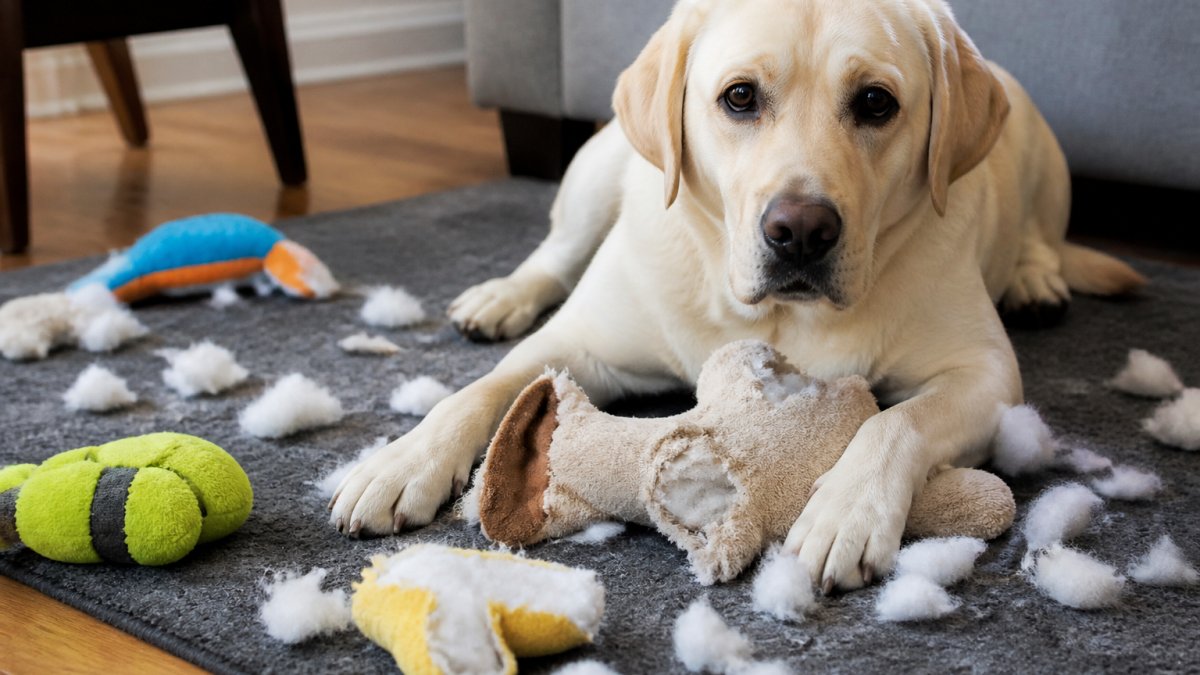
Table of Contents
- Signs Your Dog Needs a Tougher Toy
- Understanding Your Dog's Chewing Style
- Best Toys for Aggressive Chewers
- Dangers of Worn-Out Dog Toys
- How to Choose a Durable Dog Toy
- Toy Rotation and Maintenance Strategies
- Frequently Asked Questions
Last Updated: September 28, 2026
Signs Your Dog Needs a Tougher Toy
If your dog destroys toys within days, leaving stuffing scattered and squeakers broken, they need a tougher toy. Switching now prevents choking hazards and keeps your pet safe.
A tougher toy matches your dog's chewing power to prevent pieces from becoming choking hazards. Soft toys frustrate aggressive chewers, redirecting their energy to furniture and shoes.
Dogs needing tougher toys show clear signs: visible wear within days, disinterest in soft toys, and escalating destructive behavior. These signal your dog's chewing style has outgrown standard options.
Visible Wear and Tear on Current Toys
Inspect your dog's toys for split seams, shredded fabric, and missing pieces. If a toy is destroyed in less than a week, it's too soft for your dog.
Aggressive chewers puncture rubber, tear fabric in straight lines, and unravel seams. Casual players mouth toys for months; aggressive chewers reduce them to scraps in days.
Every torn piece is a potential blockage risk. Upgrade to durable materials rather than replacing soft toys repeatedly.
Key Takeaway
If a toy shows visible wear within 7 days of first use, your dog needs a tougher toy. Soft toys are not the problem; they're just not designed for your dog's bite force.
Destructive Behavior and Rapid Shredding
When your dog shreds toys rapidly, standard toys don't satisfy their chewing drive.
Heavy chewers need resistance. Soft toys tear instantly, frustrating them and redirecting their energy to furniture and baseboards.
Rapid shredding creates immediate safety risks as pieces scatter and get ingested or stuck between teeth.
Match toy material to chewing intensity. Durable rubber and nylon resist puncture and don't shred into swallowable pieces.
Disinterest in Soft or Standard Toys
Aggressive chewers ignore soft toys because they offer no resistance, like asking a weightlifter to practice with a foam stick.
Disinterest in standard toys paired with obsessive chewing of furniture signals your dog wants resistance that challenges their bite.
Mix heavy-duty toys into rotation. You'll see engagement spike immediately.
Understanding Your Dog's Chewing Style
Understanding your dog's chewing style determines which toys work. Some dogs mouth toys gently; others attack with intensity.
Aggressive Chewers vs. Casual Players
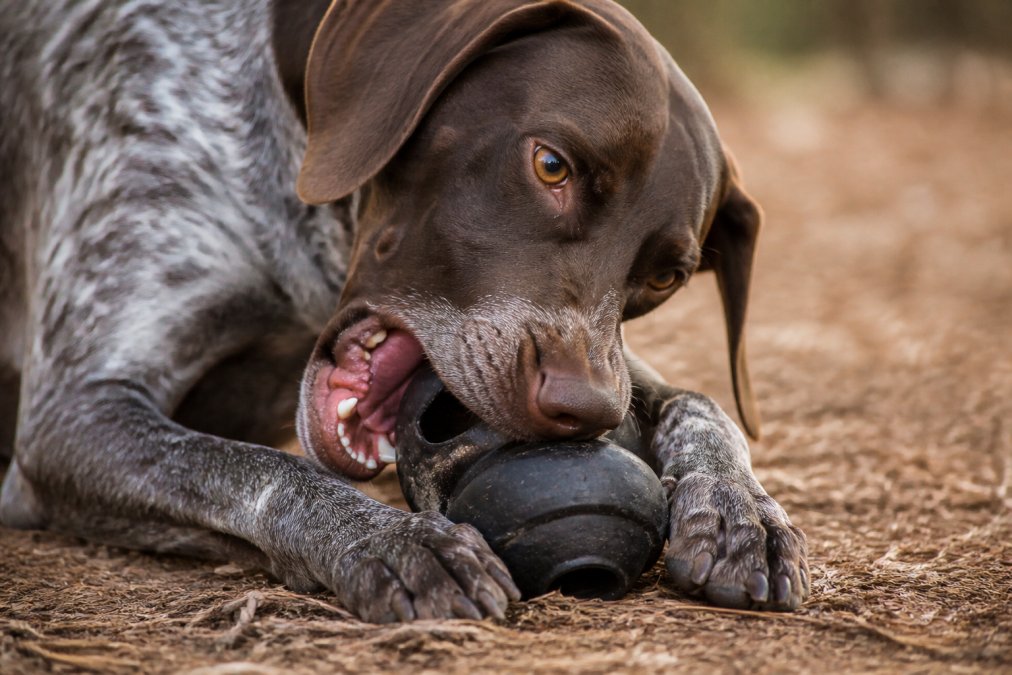
Aggressive chewers apply constant pressure, work toys with molars, and puncture rubber. Casual players mouth toys gently.
Aggressive chewers vary by size and breed. A 20-pound terrier can have stronger bite force than a 70-pound retriever.
Toy durability requirements differ dramatically. A toy lasting months for a casual player lasts days for an aggressive chewer.
Watch Out
Giving an aggressive chewer a toy designed for casual players creates a false sense of security. The toy will fail quickly and create blockage risk. Supervision alone cannot prevent ingestion of small pieces.
Bite Force and Jaw Strength
Bite force varies by breed and size. Smaller breeds like terriers often have higher bite force relative to body weight than larger breeds.
Jaw strength increases with age. Puppies chew intensely but lack the sustained power of adults, making age-specific toy selection important.
If your dog punctures your hand during gentle play, they'll destroy standard rubber toys quickly.
Best Toys for Aggressive Chewers
Aggressive chewers need toys that resist puncture, don't shred into pieces, and provide the resistance they crave. The right toy keeps them engaged for hours instead of minutes.
Heavy-Duty Rubber and Durable Materials
Heavy-duty rubber is the gold standard for aggressive chewers. It resists puncture, flexes under pressure, and doesn't splinter into swallowable pieces.
Dog Bite Resistant Rubber Grinding Toys →
Choose natural rubber, high-density rubber compounds, or TPR (thermoplastic rubber). These withstand sustained chewing without degrading.
Nylon toys work for heavy chewers but require supervision. Choose thick nylon designed to wear down slowly rather than break.
Avoid toys with squeakers, bells, detachable parts, or stuffing. These become choking hazards when torn free.
Pro Tip
Test a toy's durability by pressing your thumbnail into the material. If you can puncture it easily, your aggressive chewer will destroy it within days. Real durable toys resist thumbnail pressure.
Recommended Durable Options
The Dog Bite Resistant Rubber Grinding Toys from Pawsibly Everything start at $33.94 and come in three sizes. Small toys fit dogs under 9 kg. Medium fits 7-16 kg. Large fits 13-30 kg. These toys are designed specifically for aggressive chewing with bite-resistant rubber that doesn't splinter.

The Chew Toys For Dog Teeth Cleaning at $6.51 use TPR material with a serrated surface. The side groove design prevents damage to teeth and gums while satisfying strong chewing needs. The hollow design lets you add treats or peanut butter for extra engagement.
For dogs with intense bite force, the Spiked Dog Chew Toy Stick Dental Cleaning Toy ($18.22) features high-density, non-toxic rubber with dental spikes. The grooved ridges allow you to add treat pastes. The flexible rubber exterior won't splinter or break apart like plastic toys.
The Vocal Rugby Pet Toys ($15.62) combine strong bite resistance with a natural rubber construction. At 200g with a molar sound, they're designed for teeth grinding and tooth cleaning. The durable material handles aggressive chewing without degrading into dangerous pieces.
For interactive play, the Dog Treat Dispenser Ball Toy ($21.89) uses flexible, heavy-duty natural rubber with specialized grooves. It functions as both a chew toy and slow feeder. The inner spikes clean teeth while your dog rolls and nudges it.
| Toy | Price | Best For | Material | Key Feature |
|---|---|---|---|---|
| Dog Bite Resistant Rubber Grinding Toys | $33.94 | Heavy chewers by weight | Bite-resistant rubber | Size-matched to dog weight |
| Chew Toys For Dog Teeth Cleaning | $6.51 | Budget-conscious owners | TPR | Hollow design for treats |
| Vocal Rugby Pet Toys | $15.62 | Teeth grinding needs | Natural rubber | Sound activation |
| Spiked Dog Chew Toy Stick | $18.22 | Intense chewers | High-density rubber | Grooved ridges for pastes |
| Dog Treat Dispenser Ball Toy | $21.89 | Interactive play | Heavy-duty rubber | Slow feeder function |
Dangers of Worn-Out Dog Toys
A worn-out toy isn't just ineffective. It becomes a medical emergency waiting to happen. Understanding the specific risks helps you prioritize toy replacement.
Choking Hazards and Obstruction Risk
Small torn pieces create immediate choking risk when lodged in the throat, requiring emergency intervention.
Swallowed Parts and Gastrointestinal Blockage
Squeakers, bells, and plastic components are particular hazards. Your dog tears these free and swallows them. They don't pass through the digestive system. They accumulate.
Watch Out
A single swallowed toy component can create a life-threatening blockage. Do not wait for symptoms to appear. Replace toys showing wear immediately, especially those with detachable parts or stuffing.
How to Choose a Durable Dog Toy
Choosing the right toy requires understanding both material durability and your dog's specific needs. A toy that works for one dog might be useless or unsafe for another.
Material Safety and Puncture Resistance
Start with material. Rubber and TPR are safer than plastic for aggressive chewers. Rubber flexes under pressure. Plastic snaps and creates sharp edges. Nylon is durable but requires supervision.
Size Matching and Supervision
Size matters more than many pet parents realize. A toy too small creates choking risk. A toy too large becomes awkward to chew. Match toy size to your dog's mouth.
Toy Rotation and Maintenance Strategies
Toy rotation keeps your dog engaged and extends toy life. Maintenance prevents deterioration and catches problems before they become hazards.
Visual Inspection Checklist
Check every toy weekly. Look for these specific signs of wear:
- Punctures or tears in the rubber or material
- Loose or separated seams
- Missing pieces or chunks
- Discoloration or fading that indicates material breakdown
- Squeakers or bells that are loose or partially separated
- Cracks or splits in hard plastic components
- Softening or degradation of the material texture
When to Discard and Replace
Replace toys showing any visible damage. Don't try to salvage them. A toy with a small tear will only get worse. Your aggressive chewer will exploit that weakness.
Key Takeaway
A toy rotation system with 4-6 toys prevents boredom while extending individual toy life. Replace toys immediately when damage appears rather than waiting for complete failure.
Frequently Asked Questions
How do I know if a dog toy is safe for my aggressive chewer?
Look for toys made from non-toxic, puncture-resistant rubber that won't splinter or shred. Check that there are no detachable parts, squeakers that can be pulled out, or seams that might separate under pressure. Toys should be appropriately sized for your dog's weight and bite force. Inspect regularly for punctures, tears, or signs of wear. High-density rubber toys with no small crevices where pieces can lodge are safest for aggressive chewers.
What are the signs that a dog toy is a choking hazard?
A toy becomes a choking hazard when it shows visible damage like punctures, missing chunks, or loose rubber pieces. Squeakers or bells that can be extracted pose immediate danger. Toys that are too small for your dog's mouth or easily breakable into small fragments increase risk. Toys with detachable parts or deteriorating seams should be removed immediately. Any toy showing significant wear and tear should be discarded to prevent accidental ingestion.
What materials are best for heavy-duty dog toys?
High-density natural rubber and TPR (thermoplastic rubber) are the best materials for heavy chewers. These materials offer excellent bite resistance, flexibility, and durability without splintering. Non-toxic rubber compounds that flex under pressure rather than crack are ideal. Look for toys with reinforced construction and no hollow areas where bacteria can grow. Toys like the Dog Bite Resistant Rubber Grinding Toys ($33.94) and Spiked Dog Chew Toy Stick ($18.22) use durable rubber designed to withstand aggressive chewing.
How often should I replace my dog's chew toys?
Replace toys as soon as they show significant wear, punctures, or missing pieces, don't wait for a set timeline. High-quality durable toys may last months with regular use, while standard toys might need replacement every few weeks depending on your dog's chewing intensity. Inspect toys weekly for damage. Keep multiple toys in rotation so one can be cleaned while another is in use. Aggressive chewers may need more frequent replacements, so having backup toys on hand prevents gaps in safe play options.

