

Cart
0
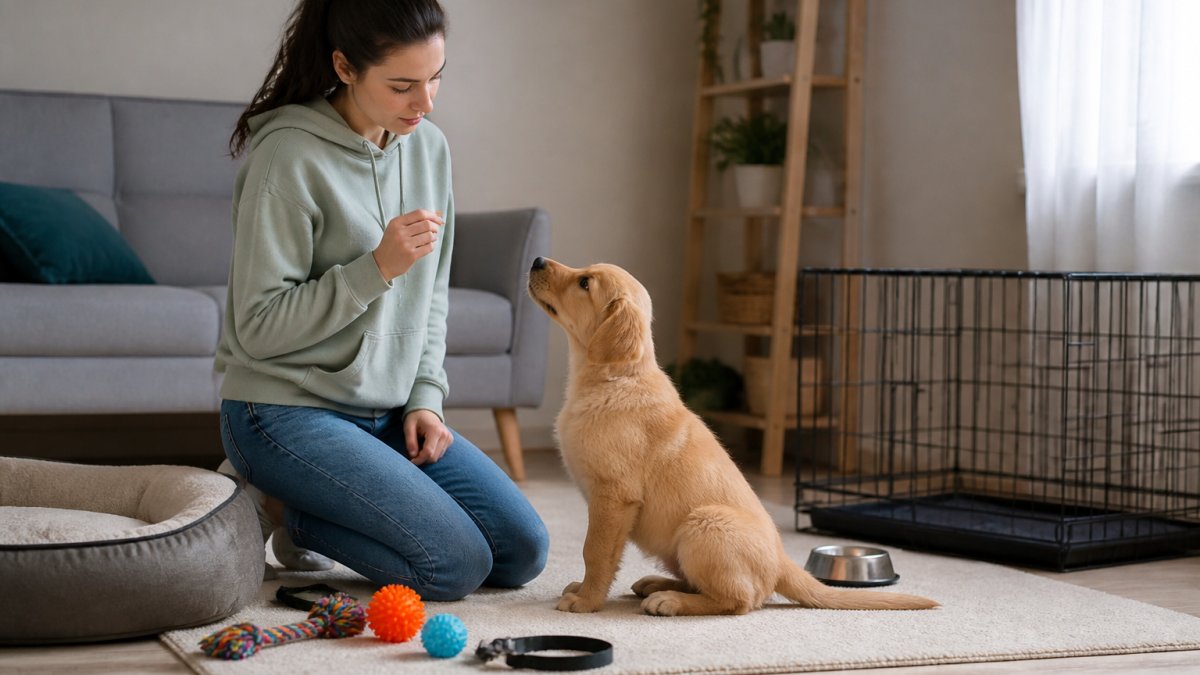
Table of Contents
- Start Puppy Obedience Training on Day One
- Your First 8 Weeks: A Puppy Training Schedule That Works
- How to Teach a Puppy to Sit Using Rewards and a Marker Word
- Build a Puppy Potty Training Schedule That Prevents Accidents
- When and How to Join Puppy Obedience Classes
- Troubleshoot Setbacks and Track Progress
- Conclusion: Consistency Beats Perfection
- Frequently Asked Questions
Last Updated: October 8, 2026
Start Puppy Obedience Training on Day One
Puppy obedience training for first-time owners starts the moment your puppy comes home, not at six months old. Every interaction teaches your puppy something, whether you plan it or not. The fix is simple: begin with name recognition, a potty rhythm, and gentle handling on day one.

Training is how your puppy learns what earns praise and treats. It is not about dominance or stern correction. According to the American Veterinary Society of Animal Behavior position statement on punishment, reward-based methods are the recommended approach for young dogs because aversive tools can increase fear and aggression.
Puppies have short attention spans. A few one-minute sessions beat one long session every time.
Key Takeaway
The first week is not about perfect obedience. It is about building trust, a routine, and a name your puppy actually responds to.
Your First 8 Weeks: A Puppy Training Schedule That Works
Most puppies come home around eight weeks old, and the first eight weeks set the tone for everything that follows. A good puppy training schedule builds one skill at a time, repeats it daily, and keeps every session under five minutes. Aim for three to five short sessions a day rather than one long block.
The plan below covers weeks eight through sixteen. Treat it as a priority list, not a checklist. If your puppy is struggling with one row, stay there an extra week before moving on.
| Age | Primary Focus | Daily Priorities | Move On When |
|---|---|---|---|
| Weeks 8-10 | Name, crate, potty rhythm | 3-5 one-minute name games; potty every 1-2 hours; two 5-minute crate sessions | Puppy looks at you on name 8 of 10 tries |
| Weeks 11-13 | Sit, leash, short outings | Two 5-minute sit sessions; one 3-minute indoor leash session; one carried outing | Puppy sits on a verbal cue with no lure in a quiet room |
| Weeks 14-16 | Proofing around distractions | One cue practice in a new room or yard daily; two short walks; one new surface or sound | Puppy holds a cue with one mild distraction present |
Weeks 8-10: Name, Crate, and Potty Rhythm
This window is about routine, not obedience. Your puppy is adjusting to a new home, a new sleep schedule, and a new digestive system.
Name recognition. Say your puppy's name once, then reward the instant they look at you. Do ten reps, twice a day.
Crate time. Feed meals inside the crate with the door open for the first two days. Then close the door for five seconds, reward, and open it. Build to five minutes over the first week.
Potty rhythm. Take your puppy out every one to two hours, plus immediately after waking, eating, drinking, and playing. Young puppies physically cannot hold their bladder for long.
Weeks 11-13: Sit, Leash, and Short Outings
Sit. Practice in the kitchen, then the living room, then the hallway. Two five-minute sessions a day is plenty. Fade the treat lure within the first three days so your puppy responds to the word, not your hand.
Leash introduction. Clip a light leash on indoors and let your puppy drag it for a minute while you reward calm behavior. Then pick up the handle and take three steps. Reward. Put it away.
Outings. This is the window when many owners start puppy socialization outings.
Weeks 14-16: Proofing Cues Around Distractions
Distractions are the real test of whether a cue is learned. Practice sit and name games in the yard, on the sidewalk, and near quiet parks, but add only one new variable at a time.
Use the three Ds: distance, duration, and distraction. Increase only one per session. If your puppy fails three times in a row, you raised the bar too fast. Drop back to the last level they succeeded at, run five easy reps, and end on a win.
Key Takeaway
A schedule is a guide, not a deadline. Puppies move through these stages at different speeds. The goal of the first eight weeks is a puppy who trusts you, knows their name, and has a potty and crate routine, not a puppy who performs perfect obedience.
How to Teach a Puppy to Sit Using Rewards and a Marker Word
To teach a puppy to sit, hold a treat just above their nose, move it slowly back over their head, and reward the instant their rear touches the floor. Say your marker word, like "yes," at that exact moment, then give the treat.
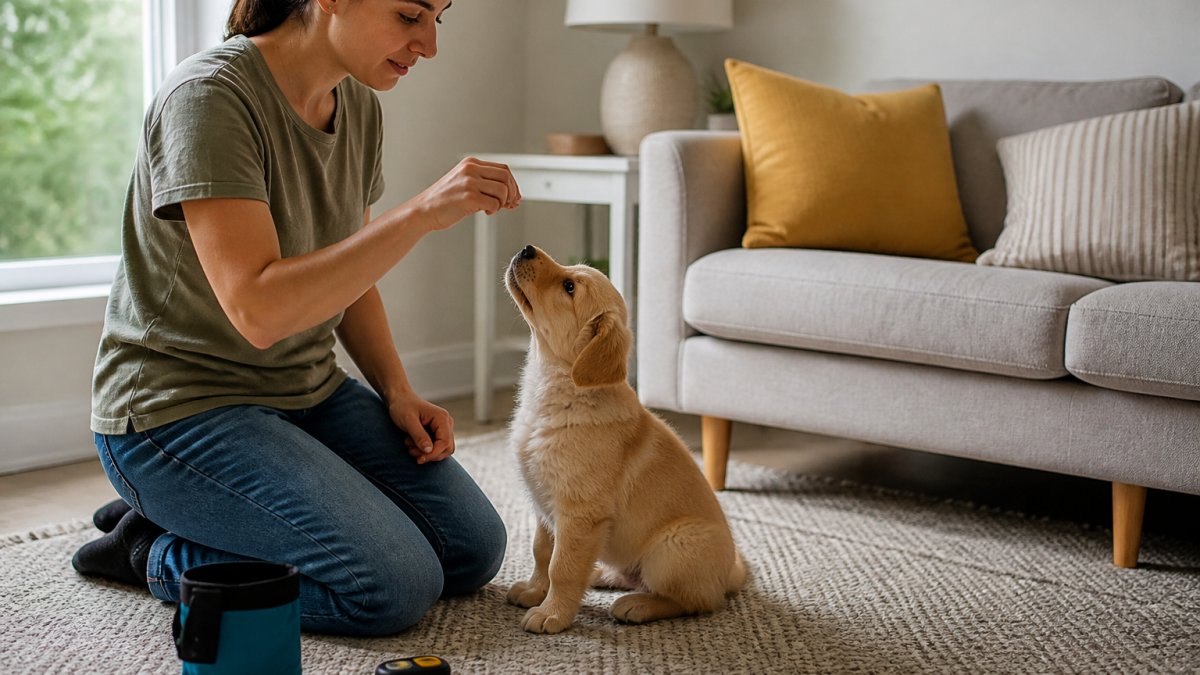
Here is the full sequence:
- Stand or kneel in front of your puppy with a treat in hand.
- Hold the treat at nose height, then slowly lift it up and back.
- The moment the rear hits the floor, say "yes" and give the treat.
- Repeat five times, then take a break.
- Add the word "sit" just before the motion once the puppy is reliable.
A marker word or clicker tells your puppy exactly which behavior earned the reward. Timing matters more than repetition. A treat delivered one second late teaches nothing.
Luring with a treat works for the first few days. Fade the lure quickly so your puppy learns the word, not the hand motion.
Pro Tip
Keep a treat pouch on your hip during the day. Rewarding a random sit your puppy offers on their own builds the habit faster than scheduled sessions alone.
For leash work, our pet leash training dog leash gives you a light, comfortable option for early indoor practice, and the multi-color cotton pet long leash is built for walking training with small, medium, and large dogs.
Build a Puppy Potty Training Schedule That Prevents Accidents
A puppy potty training schedule should take your puppy out every one to two hours, plus right after waking, eating, drinking, and playing. Young puppies cannot hold their bladder for long.
Follow this rhythm:
- Take your puppy out first thing in the morning.
- Go out again after every meal, within 15 minutes.
- Take a trip outside after every nap and play session.
- Offer one last potty break right before bed.
Take your puppy to the same spot each time. The scent helps them understand what the trip is for. Praise and treat the second they finish. If you catch an accident indoors, clap once to interrupt, then carry your puppy straight outside.
Crate training pairs well with potty training. A crate that is just big enough to stand, turn, and lie down discourages accidents, and it gives your puppy a quiet place to sleep.
Watch Out
Punishing a puppy for an indoor accident teaches them to hide when they go, which makes house training harder. Clean the spot with an enzyme cleaner and reset the schedule instead.
When and How to Join Puppy Obedience Classes
Puppy obedience classes are worth joining once your puppy has started their vaccine series, often between ten and sixteen weeks. Ask your veterinarian when it is safe for your puppy to be around other dogs. Many vets support early puppy socialization classes because the window for comfortable learning closes fast.
Look for these signs of a qualified trainer:
- Uses reward-based training and positive reinforcement
- Allows questions and gives clear homework
- Keeps class sizes small
- Never uses prong collars, shock collars, or leash pressure to correct
Most puppy classes run four to six weeks, with one session per week and short practice at home between meetings. Visit a class before you enroll if you can.
Troubleshoot Setbacks and Track Progress
Setbacks are normal, and they rarely mean your training failed. A regression usually points to one of three things: too much distraction, too long a session, or too big a jump in difficulty. Before you change anything, check those three first.
The Five Problems First-Time Owners Hit Most
Biting and mouthing. Puppies explore with their mouths, and teething peaks between three and six months. When teeth touch skin, yelp once, withdraw your hand, and offer a chew toy instead.

Jumping up. Jumping is a greeting behavior, so the reward is your attention. Turn away, cross your arms, and wait.
Pulling on leash. Pulling works because the walk continues. Stop moving the instant the leash tightens. Wait for slack, then walk.
Ignoring cues around distractions. This is almost always a difficulty problem, not a stubbornness problem. Move to a quieter room, lower the criteria, and rebuild.
Regression after progress. A puppy who aced sit last week and ignores it today is usually tired, teething, or overstimulated.
A Simple Troubleshooting Table
| Problem | Likely Cause | Fix |
|---|---|---|
| Puppy ignores "sit" | Distraction too high | Move to a quiet room and lower the bar |
| Accidents return | Schedule slipped | Reset potty trips to every hour |
| Pulling on leash | Leash skills not practiced | Train loose-leash walking indoors first |
| Chewing furniture | Boredom or teething | Offer a durable chew toy and more play |
| Jumping on guests | Attention rewarded | Turn away, reward four paws on floor |
| Biting hands | Teething or play | Yelp, pause, redirect to a chew toy |
Measuring Progress: When to Advance
Track progress with a simple weekly log. Note which cues your puppy performs with no help, which need a lure, and which are still new. Move to the next skill only when your puppy succeeds eight out of ten tries in a quiet room. Then add one distraction at a time.
A useful benchmark: a cue is reliable when your puppy responds correctly on the first ask, in three different locations, with one mild distraction present. Until then, keep the cue in easy settings and don't assume it is learned.
Pro Tip
Keep sessions short and end on a win. A puppy who finishes happy wants to train again tomorrow. If you are frustrated, stop, your puppy reads your tone faster than your words.
For teething puppies who chew everything, our dog bite resistant rubber grinding toys come in three sizes built for different weights, from small puppies up to larger breeds.
Conclusion: Consistency Beats Perfection
Training a puppy is not about flawless obedience. It is about showing up every day with the same cues, the same rewards, and the same calm patience. A missed session here and there will not ruin your puppy. Weeks of inconsistency will.
At Pawsibly Everything, we stock the everyday gear that makes training easier, from durable chew toys for teething puppies to comfortable leashes for early walking practice. Our team focuses on quality materials and gear, so you can spend less time replacing supplies and more time with your puppy.
Get started with Pawsibly Everything and give your new companion the calm, confident start they deserve.
Frequently Asked Questions
At what age should I start puppy obedience training?
Start the day your puppy comes home, usually around eight weeks. Short sessions of two to five minutes work best because puppies have a short attention span. Focus first on name recognition, potty trips outside, and gentle handling. Formal cues like sit and attention can begin at eight weeks, while group puppy obedience classes typically start once the puppy has had its first vaccinations, often between ten and sixteen weeks. Keep everything reward-based and stop before your puppy gets tired or distracted.
What is the 3-3-3 rule for puppy training?
The 3-3-3 rule describes how a rescue or new puppy settles in: three days to decompress, three weeks to learn your routine, and three months to feel fully at home. During the first three days, keep things quiet and avoid overwhelming your puppy with visitors. Over three weeks, introduce a consistent puppy training schedule with potty breaks, crate time, and short practice sessions. By three months, most puppies show their real personality and can handle more distractions during training.
How long should puppy training sessions be?
Keep sessions to two to five minutes for puppies under twelve weeks, and up to ten minutes for older puppies. Multiple short sessions per day beat one long one. A puppy's attention span is roughly one minute per month of age, so an eight-week-old can focus for about two minutes. End each session with a win, such as a successful sit or a calm leash walk, and use high-value treats to keep motivation high. Short, frequent practice builds reliable behavior faster than marathon sessions.
When should a puppy join an obedience class?
Most puppy obedience classes accept puppies between ten and sixteen weeks, after the first round of vaccinations. Look for a qualified trainer who uses positive reinforcement and avoids aversive methods like prong collars or shock collars. A good class lasts four to six weeks, includes puppy socialization time, and covers basic cues such as sit, attention, and loose-leash walking. Ask about class size and vaccination requirements before you enroll, and visit once without your puppy to see how the trainer handles the group.

