

Cart
0
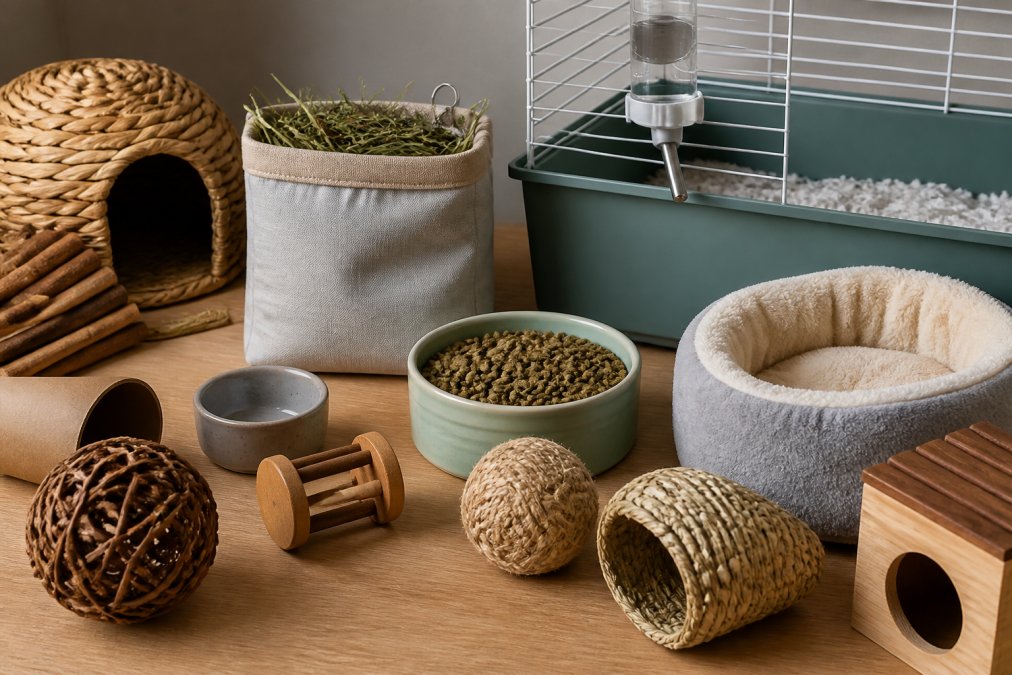
Table of Contents
- What Defines Premium Small Animal Supplies?
- The Best Small Animal Bedding for Health and Odor Control
- Small Animal Habitat Enrichment Ideas That Prevent Boredom
- Safe Toys for Guinea Pigs and Rabbits: What to Look For
- Top-Rated Habitats and Carriers for Travel and Home
- Feeding Accessories That Support Natural Foraging
- Veterinary-Approved Safety Guidelines for New Owners
- Conclusion: Building Your Premium Small Animal Care Kit
- Frequently Asked Questions
Last Updated: September 6, 2026
What Defines Premium Small Animal Supplies?
Premium small animal supplies are engineered around species-specific health, safety, and behavioral needs rather than aesthetics or low price. While budget options use mystery materials and sharp edges, premium lines prioritize non-toxic, chew-safe construction, proper ventilation, and designs that support natural behaviors.

The difference shows in the materials: fresh, dust-free hay, bedding that controls odor without respiratory irritants, and enclosures with smooth, impact-resistant surfaces. Many owners learn this after buying cheap habitats that rust, toys that splinter, or bedding that triggers sneezing.
Below, we show you how to evaluate bedding, toys, habitats, and feeding accessories so every dollar supports your pet's health.

The Best Small Animal Bedding for Health and Odor Control
The best small animal bedding combines high absorbency, dust-free composition, and odor control without harsh chemical fragrances. Premium bedding goes further: consistent particle size, third-party dust testing, and pesticide-free sourcing.
Paper-based bedding and aspen shavings outperform pine and cedar, which release phenols that irritate respiratory tracts and liver enzymes (peer-reviewed research). Kiln-dried pine is sometimes marketed as safe, but many exotic veterinarians still recommend avoiding it for rabbits, guinea pigs, and rats.
Material-by-Material Breakdown
Paper-based bedding: Made from recycled paper or virgin pulp, this includes pellets, crumbles, and soft flakes. Pelleted paper offers the highest absorbency, 2 to 3 times its weight in liquid, and is ideal for litter boxes. Flaked paper is softer for burrowing but compacts faster. Look for brands that specify "ink-free" or "processed without bleach."
Aspen shavings: A naturally phenol-free hardwood with moderate absorbency and a mild scent. Excellent for hamsters and gerbils that dig. Some batches contain sharp splinters, so inspect the bag and choose brands that sift for fines.
Hemp bedding: A newer option with high absorbency and low dust. More sustainable than wood shavings, though coarser; it holds tunnels well.
Fleece liners: Washable and reusable, popular for guinea pigs and rabbits on solid floors. They require a two-layer system, fleece over an absorbent pad, and daily spot cleaning. The upfront cost is higher, but fleece pays for itself within 6 to 8 months.
Absorbency and Odor Control Benchmarks
Premium bedding should absorb at least 1.5 times its weight in moisture; pelleted paper reaches 2.5 to 3 times (PubMed). Higher absorbency means fewer full changes and lower ammonia levels, a leading cause of chronic respiratory disease in small mammals.
Odor control should come from absorption, not fragrance. Scented beddings mask odors with volatile organic compounds that can trigger respiratory infections. If odor persists despite spot-cleaning, the issue is usually ventilation or an undersized enclosure.
Species-Specific Bedding Depth and Texture
| Species | Recommended Bedding | Minimum Depth | Notes |
|---|---|---|---|
| Rabbits | Paper pellets in litter box; fleece or paper on floor | 1-2 inches | Rabbits spend little time burrowing; focus on litter training |
| Guinea pigs | Flaked paper or fleece | 2-3 inches | Soft texture prevents pododermatitis (bumblefoot) |
| Hamsters | Aspen or paper, mixed | 6-10 inches | Deep bedding supports natural burrowing tunnels |
| Gerbils | Aspen or hemp | 4-6 inches | Gerbils are desert species; avoid overly humid paper |
| Chinchillas | Kiln-dried pine or aspen | 1-2 inches | Chinchillas need dust baths, not wet bedding |
| Rats | Paper-based or fleece | 1-2 inches | Rats are prone to respiratory issues; dust-free is non-negotiable |
The Cleaning Routine That Actually Works
Spot-clean daily. Replace paper or wood substrates weekly; launder fleece every 3 to 4 days with fragrance-free detergent and a vinegar rinse. Wipe the enclosure floor with a 50/50 vinegar-water solution during full changes.
Pro Tip
When transitioning to a new bedding brand, mix it 50/50 with the old substrate for the first week. A sudden change can confuse scent-driven pets and trigger territorial marking. Watch for sneezing or pawing at the nose during the transition; if these appear, the new bedding may be too dusty regardless of label claims.
Red Flags to Avoid
- Cedar shavings: High phenol content, linked to liver damage in small mammals
- Scented or colored bedding: Added fragrances and dyes serve marketing, not animal health
- Clay cat litter: Dusty and clumping; if ingested, can cause intestinal blockages
- "Dust-free" claims without third-party testing: Some brands use this term loosely; check for a stated particle size or HEPA filtration in manufacturing
Small Animal Habitat Enrichment Ideas That Prevent Boredom
Habitat enrichment adds structures and activities that encourage natural behaviors like climbing, hiding, and foraging. A cage with just food and a wheel leads to stress, over-grooming, and repetitive behaviors.
Then add DIY enrichment: cardboard tubes as tunnels, a shallow dish of sand for dust baths, and scattered pellets to encourage foraging.
For owners who want a ready-made solution, a small animal metal wire playpen creates a safe, spacious arena for supervised exploration outside the daily cage. The colorful folding exercise yard from Pawsibly Everything, priced at $43.86, gives hedgehogs, guinea pigs, and hamsters room to run while keeping them away from household cords and dusty corners.
| Enrichment Need | DIY Solution | Ready-Made Option | Frequency |
|---|---|---|---|
| Foraging | Scatter pellets in bedding | Wooden foraging puzzle board | Daily |
| Climbing & hiding | Cardboard boxes and tubes | Wire playpen with hideouts | Weekly rotation |
| Chewing | Untreated applewood sticks | Pine puzzle toy with treat cavities | Replace when soiled |
Safe Toys for Guinea Pigs and Rabbits: What to Look For
Safe toys for guinea pigs and rabbits are made from untreated, digestible materials that encourage chewing without splinters or toxic coatings. Their open-rooted teeth grow continuously, so chewing is essential for survival.

Solid pine and untreated willow are excellent choices. The wooden hamster interactive puzzle toy from Pawsibly Everything, at $14.23, uses 100% pet-safe natural pine with sliding panels and rope-pull pegs, and works well for smaller rabbits and guinea pigs.
Variety matters as much as material. Rotate toys weekly to maintain novelty and prevent habituation.
Watch Out
Never give a rabbit or guinea pig a toy treated with chemical preservatives, varnishes, or artificial colors. Chewing is inevitable, and ingesting those coatings can cause serious digestive distress.
Top-Rated Habitats and Carriers for Travel and Home
Top-rated habitats balance floor space, ventilation, and ease of cleaning. For travel, the priorities shift toward security, visibility, and stress reduction.
The Minimum Size Standard Most Retailers Won't Tell You
The Humane Society and veterinary associations generally recommend the following minimums, not ideal sizes, but absolute floors: (humanesociety.org)
| Species | Minimum Floor Space | Minimum Dimensions (L x W x H) | Why |
|---|---|---|---|
| Hamster (Syrian) | 450 sq in | 24 x 18 x 12 in | Syrians are territorial and need separate sleeping and toilet areas |
| Hamster (Dwarf) | 360 sq in | 20 x 18 x 12 in | Dwarfs burrow extensively; depth matters more than height |
| Gerbil (pair) | 360 sq in | 20 x 18 x 12 in | Gerbils need deep bedding for tunnel systems |
| Guinea pig (single) | 7.5 sq ft | 30 x 36 x 18 in | Guinea pigs rarely climb; floor space is the priority |
| Guinea pig (pair) | 10.5 sq ft | 30 x 50 x 18 in | Pairs need separate hideouts and feeding zones |
| Rabbit (dwarf) | 8 sq ft | 24 x 48 x 24 in | Rabbits need room to stretch fully and stand on hind legs |
These numbers are not arbitrary. Small mammals are prey species; cramped housing triggers chronic stress that suppresses immune function and shortens lifespan.
Evaluating Enclosure Materials: Wire, Glass, and Acrylic
Wire cages offer the best ventilation but require careful bar spacing: no more than 0.5 inches for hamsters and gerbils, 1 inch for rabbits and guinea pigs. The floor must be solid, wire flooring causes pododermatitis. Look for a deep plastic base (at least 4 inches) for thick bedding.
The lid must be at least 30% mesh, with weekly full cleanings. Tanks suit hamsters and gerbils that burrow; they are poor choices for rabbits and guinea pigs.
Acrylic habitats offer glass-like visibility with lighter weight and better impact resistance, but scratch easily and cost more. Panels can cloud from urine residue; look for removable panels for thorough washing.
The Ventilation-Absorption Trade-Off
The best designs use cross-ventilation, mesh panels on multiple sides, with a solid base holding 2 to 3 inches of absorbent bedding.
Premium habitats often include a raised lip to prevent bedding scatter while maintaining airflow. Check that ventilation panels sit at animal level, not just the top, stagnant air at the floor is where ammonia accumulates.
Travel Carriers: Stress Reduction Is a Feature, Not an Add-On
Visual security: Solid-sided carriers with a small mesh window reduce visual overwhelm. Clear carriers can increase stress; drape a cloth over three sides during transport.
Temperature regulation: Small mammals are prone to heat stroke. A carrier needs ventilation on at least two sides. In summer, pre-cool with an ice pack wrapped in a towel; in winter, line with fleece and avoid HVAC vents.
Motion dampening: A flat, stable base with a low center of gravity reduces swaying. Place the carrier on the car floor and secure it with a seatbelt.
The Life-Stage Factor Most Guides Ignore
Juvenile small mammals have different housing needs than seniors. Baby hamsters and gerbils can squeeze through adult-safe bar spacing, so a habitat must have adjustable spacing or be replaced within 8 to 10 weeks. Seniors with arthritis need single-level habitats with low-entry access.
Practical Evaluation Checklist
Before purchasing any habitat or carrier, run through this checklist:
- Bar spacing: Can the adult animal fit its head through? If yes, it can escape.
- Floor type: Is it solid, or does it have wire grating? Wire floors are unacceptable for long-term housing.
- Ventilation: Are there mesh panels at animal level on at least two sides?
- Cleaning access: Can you reach all corners with a sponge? Removable trays or doors that open fully make cleaning easier and more consistent.
- Chew resistance: Are any plastic components exposed? Rabbits and guinea pigs will chew through soft plastic within days.
- Carrier stability: Does it sit flat? Does it tip when the animal moves?
- Future fit: Will this still work when the animal reaches adult size?
Watch Out
Never house rabbits in wire-floor cages. The wire causes painful foot lesions called pododermatitis that can become infected and require veterinary treatment. Solid floors with soft bedding are the only acceptable option.
Feeding Accessories That Support Natural Foraging
Feeding accessories that support natural foraging slow consumption, reduce waste, and engage the brain. A bowl of pellets eaten in ten minutes leaves that instinct unfulfilled.
The automatic gravity hamster food dispenser, priced at $9.33, uses clear acrylic to show food levels while its deep trough prevents seed scattering. The hanging rabbit hay feeder bag with dual feeding windows, at $11.74, keeps hay off the floor and allows multiple pets to eat side by side.

The standing hamster water bottle holder, modeled as a lighthouse at $15.20, eliminates mounting frustration and its ceramic casing protects the reservoir from chewing.
Key Takeaway
Foraging accessories are not luxury add-ons. They reduce stress, slow eating, and prevent the boredom that leads to destructive chewing and over-grooming.
Veterinary-Approved Safety Guidelines for New Owners
Veterinary-approved safety guidelines center on preventing the three most common emergencies: respiratory distress from poor bedding, gastrointestinal stasis from inadequate fiber, and injuries from unsafe enclosure features.
Provide unlimited timothy hay for rabbits and guinea pigs; a pellet-only diet causes dental and digestive issues. Check all enclosure hardware weekly for loose latches, sharp edges, and cracked plastic.
Gentle, frequent handling from a young age reduces stress behaviors. Always supervise interactions between species, and never house rabbits with guinea pigs, they have different dietary and social needs.
Conclusion: Building Your Premium Small Animal Care Kit
Building a premium care kit means choosing products that support species-appropriate behavior. The upfront cost is higher, but the payoff is fewer vet bills, less waste, and a pet that thrives.
Every item is selected for safe materials, durable construction, and your companion's comfort. Get started with Pawsibly Everything and give your small pet the quality care they deserve.
Frequently Asked Questions
What are the essential supplies for a new small pet?
Start with a spacious habitat that offers good ventilation, like the Portable Wire Hamster Cage with Accessories. Add a solid-bottom base for burrowing, dust-free bedding, a chew-proof water bottle, a ceramic food bowl, and a hideout for security. Incorporate enrichment toys, such as a foraging board, to encourage natural behaviors. Selecting premium small animal supplies from the beginning helps prevent health issues and behavioral problems, saving you money on vet visits later.
How do I choose high-quality bedding for small animals?
Look for the best small animal bedding that is paper-based, dust-free, and highly absorbent. Avoid cedar or pine shavings, which contain phenols that can cause respiratory and liver damage in small pets. Quality bedding should control odor effectively and allow for natural burrowing. The deep base tray on a habitat like the Portable Plastic Hamster Cage is designed to hold this type of bedding, keeping your pet comfortable and your space clean.
What makes pet supplies 'premium' compared to standard options?
Premium small animal supplies differ through the use of non-toxic, durable materials and designs that actively promote health. For instance, a wooden puzzle toy made from untreated pine supports dental health and mental stimulation, while a standard plastic toy might not. Premium habitats offer better ventilation and easier cleaning. These products are built to last, reducing long-term costs and providing a safer, more enriching environment for your pet.
How often should I replace small animal habitat accessories?
Inspect all accessories weekly for signs of wear. Replace wooden chew toys every 2-4 weeks, as they become soiled or splintered. Swap out plastic food bowls if they become scratched, as bacteria can hide in the grooves. Clean and check water bottles and tubes for algae or blockages. A hanging hay feeder should be replaced when the fabric shows signs of heavy chewing or soiling. Regular replacement is a key part of maintaining good health and wellness.
Are there specific health benefits to using premium small animal food?
Yes. A premium, pellet-based diet prevents selective feeding, where pets pick out tasty pieces and miss essential nutrients. High-quality food supports digestive health and provides balanced nutrition for all life stages. Pairing a consistent diet with enrichment, like an automatic gravity feeder, encourages natural foraging behavior. Always provide fresh timothy hay for fiber, which is crucial for dental care and proper gut function in rabbits and guinea pigs.

