

Cart
0
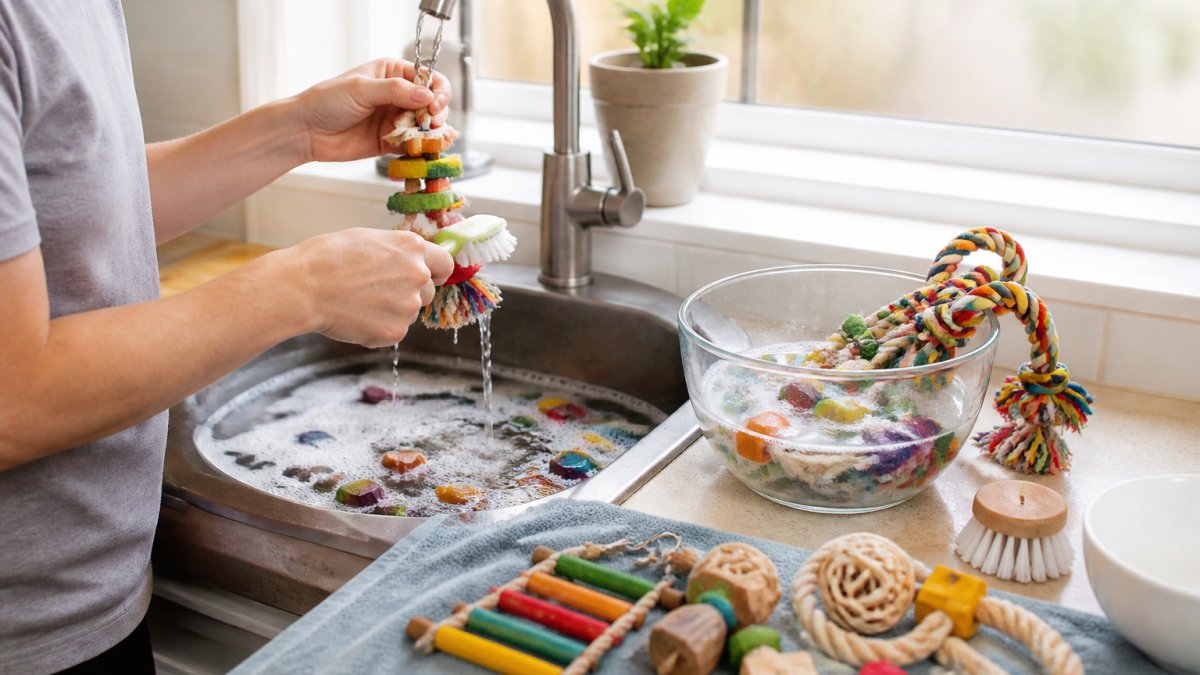
Table of Contents
- Why Cleaning Bird Toys Matters for Your Pet's Health
- How Often to Clean Bird Toys: A Cleaning Schedule
- Essential Supplies for Cleaning Bird Toys
- Step-by-Step: How to Clean Bird Toys Safely
- How to Clean Wooden Bird Toys and Perches
- How to Disinfect Bird Toys Without Harming Your Bird
- Bird-Safe Cleaning Products and What to Avoid
- When to Replace Bird Toys Instead of Cleaning
- Frequently Asked Questions
Last Updated: October 19, 2026
Why Cleaning Bird Toys Matters for Your Pet's Health
A bird's toys and perches are more than just entertainment. They're surfaces your feathered friend touches, chews, and sometimes eats from every single day. When you neglect to clean bird toys safely, you're allowing bacteria, mold, and food residue to accumulate in spaces your bird interacts with constantly.
Dirty toys create real health risks. Mold spores can trigger respiratory infections (Killing Two Birds with One Stone). Bacteria from old food particles cause digestive problems. Parasites and fungi thrive in warm, damp environments. Keeping your bird's environment clean is one of the simplest ways to support their long-term health and happiness.
The good news: cleaning bird toys safely doesn't require special equipment or harsh chemicals. You need warm water, mild soap, and a little time. The process is straightforward, and the payoff is enormous. A clean cage environment means fewer vet visits, less stress for your bird, and a more enjoyable living space for everyone.
Pro Tip
Birds are sensitive to fumes and chemical residues. Even "pet-safe" cleaners can irritate their respiratory systems if not rinsed thoroughly. Stick with plain soap and water as your first choice, it works just as well and poses zero risk.
How Often to Clean Bird Toys: A Cleaning Schedule
How often you clean bird toys safely depends on several factors: the toy material, how much your bird uses it, and whether food residue builds up on it.
Daily tasks:
- Remove uneaten food from food containers and perches
- Wipe down perches your bird uses most with a damp cloth
- Check for visible droppings or debris
Weekly cleaning:
- Wash all toys and perches with mild soap and warm water
- Scrub crevices where debris collects
- Rinse thoroughly and air dry completely
Monthly deep clean:
- Soak wooden perches and toys in warm soapy water for 15-20 minutes
- Inspect all toys for damage, splinters, or signs of wear
- Replace any toys showing significant deterioration
The schedule intensifies if your bird is sick, if you've introduced secondhand toys, or if you notice pest contamination. In those cases, increase cleaning frequency to every 2-3 days until the issue resolves.
Key Takeaway
Weekly cleaning prevents most health problems before they start. Daily spot-cleaning extends the life of your toys and keeps your bird healthier between deep cleans.
Essential Supplies for Cleaning Bird Toys
You don't need an expensive cleaning kit. Most households already have what you need to clean bird toys safely.
Basic supplies:
- Warm water (not hot, hot water can damage some materials)
- Mild dish soap (unscented, no dyes)
- Soft cloth or sponge
- Stiff nylon brush (for scrubbing perches)
- Soft-bristled brush (for delicate toys)
- Drying rack or clean towel
Optional but helpful:
- Perch scraper (for removing stubborn buildup)
- Colander or strainer (for rinsing small toys)
- Soft nylon brush for crevices
What NOT to use:
- Bleach or harsh disinfectants
- Scented soaps or detergents
- Abrasive scouring pads
- Vinegar-based cleaners (too acidic for bird respiratory systems)
- Grapefruit seed extract (irritates bird lungs)
Keep your cleaning supplies separate from kitchen items. Store them in a dedicated container away from food preparation areas. This prevents accidental cross-contamination and keeps bird-specific supplies organized and ready to use.
Step-by-Step: How to Clean Bird Toys Safely
The process for cleaning bird toys safely follows a logical sequence. Each step builds on the previous one to ensure thorough cleaning without damaging the toy or leaving harmful residue.
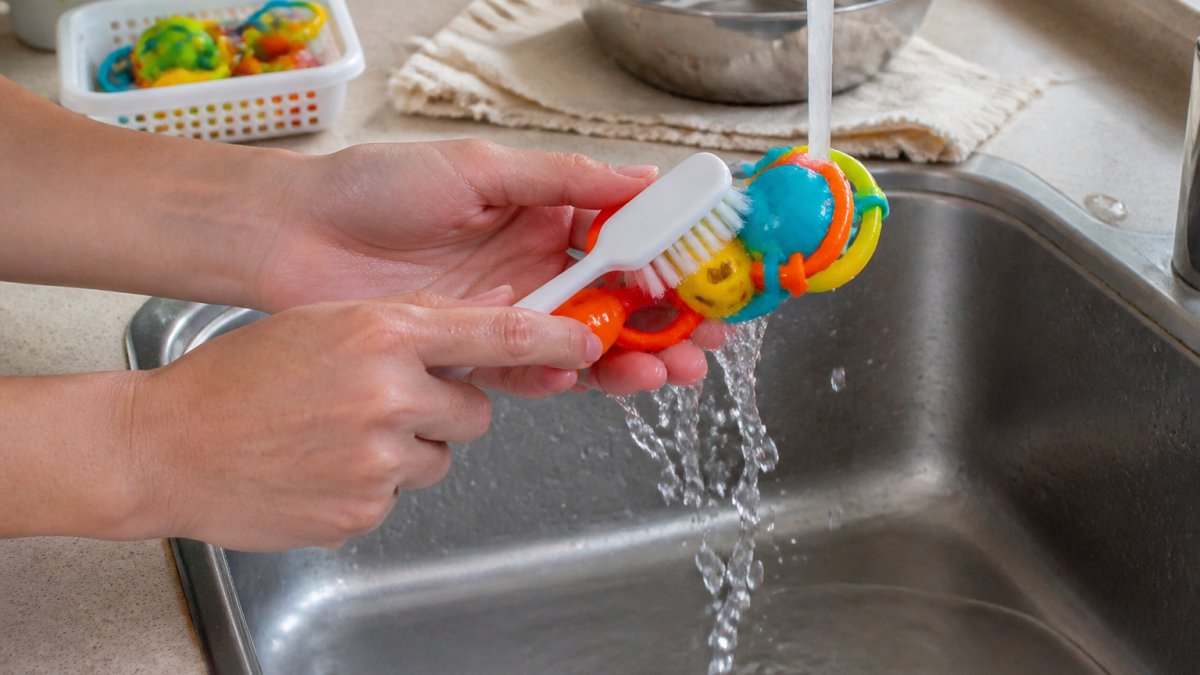
Inspect and Remove Debris
Before you wash anything, inspect each toy carefully. Look for visible damage, splinters, cracks, or areas where the material is breaking down.
Remove loose debris by hand:
- Shake the toy to dislodge dried food particles
- Pick out visible droppings or debris
- Check inside hollow toys for trapped material
- Look for signs of mold or discoloration
If a toy shows significant damage, deep cracks, splintering wood, or areas your bird could ingest, set it aside for replacement rather than cleaning. Damaged toys pose choking and injury risks that cleaning won't fix.
Wash with Mild Soap and Warm Water
Fill a sink or basin with warm water and add a small amount of mild dish soap. The water should be warm enough to cut through grime but not so hot it damages plastic or wood.
Submerge the toys and let them soak for 5-10 minutes. This loosens stuck-on food and debris. For heavily soiled toys, soak for 15-20 minutes.
Gently agitate the water with your hands to help dislodge particles. Don't use a washing machine for bird toys, the agitation and heat can damage materials and leave soap residue that's dangerous for your bird.
Scrub and Rinse Thoroughly
Use a soft cloth or sponge to gently scrub the toy's surface. For perches and toys with crevices, use a stiff nylon brush to scrub away stubborn buildup.
Pay special attention to:
- Grooves and textured surfaces
- Areas where your bird's droppings accumulate
- Crevices where food particles hide
- Rope toys (scrub gently to avoid damaging fibers)
Rinse under running warm water until all soap is gone. This step is critical, soap residue is toxic to birds. Keep rinsing until the water runs clear and you see no bubbles.
For toys with multiple layers or hollow sections, run water through them to flush out trapped soap and debris.
Watch Out
Incomplete rinsing is a common mistake. Even small amounts of soap residue can irritate your bird's digestive and respiratory systems. When in doubt, rinse longer than you think necessary.
Dry Completely Before Returning to the Cage
Wet toys create an ideal environment for mold and bacteria growth. Never return a damp toy to your bird's cage.
Dry toys using one of these methods:
- Air dry on a clean rack or towel in a well-ventilated area
- Pat dry with a clean cloth and then air dry
- Use a fan to speed up drying (avoid direct heat)
Drying time depends on the toy material and size. Plastic toys dry quickly (30-60 minutes). Wooden toys and rope toys take longer (2-4 hours). Check that toys are completely dry before your bird has access to them.
Store cleaned toys in a clean, dry container until you return them to the cage. This prevents contamination from dust or debris.
How to Clean Wooden Bird Toys and Perches
Wooden toys and perches require different care than plastic toys. Wood is porous, absorbs moisture, and can splinter if not handled properly.
Never soak wooden toys for extended periods. Water penetrates the wood, causing swelling, warping, and eventual deterioration. Instead, use a gentler approach.
Cleaning wooden toys safely:
Damp cloth method: Dampen a soft cloth with warm soapy water and wipe the wooden surface. Use a soft brush to gently scrub away debris. Rinse with a damp cloth (not soaked) to remove soap. Pat dry immediately with a clean towel.
For stubborn debris: Use a perch scraper or soft nylon brush to gently remove buildup. Scrape in the direction of the wood grain to avoid splintering. Never use steel wool or abrasive pads.
Inspection is critical with wooden toys. Check for:
- Soft spots (sign of rot or mold)
- Splintering edges
- Discoloration or dark patches (mold)
- Deep cracks where debris accumulates
If you find any of these issues, replace the toy. Damaged wood poses splinter risks and harbors harmful microorganisms that cleaning won't eliminate.
Dry wooden toys immediately after cleaning. Set them upright in a well-ventilated area. Never use heat to speed drying, direct heat can crack or warp wood.
Best For
Wooden perches and toys work best for birds that chew frequently. They're natural, engaging, and replaceable. Plan to replace heavily-used wooden toys every 3-6 months depending on your bird's chewing intensity.
How to Disinfect Bird Toys Without Harming Your Bird
Disinfecting goes beyond cleaning. It kills bacteria, viruses, and fungi that regular soap and water might miss. The challenge is doing this safely without exposing your bird to harmful chemicals.
Safe disinfection methods:
Hot water method: Soak toys in hot (not boiling) water for 10-15 minutes. This kills many microorganisms without chemicals. Let toys cool before handling.
Steam method: If you have a steam cleaner, use it on bird toys. The heat kills pathogens effectively. Ensure toys dry completely afterward.
Dishwasher method: Some plastic toys and stainless steel perches are dishwasher-safe. Check manufacturer guidelines. Use the hot cycle without heated dry.
What NOT to use for disinfection:
Bleach solutions are toxic to birds. Even diluted bleach leaves residue that irritates respiratory systems. Never use bleach on bird toys.
Vinegar is too acidic and irritates bird lungs. Grapefruit seed extract, despite being marketed as "natural," is dangerous for birds.
The safest approach combines regular soap-and-water cleaning with occasional hot water soaking. This removes debris and kills most pathogens without chemical risk.
Reserve stronger disinfection methods for situations where your bird has been sick, after introducing secondhand toys, or if you suspect pest contamination.
Bird-Safe Cleaning Products and What to Avoid
When you need to move beyond plain soap and water, choose products carefully.
Safe options:
Plain warm water and mild dish soap remain your best choice. They're effective, affordable, and completely safe.
All-natural cleaners without added fragrance or dyes are generally safe if rinsed thoroughly. Read labels to confirm they contain no essential oils or chemical additives.
Unscented baby wipes work for quick spot-cleaning between deep washes. Ensure they're fragrance-free and hypoallergenic.
Products to avoid:
Anything with fragrance or essential oils irritates bird respiratory systems. This includes lavender, tea tree, eucalyptus, and citrus-scented products.
Disinfectants marketed for household use contain chemicals that are toxic to birds. This includes Lysol, Clorox, and similar products.
Bleach and bleach-based cleaners are extremely dangerous. They cause respiratory damage and can be fatal.
Vinegar and vinegar-based cleaners are too acidic for bird lungs. The fumes irritate their respiratory systems.
Grapefruit seed extract is often marketed as a natural antimicrobial, but it's harmful to birds. Avoid it completely.
When in doubt, stick with warm water and mild soap. It's impossible to overdose on safety with this combination, and it cleans effectively.
When to Replace Bird Toys Instead of Cleaning
Some toys reach a point where cleaning isn't enough. Knowing when to replace rather than clean prevents health problems and saves time.
Replace toys when:
Visible damage appears: Cracks, splintering, or pieces breaking off mean the toy poses injury or choking risks. Cleaning won't fix structural damage.
Mold is present: Dark patches, discoloration, or a musty smell indicate mold growth. Mold can cause serious respiratory infections.
Material is deteriorating: Rope fraying, wood becoming soft or spongy, or plastic becoming brittle all signal end-of-life.
Your bird has been sick: After illness, replacing toys eliminates the risk of reinfection from pathogens that survived cleaning.
You've acquired secondhand toys: Used toys from unknown sources may harbor parasites, bacteria, or viruses that cleaning might not eliminate completely.
Toys have been exposed to pests: If you've had cockroaches, mites, or other pest contamination, replace exposed toys rather than risk incomplete disinfection.
The toy is old: Even without visible damage, toys degrade over time. Plastic becomes brittle, wood loses integrity, and fabric weakens.
Regular replacement keeps your bird's environment fresh and safe.
Keeping your bird's toys clean is one of the most important aspects of pet care, yet it's often overlooked.
Frequently Asked Questions
How often should you clean bird toys?
Daily spot cleaning removes visible droppings and food residue. Wash toys with soap and water weekly, and disinfect monthly. Toys in high-traffic areas or heavily soiled toys need more frequent cleaning. Check toys daily for damage and replace immediately if splintered, cracked, or contaminated with mold or pest evidence.
Can you use a dishwasher to clean bird toys?
Yes, dishwasher-safe toys can go in the hot cycle, which sanitizes effectively. Place plastic toys, metal toys, and dishwasher-safe perches on the top rack. Avoid wooden toys, rope toys, and fabric materials in the dishwasher, these absorb water and deteriorate. Always skip the heated dry cycle to prevent damage.
What bird-safe cleaning products should you use?
Mild dish soap and warm water are safest for most toys. Avoid bleach, ammonia, phenol-based cleaners, and scented products, these are toxic to birds and can cause respiratory damage.
When should you discard a bird toy instead of cleaning it?
Discard toys with visible mold, splinters, or cracks that can't be smoothed. Remove toys exposed to pest contamination like cockroaches or rodent droppings. If a toy shows signs of rust, has loose parts that could be swallowed, or smells musty after drying, replace it. Secondhand toys from unknown sources should be discarded if they show any contamination signs.

