

Cart
0
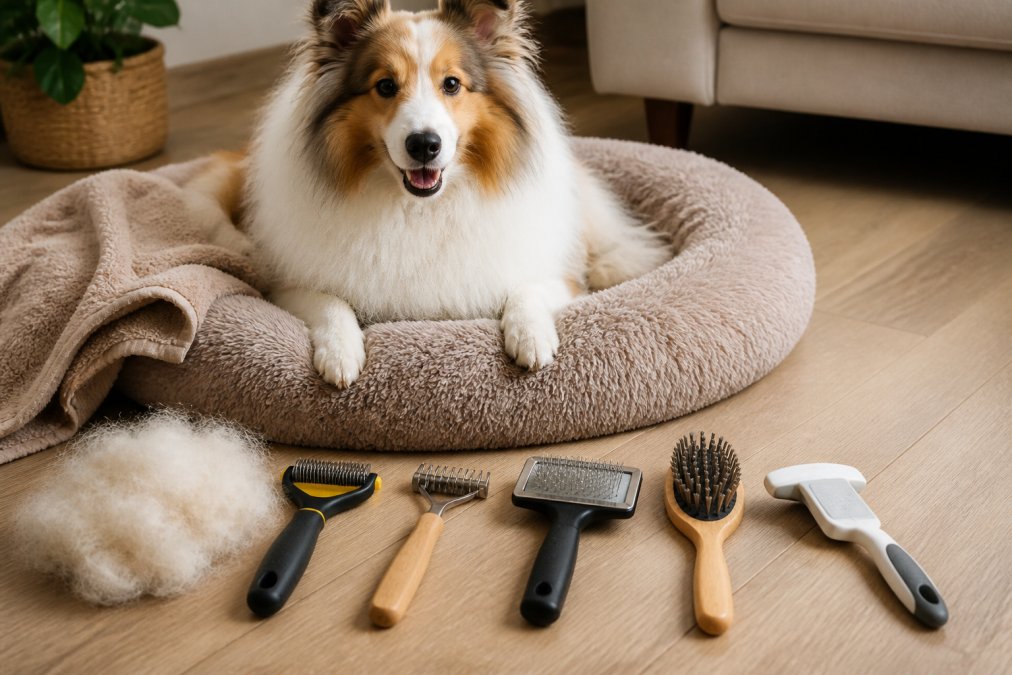
Table of Contents
- Quick Comparison Table: Top Grooming Brushes for Shedding
- Types of Grooming Brushes for Shedding
- Slicker Brush vs. Undercoat Rake: Which Should You Choose?
- Best Brush for Double Coated Dogs
- How Often to Brush a Shedding Dog
- How to Choose the Right Brush for Your Pet's Coat Type
- Proper Grooming Technique to Minimize Shedding at Home
- Benefits of Regular Grooming and Maintenance
Last Updated: August 6, 2026
Quick Comparison Table: Top Grooming Brushes for Shedding
| Brush Type | Best For | Key Feature | Price Range |
|---|---|---|---|
| Slicker Brush | Long coats, tangles, detangling | Fine angled bristles remove mats and loose fur | $12.99-$29.99 |
| Undercoat Rake | Double coats, heavy shedding | Deep penetration removes undercoat without topcoat damage | $19.90-$35.27 |
| De-Shedding Blade | All coat types, maximum loose hair removal | Stainless steel blade reaches deep undercoat | $12.87-$31.87 |
| Grooming Glove | Sensitive skin, bath time, massage | Dual-sided silicone for comfort and gentle grooming | $18.36-$27.73 |
| Rubber Massage Brush | Short coats, bath grooming, sensitive pets | Soft rubber bristles provide soothing massage | $6.99-$14.99 |
The right grooming brush for shedding makes the difference between spending hours vacuuming loose fur and maintaining a healthy coat with minimal mess. The best brush depends on your pet's coat type, undercoat density, and time commitment. A slicker brush works for a Maltese but won't touch a German Shepherd's undercoat. An undercoat rake is essential for double-coated breeds but damages fine, single-layer coats.

Below, we'll walk you through every major brush type, show you the real differences, and help you choose the right tool for your situation.
Types of Grooming Brushes for Shedding
Understanding different brush categories is the foundation for choosing the right tool. Each type targets a specific coat layer or serves a different grooming purpose.
Slicker Brushes: Fine Bristles for Detangling
A slicker brush features short, fine wires set closely together on a flat or slightly curved surface. These bristles remove loose fur, tangles, and mats without reaching the undercoat. Slicker brushes work best on long-haired and curly-coated breeds like Poodles, Doodles, Shih Tzus, and Afghan Hounds.
The angled bristles glide through coat layers, catching loose hair and preventing tangles. Use gentle, purposeful strokes to avoid brush burn on sensitive skin. The self-cleaning feature on modern slicker brushes retracts bristles to release collected hair, saving cleanup time.
Pro Tip
Test bristle stiffness before buying. Softer bristles are gentler on sensitive skin but less effective at removing stubborn tangles. Stiffer bristles grab more hair but require lighter pressure to avoid irritation.
Undercoat Rakes: Deep Shedding Removal
An undercoat rake has longer, widely-spaced teeth designed to penetrate through the topcoat and pull out loose undercoat hair. These tools are essential for double-coated breeds like German Shepherds, Golden Retrievers, Huskies, Corgis, and Malamutes, which shed from the undercoat.
Use an undercoat rake at approximately 45 degrees with long, smooth strokes in the direction of hair growth. Too much pressure or working against the grain causes discomfort and skin irritation. Undercoat rakes come in different tooth spacings, wider spacing for thick undercoats, closer spacing for finer undercoats.
Watch Out
Never use an undercoat rake on single-coated breeds like Boxers, Pit Bulls, or Weimaraners. These breeds lack an undercoat, and a rake will damage their topcoat and irritate the skin.
De-Shedding Blades: Stainless Steel Efficiency
De-shedding blades feature a thin, ridged stainless steel blade that scrapes loose hair from the coat without cutting or pulling. The ridges catch loose fur at the follicle base and remove it cleanly. These tools are versatile across coat types and particularly effective for pets with sensitive skin.
The blade glides smoothly through the coat without pulling, causing less irritation than wire-based tools. Many professional groomers prefer de-shedding blades for nervous or anxious pets. Stainless steel construction means these tools last for years with minimal maintenance.
Grooming Gloves and Massage Brushes: Comfort During Bath
Grooming gloves and massage brushes serve a different purpose than the tools above. These are designed for comfort, massage, and bath-time grooming rather than deep shedding removal. Grooming gloves feature soft rubber or silicone bristles on the palms and fingers, allowing you to groom while petting your dog or cat. A rubber massage brush offers similar benefits with a handheld design and works well for short-coated breeds.
The trade-off is shedding effectiveness. These tools remove loose hair but don't penetrate deeply into the undercoat like rakes or de-shedding blades do. They work best as supplementary tools or for pets with minimal shedding.
Best For
Anxious pets, puppies, and senior dogs who find traditional grooming stressful. Also excellent for short-coated breeds during regular maintenance grooming.
Slicker Brush vs. Undercoat Rake: Which Should You Choose?
The choice between a slicker brush and an undercoat rake depends on your pet's coat structure. A slicker brush is your tool for detangling and maintaining long or curly coats. An undercoat rake targets deeper layers and removes loose undercoat hair that causes the bulk of household shedding.
Most double-coated dogs need both tools, used in sequence. Start with an undercoat rake to remove loose undercoat, then follow with a slicker brush to detangle and smooth the topcoat. For single-coated breeds without significant undercoat, a slicker brush alone is usually sufficient.
Key Takeaway
Slicker brushes work on the topcoat and prevent tangles. Undercoat rakes remove loose undercoat hair. Most double-coated dogs need both tools used in sequence for optimal shedding control.
Best Brush for Double Coated Dogs
Double-coated breeds have two distinct coat layers: a soft, dense undercoat and a longer, coarser topcoat. Shedding in these breeds is intense because the undercoat sheds seasonally in large quantities.
The best brush for double-coated dogs is an undercoat rake, used as your primary shedding tool. Breeds like German Shepherds, Golden Retrievers, Huskies, Corgis, and Malamutes all require undercoat rake work to manage shedding effectively. Undercoat rakes designed for double-coated breeds typically have wider-spaced teeth that penetrate the dense undercoat without pulling the topcoat.
During peak shedding season (typically spring and fall), use an undercoat rake 2-3 times per week. Outside shedding season, once weekly is usually sufficient.
How Often to Brush a Shedding Dog
The frequency of brushing depends on your pet's coat type, shedding pattern, and your tolerance for loose hair. For double-coated breeds during shedding season, brush 2-3 times per week with an undercoat rake. Outside shedding season, once weekly is usually sufficient. This schedule prevents matting and reduces household shedding by 50-75%.
For long-coated breeds without significant undercoat, daily or every-other-day brushing with a slicker brush prevents tangles and matting. For short-coated single-coat breeds, once or twice weekly brushing is usually adequate.
Pro Tip
Set a specific day and time for grooming to build consistency. Many pet owners find weekend grooming sessions work well because they have more time and their pet is in a relaxed state.
How to Choose the Right Brush for Your Pet's Coat Type
Selecting the right brush starts with understanding your pet's coat structure. Identify your pet's coat type first: double-coated breeds have two distinct layers, single-coated breeds have one layer, long-haired breeds have extended topcoat length, and curly or wavy coats have unique matting challenges.
For double-coated breeds, an undercoat rake is non-negotiable as your primary tool. Add a slicker brush for detangling and finishing. For long-coated single-coat breeds, a slicker brush is your primary tool, used 3-4 times per week to prevent matting. For short-coated breeds, a de-shedding blade or rubber massage brush handles shedding effectively. For curly or wavy coats, a slicker brush is essential because matting is a significant risk.
Consider your pet's skin sensitivity and your own physical ability. If you have wrist or hand issues, look for brushes with ergonomic handles and lighter weight.
Best For
Pet owners new to grooming should start with a combination: an undercoat rake or de-shedding blade as the primary tool, and a slicker brush for finishing. This two-tool approach handles most shedding situations.
Proper Grooming Technique to Minimize Shedding at Home
Technique matters as much as tool selection. Using the right brush incorrectly can irritate your pet's skin and reduce grooming effectiveness.
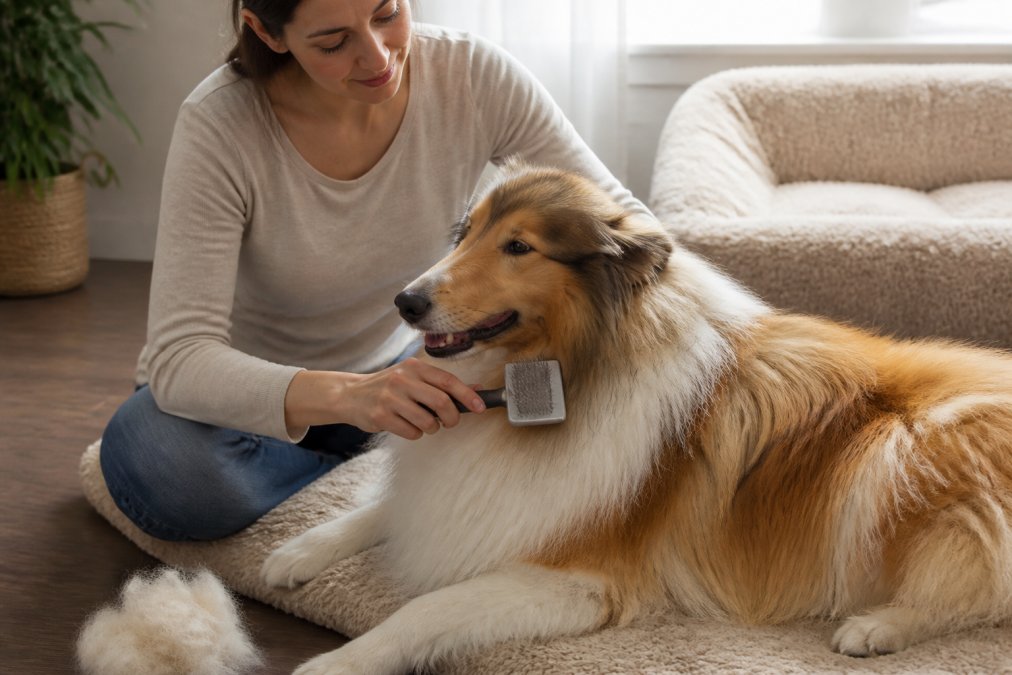
Start by brushing in the direction of hair growth. Working against the grain causes discomfort and damages the coat. Use long, smooth strokes rather than short, choppy movements.
For undercoat rakes, angle the tool at approximately 45 degrees to the skin. Use moderate pressure, your pet shouldn't show signs of discomfort. For slicker brushes, use lighter pressure than with an undercoat rake. Brush your pet's entire body, including the underside of legs, behind the ears, and under the tail, common shedding spots people miss. Stop grooming if your pet shows stress or discomfort.
Ergonomic Health: Protecting Your Wrists During Grooming
Grooming puts repetitive stress on your wrists, forearms, and shoulders. Pet owners who groom regularly often develop wrist strain or tendinitis. Proper ergonomics prevent these injuries.
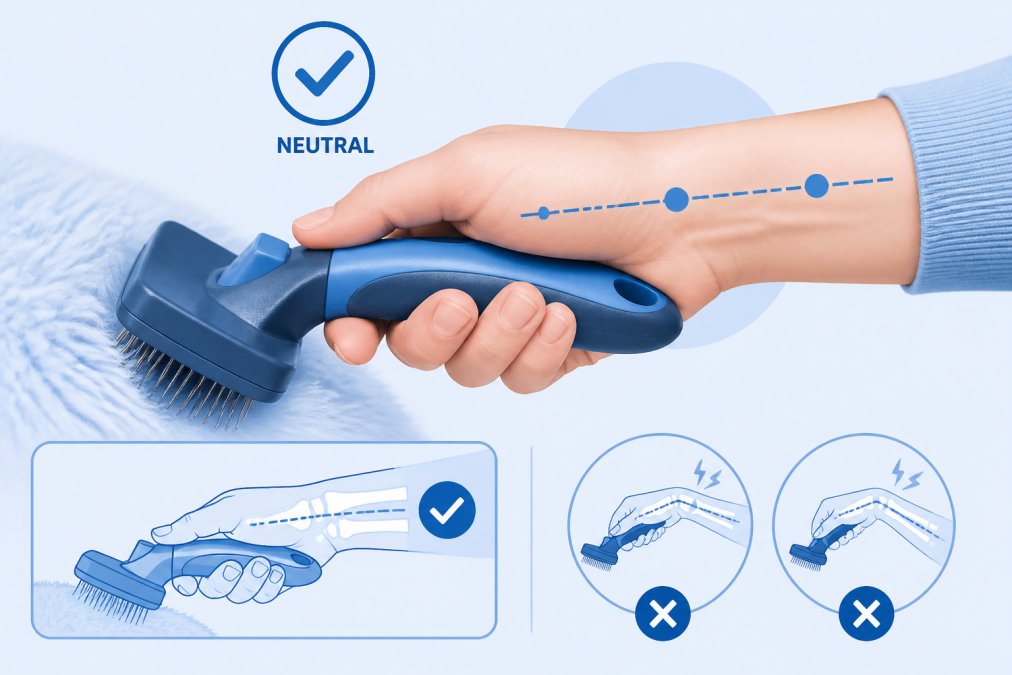
Choose brushes with ergonomic handles designed to reduce wrist strain. Look for cushioned, non-slip handles sized to fit your hand comfortably. Maintain a neutral wrist position while grooming, your wrist should be straight, not bent backward or forward.
Take breaks every 10-15 minutes during grooming sessions. Alternate hands when possible to distribute workload across both sides of your body. Use lighter pressure than you think necessary, a relaxed grip with moderate pressure is more effective and causes less strain. If you have existing wrist issues, prioritize lightweight tools like grooming gloves and rubber massage brushes.
Benefits of Regular Grooming and Maintenance
Regular grooming removes loose hair before it sheds naturally, reducing household shedding by 50-75%, meaning less vacuuming and cleaner furniture. For pet owners with allergies, this reduction in airborne dander can be significant.
Regular brushing stimulates blood flow to the skin and promotes natural oil production. These oils protect the skin barrier and keep the coat shiny and healthy. Pets with dry, flaky skin often improve dramatically with consistent grooming.
Grooming sessions provide an opportunity to spot skin issues early. While brushing, you'll notice lumps, rashes, hot spots, or unusual odors that might indicate health problems. Regular maintenance grooming is also less stressful than occasional intensive sessions, a pet groomed weekly becomes accustomed to the routine and remains calm.
Frequently Asked Questions
What is the best brush for a dog that sheds a lot?
The best grooming brush for heavy shedding depends on your dog's coat type. For double-coated breeds, an undercoat rake or de-shedding tool removes loose undercoat hair most effectively. For long-haired dogs, a slicker brush works well for detangling before de-shedding. Pawsibly Everything offers the Pet Grooming Brush To Remove Floating Hair ($23.94) and the Pet Pumpkin Grooming Self Cleaning Slicker Brush ($17.96), both designed to tackle significant shedding. For maximum results, use a de-shedding tool first, then follow with a slicker brush to remove remaining loose fur.
How often should you use a de-shedding tool on a shedding dog?
During heavy shedding seasons (spring and fall), use a de-shedding tool 2-3 times per week. In off-seasons, once weekly is sufficient. However, avoid over-brushing, using de-shedding tools more than 3 times weekly can irritate skin and damage the topcoat. Always check your dog's skin for redness or sensitivity after grooming. If your dog has skin allergies or sensitivity, start with once-weekly sessions and monitor their response.
Is a slicker brush or undercoat rake better for removing shedding?
An undercoat rake is superior for removing bulk shedding because it penetrates deeper into the undercoat where loose hair accumulates. A slicker brush excels at detangling and removing surface loose hair, making it better for maintenance between de-shedding sessions. The ideal approach: use an undercoat rake first to remove dense undercoat, then a slicker brush to finish and remove any remaining loose topcoat hair. Pawsibly Everything's Pet Pumpkin Grooming Self Cleaning Slicker Brush works well for this finishing step.
What is the best brush for double-coated dogs?
Double-coated dogs require tools that reach the undercoat without damaging the topcoat. An undercoat rake is the gold standard because its long teeth separate and remove loose undercoat while leaving the protective topcoat intact. Follow up with a slicker brush for detangling. Avoid using de-shedding blades too aggressively on double coats, as they can thin the protective topcoat if overused. Brush double-coated breeds 2-3 times weekly during shedding season to prevent matting and manage loose hair effectively.
Can you over-brush a dog with a shedding tool?
Yes, over-brushing causes skin irritation, brush burn, and can damage hair follicles. Limit de-shedding tool use to 2-3 times weekly maximum. Watch for signs of irritation: redness, flaking, or your dog flinching during grooming. If you notice these, reduce frequency and consider using gentler tools like grooming gloves. Pawsibly Everything's Pet Bathing 2-in-1 Grooming Glove ($18.36) offers a softer alternative for sensitive dogs while still removing loose hair effectively through gentle massage.
This article was written using GrandRanker

